


By Ishaq Dan-Imam, Lokoja
The disability community in Kogi State has welcomed the appointment of the Chairman of the Joint National Association of Persons with Disabilities (JONAPWD), Mr. Ibrahim Daniel Arome, as Senior Special Assistant to Governor Ahmed Usman Ododo on Grassroots Mobilisation, describing it as a significant milestone in the struggle for greater political inclusion of persons with disabilities (PWDs).
The appointment has been widely hailed as a reward for years of advocacy by disability groups seeking meaningful representation in governance and recognition of the electoral and developmental contributions of persons with disabilities in the state.

According to the Kogi State Government, Arome’s appointment is in recognition of his unwavering commitment to the ruling All Progressives Congress (APC), his contributions to the state’s political development, and his grassroots mobilisation efforts. The government also urged the new appointee to continue mobilising support for Governor Ododo’s administration and the APC.
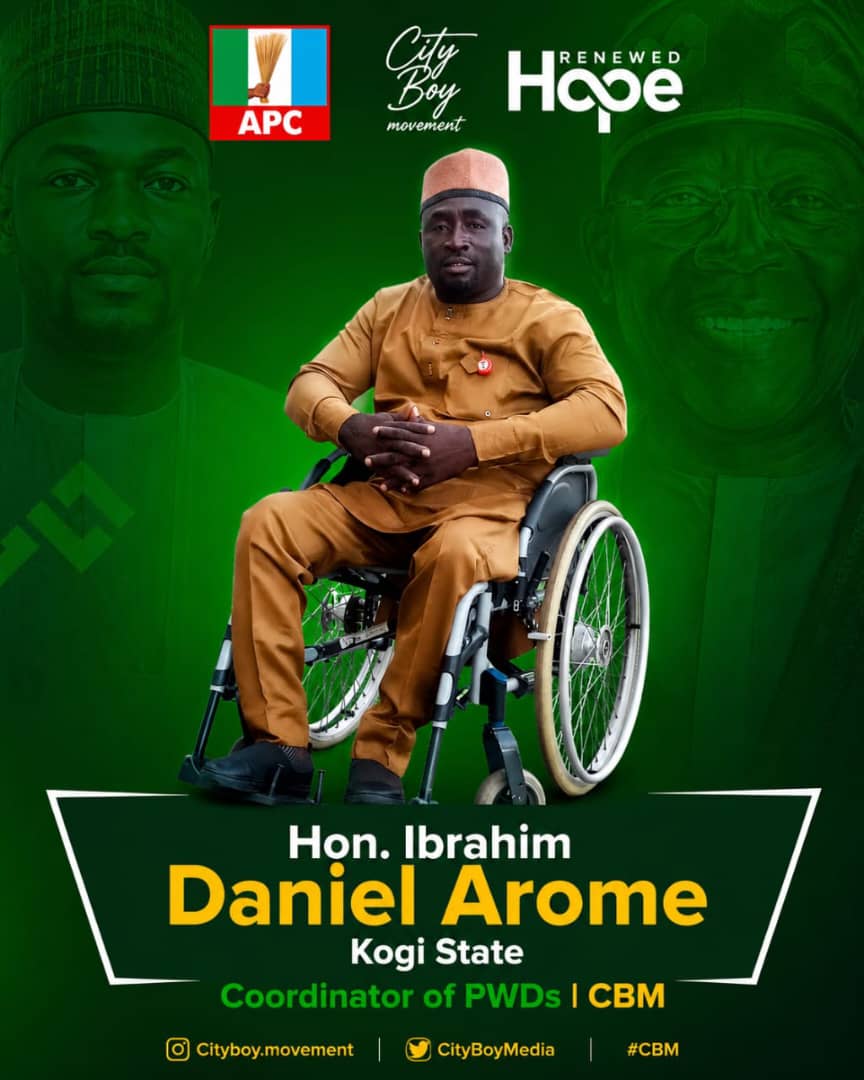
A respected disability rights advocate, Arome previously served as the pioneer Board Chairman of the Kogi State Office for Disability Affairs (KOSODA) during the administration of former Governor Yahaya Bello.
His latest appointment brings to five the number of persons with disabilities currently serving as Senior Special Assistants under Governor Ododo’s administration, a development many stakeholders see as evidence of the government’s growing commitment to inclusive governance.
Reacting to the appointment, disability rights advocates described it as a landmark achievement for the community.
Comrade Davies Oluwasegun Solomon said the appointment reflects the government’s increasing recognition of the capacity and political relevance of persons with disabilities.
“This is another memorable moment for the disability community. The appointment of our Chairman, Comrade Daniel Ibrahim Arome, as Senior Special Assistant to the Governor from Kogi East Senatorial District is a clear demonstration that Governor Ahmed Usman Ododo values inclusion and recognises the contributions of persons with disabilities,” he said.
According to Solomon, Arome has consistently demonstrated loyalty, dedication and effective leadership within the disability community and the APC.
He commended Governor Ododo for what he described as a visionary commitment to empowering persons with disabilities and expanding their participation in politics and governance.
Solomon also acknowledged the contributions of former Governor Yahaya Bello, noting that the signing of the Kogi State Disability Law laid the foundation for the establishment of the Kogi State Office for Disability Affairs (KOSODA), which has continued to advance disability inclusion in the state.
While expressing appreciation for the appointment, he appealed to the state government to implement the five per cent employment quota for persons with disabilities as provided by law and create more job opportunities for qualified members of the disability community.
“We appreciate the governor for identifying the ability in our disability and for finding one of us worthy of this important appointment. However, we also appeal for the full implementation of the five per cent employment quota for persons with disabilities and for greater access to employment opportunities for qualified members of our community,” he said.
Also speaking, the President of the Association of Applicants and Workers with Disabilities in Nigeria, Comrade Samuel Mark, expressed gratitude to the Kogi State Government for giving persons with disabilities a greater sense of belonging through political appointments.
He, however, called on both the Kogi State Government and the Federal Government to support constitutional reforms that would create reserved legislative seats for persons with disabilities in State Houses of Assembly and Local Government Legislative Councils.
According to him, such constitutional safeguards would guarantee broader political participation, promote economic empowerment, strengthen social inclusion and ensure that the educational, transportation and socio-economic rights of persons with disabilities are adequately protected across the country.
