


By Friday Idachaba, Lokoja
Nigeria needs comprehensive ethical reorientation and far-reaching bureaucratic reforms to tackle corruption, political interference and declining professionalism in the public service, a university don, Professor Joseph Odoba Achegbulu, has said.
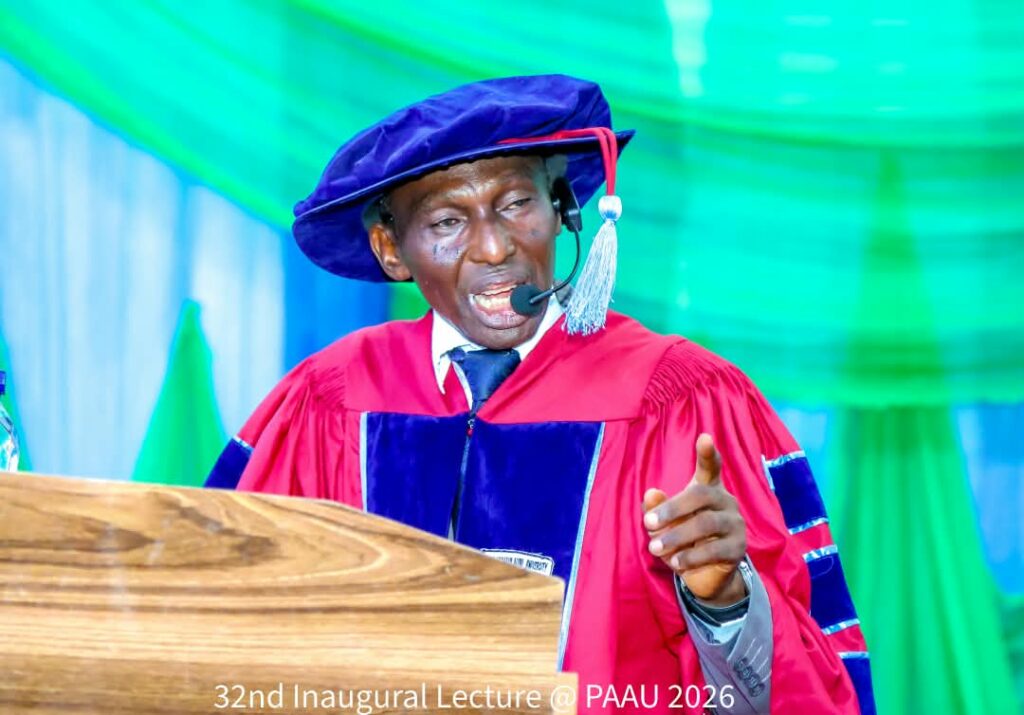
Achegbulu of Prince Abubakar Audu University (PAAU), Anyigba, made the call while delivering the university’s 32nd Inaugural Lecture titled, “Nigerian Public Bureaucracy: A Casualty of Ecological Outreach.”


He described public bureaucracy as “government in action”, explaining that it serves as the machinery through which government policies and programmes are translated into tangible benefits for citizens.
He stressed that the efficiency and character of the public service have far-reaching implications for national development and citizens’ welfare.
The inaugural lecturer warned that a weak and ineffective bureaucracy could worsen poverty, unemployment, inequality, low foreign direct investment, youth restiveness, infant mortality, brain drain and ethno-religious conflicts.
He lamented that Nigeria’s public service had increasingly become associated with red-tapism, administrative bottlenecks, tardiness, inertia and inefficiency.
Highlighting the foundations of effective public administration, Achegbulu identified the classical Weberian principles of hierarchy, division of labour, merit-based appointments, professionalism, legal-rational authority and political neutrality.
He said accountability, transparency, integrity, impartiality and discipline must also remain central to public service delivery.
Reviewing previous reform initiatives, including the Harragin, Gorsuch, Udoji and Allison Ayida commissions, as well as the 1988 Civil Service Reforms, he observed that successive interventions had failed to eliminate corruption, politicisation, weak accountability and administrative inefficiency.
He identified political patronage, godfatherism, corruption, administrative overreach, poor remuneration, indiscipline and conflicts between career bureaucrats and political office holders as major obstacles to effective public administration.
The professor also criticised the growing preference for ethnic, religious and partisan considerations over competence and professional qualifications in public appointments.
To address these challenges, he advocated a comprehensive national ethical reorientation and character reformation programme, supported by an enforceable code of conduct for political office holders and appropriate sanctions for violations.
He further called for merit-based appointments, protection of career civil servants from undue political interference and stronger professional associations to enforce ethical standards among their members.
Speaking at the event, the Vice-Chancellor of PAAU, Professor Salisu Ogbo Usman, described the lecture as timely and consequential.
He noted that political, economic, socio-cultural and technological forces significantly influence the operations and performance of public institutions.
However, Ogbo cautioned against attributing institutional weaknesses entirely to external pressures, stressing that leadership quality, internal management, workforce capacity and enforcement of standards also determine administrative performance.
Earlier, the Chairman of the Inaugural Lecture Committee, Professor S. S. Arogba, congratulated Achegbulu on the academic milestone.
The lecture, the first inaugural lecture in the Department of Public Administration and the fifth in the Faculty of Management Sciences, attracted members of the university’s Governing Council, academics, traditional and religious leaders, among other dignitaries.