


The Senate has turned its attention to politicians allegedly financing political violence, warning that candidates who sponsor attacks or deploy armed thugs against opponents could be disqualified from participating in the 2027 general elections.
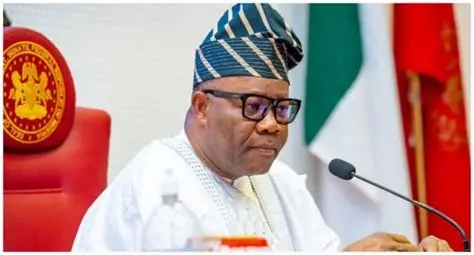
Senate President Godswill Akpabio issued the warning on Tuesday as lawmakers ordered security agencies to investigate reported attacks involving President Bola Tinubu, former Vice-President Atiku Abubakar and Peter Obi, presidential candidate of the Nigerian Democratic Congress (NDC).
The Senate’s intervention followed allegations that some politicians were recruiting, arming and financing youths to disrupt political activities and intimidate opponents ahead of the elections.

In a significant warning to political actors, Akpabio drew attention to Sections 121 to 128 of the 2026 Electoral Act, cautioning that candidates whose agents engage in or incite electoral violence could face disqualification if the Independent National Electoral Commission (INEC) establishes a prima facie case against them.
He said candidates who surround themselves with armed thugs or use weapons to intimidate political opponents should not assume they would escape legal consequences.
The warning came during deliberations on a motion of urgent public importance sponsored by Senator Abdul Ningi, who raised concerns over a series of reported attacks on political leaders and their supporters.
Among the incidents highlighted was the reported attack on Tinubu’s motorcade on November 13, shortly after the President observed Jumat prayers at the Shehu Shagari Central Mosque in Garki, Abuja.
Lawmakers also recalled the reported attack on Obi and other political stakeholders in Benue State, the disruption of an NDC and Obidient Movement procession in Asaba, Delta State, on November 7, which reportedly left one person dead and five injured.
The attack on Atiku’s convoy in Sokoto State was also cited.
However, the debate took a sharper turn when Senator Samaila Kawu accused politicians themselves of being behind the growing wave of political violence.
“We are the sponsors of all what is going on,” Kawu declared.
He argued that security agencies should look beyond the youths carrying out attacks and investigate the politicians allegedly supplying them with weapons, drugs and financial incentives.
Kawu’s intervention shifted attention from street-level perpetrators to those suspected of organising and funding political thuggery.
Senator Mohammed Ndume also called for decisive action, describing the reported attack on Tinubu as an embarrassment to the country.
He urged the police to prevent dangerous objects from being taken into political rallies and demanded the prosecution of anyone found culpable.
The Minority Leader, Senator Abba Moro, warned that unchecked political violence could frighten voters, discourage electoral participation and undermine the credibility of the 2027 elections.
Senator Babangida Hussaini recalled recommendations by the Justice Mohammed Uwais-led Electoral Reform Committee, which proposed specialised institutions and courts to address electoral offences.
He regretted that the failure to implement some of the recommendations had allowed electoral violence to remain a recurring problem.
Senator Sampson Ekong called for equal security protection for candidates across political parties and urged the Federal Ministry of Information and the National Orientation Agency to intensify public enlightenment against political violence.
At the end of the debate, the Senate mandated its committees on National Security and Intelligence, Public Affairs, and INEC to engage relevant security and electoral institutions and submit their findings within one week.
It also urged the Federal Government to strengthen security around political leaders, candidates, supporters and campaign gatherings while establishing early-warning and rapid-response mechanisms to prevent further attacks.
Akpabio further cautioned parents and guardians against allowing their children to be used as instruments of political violence, warning that certain offences could attract charges bordering on treasonable felony.
With political activities gathering momentum ahead of 2027, the Senate’s message was directed not only at youths involved in political attacks but also at the powerful interests allegedly financing them.
The lawmakers warned that those who bankroll violence could face serious legal consequences, while insisting that Nigerians must be allowed to participate in the electoral process without intimidation.