

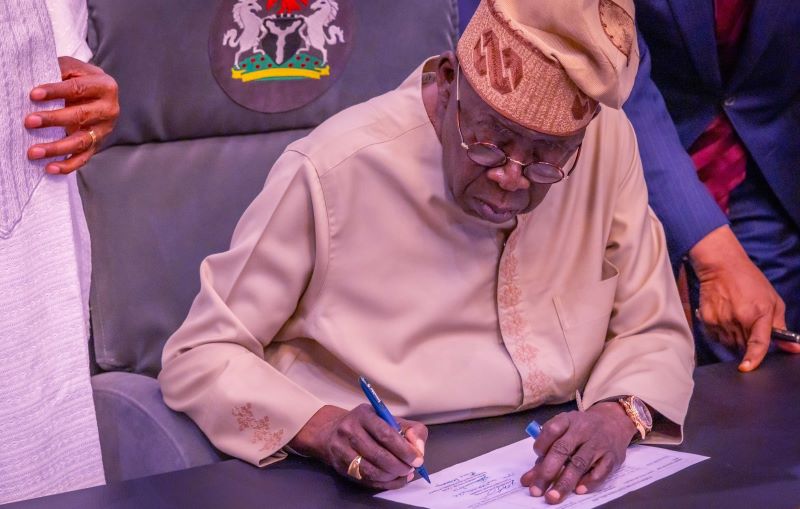

President Bola Tinubu has forwarded a bill to the Senate seeking to empower the Federal Government to enter into agreements with foreign countries for the transfer of convicted Nigerians to serve their sentences at home.
The proposed legislation, the Transfer of Convicted Offenders Enactment and Enforcement Amendment Bill, 2026, seeks to amend the 2004 Act to create a legal framework for the transfer of convicted offenders between Nigeria and other countries under mutual agreements.
The bill was contained in a letter read by Senate President Godswill Akpabio at Tuesday’s plenary. He referred it to the Senate Committee on Rules and Business for further legislative action.
In the letter, Tinubu said the amendment would empower Nigeria to negotiate with foreign governments for the transfer of convicted offenders to the country, and to honour similar requests from other governments, subject to the terms of the relevant agreements.
He said the proposed law would also authorise the President to extend its application to countries with which Nigeria has entered into such agreements, by an order published in the Federal Gazette. According to him, the provision would facilitate the implementation of prisoner-transfer agreements with countries outside the Commonwealth.
The proposal comes amid cases of Nigerians, including former public officials and political figures, convicted and imprisoned abroad.
Former Delta State Governor James Ibori was jailed for 13 years in the United Kingdom in 2012 after pleading guilty to money laundering, and was released in 2016. Former Deputy Senate President Ike Ekweremadu was sentenced in the UK in 2023 to nine years and eight months for his role in an organ-trafficking conspiracy. Abidemi Rufai, a former aide to Ogun State Governor Dapo Abiodun, received a five-year sentence in the United States in 2022 for wire fraud and aggravated identity theft.
Nigeria and the United Kingdom already have a prisoner-transfer arrangement under which eligible prisoners may serve their sentences in their home countries, subject to conditions and the agreement of both governments. The amendment seeks to provide a framework for similar arrangements with countries outside the Commonwealth.
The bill, however, would not automatically guarantee the transfer of every Nigerian convicted abroad. Any transfer would depend on the relevant agreement, the eligibility conditions and the consent of the countries involved.