

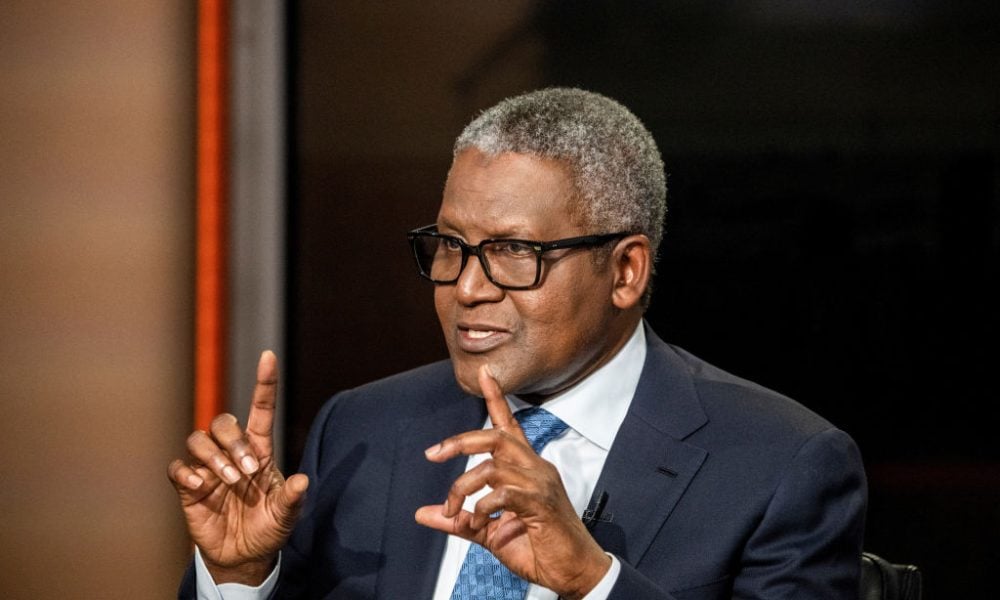

President of Dangote Group, Aliko Dangote, has said the launch of his 700,000-barrel-per-day refinery disrupted a fuel subsidy system that he claimed was costing Nigeria about $10 billion annually.
Dangote said he could not afford to abandon the project despite the resistance it faced because, in his view, Nigeria’s dependence on imported petroleum products and subsidy payments had become a major drain on government finances.
He made the disclosure in a recent interview with Al Jazeera, where he also spoke about the opposition he encountered while building the refinery.


“Turning back was not an option. They were looting $10 billion every year because it was a subsidy. People were just writing numbers, the government was busy paying and sweating, but we came and disrupted everything,” he said.
Dangote said the project brought him into direct confrontation with what he described as powerful interests and cartels within Nigeria’s petroleum sector.
“We fought them hard,” he said, adding that the resistance had reduced after the refinery successfully commenced operations.
According to him, however, some interests were still attempting to create difficulties for the refinery.
“They saw that we had succeeded, so now things have calmed down. Of course, we still have little flies that will come and try to disturb us,” he said.
The billionaire’s comments come against the backdrop of the changing structure of Nigeria’s downstream petroleum sector following the commencement of operations at the Dangote Refinery.
The refinery also entered Nigeria’s capital market on September 14, when its Initial Public Offering opened on the Nigerian Exchange Limited at N525 per share.
Dangote’s latest remarks have again placed the country’s former fuel subsidy regime, the cost of petroleum imports and the emergence of domestic refining capacity at the centre of debate over Nigeria’s energy economy.