

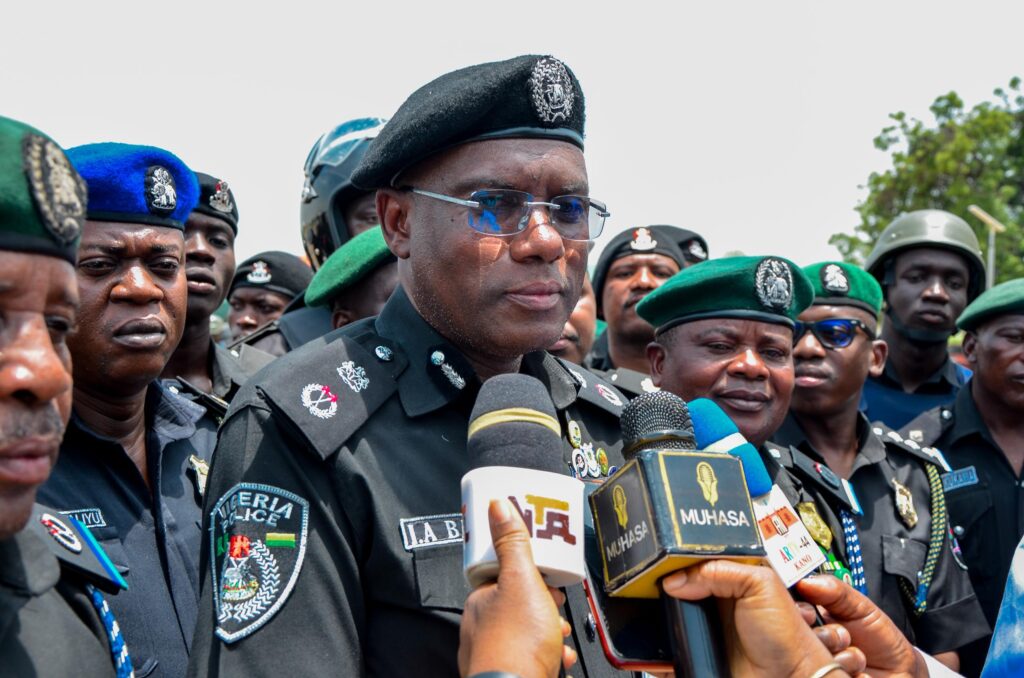

The Kano State Police Command has defended its move to block a meeting of the Tinubu Must Go (TMG) movement, citing security risks over the expected attendance of about 700 people.
But the action has sparked a dispute over the limits of police intervention in peaceful political gatherings, with the organisers accusing the command of violating their fundamental rights.
Commissioner of Police Ibrahim Adamu Bakori said the command was concerned about the safety of participants and residents, insisting that the decision was not politically motivated.

Speaking with DCL Hausa on Sunday, Bakori acknowledged that the organisers had the right to assemble and that the law did not require them to obtain police permission.
He argued, however, that notifying the police would have allowed the command to assess possible threats and make security arrangements.
The commissioner said he contacted one of the movement’s conveners, lawyer Abba Hikima, on Saturday night after learning about the planned meeting on social media.
According to him, he advised Hikima to postpone the gathering and meet with police officials to discuss security concerns, but the lawyer did not respond to subsequent calls.
Bakori also cited a recent security incident in Sabon Gari, where he said police seized weapons and arrested individuals allegedly travelling to Kano for political activities. He said investigations were ongoing.
Hikima, however, alleged that more than 10 mobile police vehicles were deployed to prevent members from accessing the private venue they had booked.
He described the action as an infringement on their rights, maintaining that the meeting was intended to enable members to exchange ideas and mobilise support for their political objectives.
Bakori denied any link between the police action and the movement’s opposition to President Bola Tinubu, insisting that the command’s priority was public safety.
The incident has brought renewed attention to the tension between security concerns and citizens’ rights to peaceful assembly, particularly as political mobilisation gathers momentum ahead of the 2027 elections.