
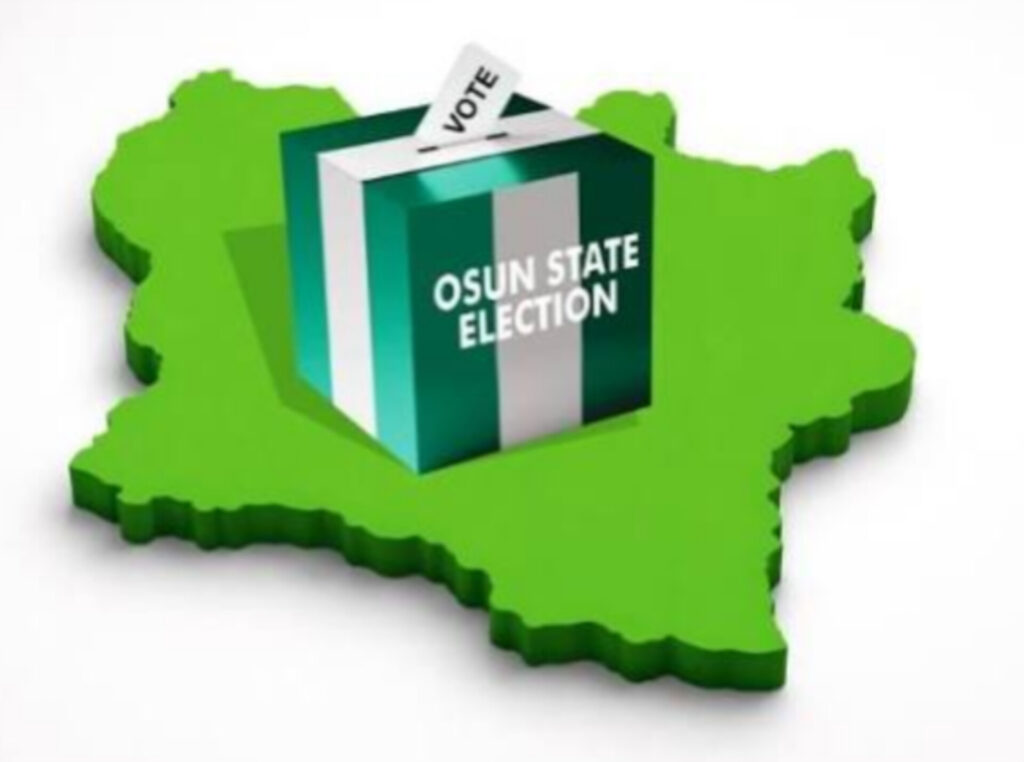

The Human Rights Writers Association of Nigeria (HURIWA) has raised fresh concerns over alleged vote buying ahead of the Osun State governorship election, warning that the practice is fast becoming a sophisticated threat to Nigeria’s constitutional democracy.
The rights group said allegations that voters were being offered between ₦10,000 and ₦20,000 in exchange for their votes showed that vote buying was no longer an isolated electoral malpractice but an increasingly organised phenomenon capable of distorting the will of the electorate.
In a statement issued on Saturday, HURIWA National Coordinator, Comrade Emmanuel Nnadozie Onwubiko, said the development vindicated the organisation’s earlier warnings about the growing commercialisation of Nigeria’s electoral process.

HURIWA alleged that supporters of the All Progressives Congress (APC) and Accord Party had commenced the distribution of money to potential voters ahead of the Osun poll.
The group stressed that the allegations must be properly investigated, but expressed concern over what it described as the failure of law-enforcement agencies to prevent alleged vote buying before it spreads across communities.
“We warned before now that vote buying was becoming a serious threat to Nigeria’s democracy. What we are seeing in Osun has elevated that menace to another level and should serve as a wake-up call to every institution responsible for protecting the sanctity of the ballot,” Onwubiko said.
HURIWA described vote buying as “electoral terrorism against constitutional democracy,” arguing that the practice undermines the sovereignty of voters by allowing financial strength to influence electoral outcomes.
According to the organisation, the consequences extend beyond election day because politicians who spend huge sums purchasing votes may subsequently seek to recover their expenditure through access to public resources.
“When a mandate is purchased, governance becomes an investment recovery project. The politician who spends billions buying votes will naturally seek ways of recovering that money from the public treasury,” Onwubiko warned.
The group also linked the growth of vote buying to widespread poverty and economic hardship, saying vulnerable voters were increasingly being exploited by political actors seeking electoral advantage.
However, HURIWA said enforcement agencies should focus particularly on the financiers and organisers of vote buying rather than treating economically desperate voters as the principal offenders.
It called on the Independent National Electoral Commission (INEC), Economic and Financial Crimes Commission (EFCC), Independent Corrupt Practices and Other Related Offences Commission (ICPC) and the Nigeria Police Force to investigate and prosecute anyone found to be financing or coordinating vote-buying operations.
The organisation further urged INEC to strengthen mechanisms for detecting and documenting electoral inducement before, during and after elections.
HURIWA warned that failure to decisively confront the practice could have serious implications for the 2027 general elections.
It said elections could eventually become contests determined by financial capacity rather than competence, policies and the freely expressed wishes of citizens.
“Nigeria cannot continue to hold elections where votes are negotiated, sold and purchased while pretending that constitutional democracy is functioning normally,” the group said.
HURIWA urged political parties, civil society organisations, the media and Nigerians to reject the normalisation of vote buying and expose attempts to commercialise the ballot.
The group said the developments in Osun should serve as an urgent warning ahead of 2027, stressing that “the ballot must never become merchandise and the democratic mandate of Nigerians must never be available to the highest bidder.”