


The Independent National Electoral Commission (INEC) has uncovered serious irregularities in Nigeria’s voters’ register, expunging 1,608,660 invalid records and identifying 54 officials allegedly involved in registration fraud across 10 states.
The revelations have raised fresh concerns about the integrity of the electoral register ahead of the 2027 general elections, even as 375 judges prepare to handle disputes that could emerge from the polls.
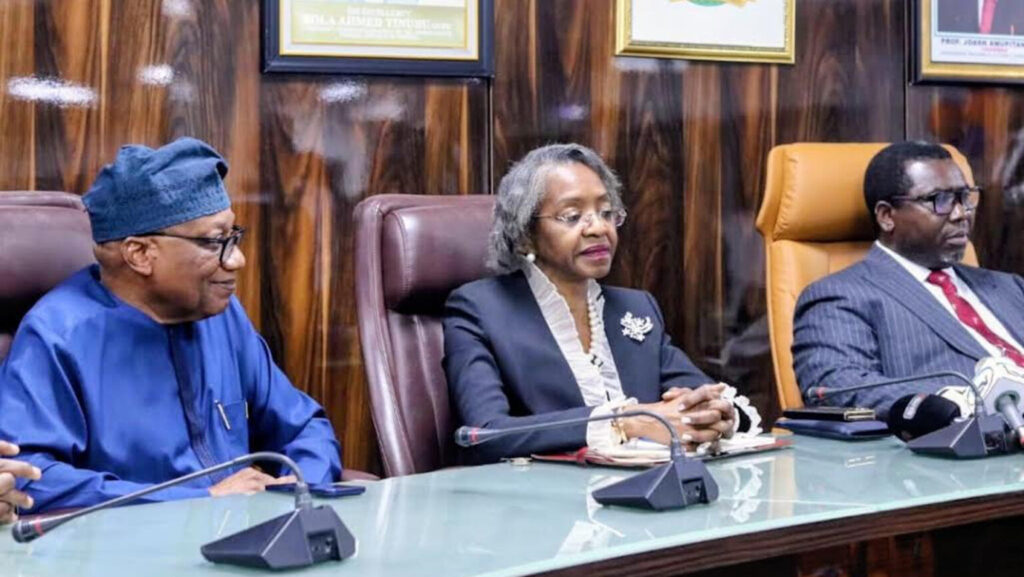
INEC Chairman, Prof. Joash Amupitan, disclosed the findings on Monday in Abuja while presenting the outcome of the commission’s review of the Preliminary Register of Voters.


He said the screening uncovered multiple registrations, manipulated photographs, suspicious registration patterns and records belonging to deceased persons.
According to him, the commission initially flagged 1,545,052 records through its Automated Biometric Identification System (ABIS), although not all were eventually found to be invalid.
Of the flagged entries, 1,277,052 were confirmed invalid and removed.
Following complaints and objections received during the seven-day public display of the preliminary register from October 9 to 15, INEC reviewed another 268,000 cases. It invalidated 217,722 while retaining 50,278 as genuine registrations.
A further screening uncovered 113,886 invalid entries, bringing the total number removed to 1,608,660. The commission also expunged 873 records belonging to verified deceased voters.
But beyond the questionable entries, the discovery of alleged complicity by 54 personnel across 10 states has emerged as another major concern.
Amupitan said the officials were identified following investigations into deliberate attempts to circumvent established registration procedures.
He disclosed that those found culpable would face disciplinary measures, including possible prosecution.
The INEC chairman acknowledged that the latest exercise had not completely addressed the integrity challenges confronting the voters’ register, particularly irregularities linked to records accumulated between 2011 and 2023.
He also confirmed concerns over manipulated photographs and AI-generated images, prompting the commission to discontinue external webcam-based photograph uploads for voter registration.
Under the new directive, photographs must be captured through INEC’s approved application.
The commission has also approved an Artificial Intelligence Governance Framework to guide the responsible use of AI in its operations.
Amupitan said the final reconciliation and quality assurance exercise was ongoing, with the Final Register of Voters scheduled for publication on December 15, 2026.
375 judges face election petition test
As INEC battles to clean up the voters’ register, the judiciary is also preparing for what could become a demanding post-election legal battle.
A total of 375 judicial officers have been nominated to serve on election petition tribunals across the country.
The Chief Justice of Nigeria, Justice Kudirat Kekere-Ekun, warned the judges and lawyers against allowing political interests, financial inducements and conflicting court orders to undermine electoral justice.
She particularly cautioned lawyers against filing multiple suits on the same subject matter and obtaining conflicting orders from courts of coordinate jurisdiction.
The CJN insisted that election disputes must be determined strictly on the basis of evidence, pleadings and applicable laws, rather than political popularity or public pressure.
She warned that the courtroom must not become an extension of the political arena.
President of the Court of Appeal, Justice Monica Dongban-Mensem, said 138 of the nominated judges had previous election tribunal experience, while 237 were new nominees.
She charged them to resist political intimidation, financial inducements and personal relationships capable of compromising their independence.
INEC warns against AI-generated election evidence
Amupitan also warned that artificial intelligence, deepfake videos and fabricated audio recordings could complicate election litigation in 2027.
He said disputes could arise over the authenticity of electronic results, accreditation records and digitally generated evidence.
He urged judges to examine the origin, authenticity and forensic chain of custody of electronic materials before admitting or relying on them.
Describing the growing possibility of genuine evidence being dismissed as AI-generated as the “Liar’s Dividend”, he urged tribunals to rely on certified records obtained directly from INEC.
Meanwhile, Attorney-General of the Federation, Lateef Fagbemi, called for additional election petition panels in jurisdictions likely to experience a high volume of disputes.
He also urged the Nigerian Bar Association to develop ethical guidelines for lawyers handling election-related cases.
HURIWA warns judges against compromising mandate
Separately, the Human Rights Writers Association of Nigeria (HURIWA) warned the 375 nominated judges against allowing politicians to overturn the will of voters through financial inducements or questionable judgments.
Its National Coordinator, Comrade Emmanuel Onwubiko, described the 2027 post-election period as a defining test for Nigeria’s democracy.
The association called on the Economic and Financial Crimes Commission and the Independent Corrupt Practices and Other Related Offences Commission to monitor credible allegations of financial inducement and suspicious transactions involving election petition proceedings.
HURIWA also urged the Code of Conduct Bureau to strengthen monitoring of judges’ asset declarations.
The group maintained that election tribunals must protect the mandate freely given by Nigerians rather than provide opportunities for politicians to manipulate electoral outcomes through the courts.
INEC, meanwhile, has urged journalists to maintain professional standards, verify information and avoid inflammatory reporting ahead of the 2027 elections.
The commission stressed that credible election reporting remains essential to public confidence in the electoral process.