

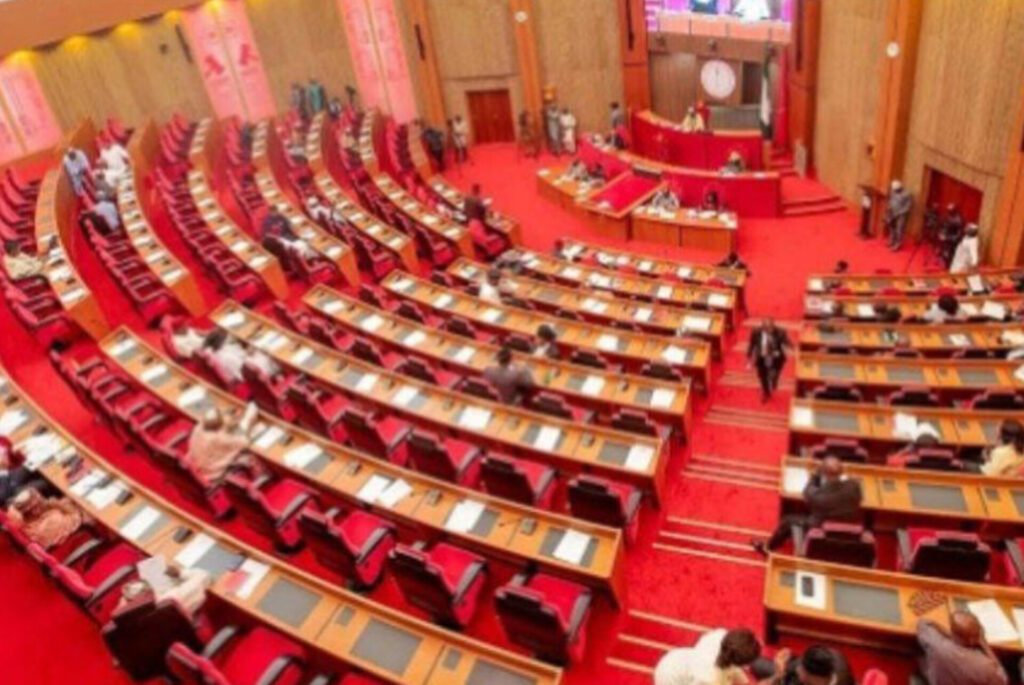

A carefully coordinated 24-hour legislative manoeuvre by the Senate leadership and the Presidency on Wednesday delivered the passage of President Bola Tinubu’s State Police Bill, fast-tracking one of the most consequential constitutional reforms in Nigeria’s democratic history.
The Constitution of the Federal Republic of Nigeria (Alteration) (State Police) Bill, 2026, scaled First Reading, Second Reading, Committee of the Whole and Third Reading within a single legislative day, compressing what would ordinarily be an extended constitutional amendment process into less than 24 hours.
The accelerated passage followed a combination of executive lobbying, behind-the-scenes consultations, a prolonged closed-door session and the deployment of Senate procedural powers to vary standing rules in order to expedite consideration of the proposal.


At the heart of the legislation is the establishment of State Police Services across the federation alongside a restructured Federal Police Service. However, while the bill grants states constitutional authority to establish and operate their own police institutions, it preserves extensive emergency intervention powers for the Federal Government.
Under the proposed constitutional framework, the Federal Police Service may intervene in a state’s policing affairs where there is an actual or imminent breakdown of public order, threats to national security, serious human rights abuses or evidence that a state police service is unable to effectively discharge its responsibilities.
The legislation also authorises the Federal Police Service, subject to presidential approval, Senate oversight and judicial review, to temporarily assume operational control of a state police service where circumstances require such intervention.
The Senate’s rapid handling of the bill was driven by growing concerns over insecurity and sustained calls for decentralised policing, with lawmakers repeatedly told that the measure represented an urgent national response to terrorism, banditry, kidnapping and other violent crimes.
By the close of proceedings, senators had endorsed a constitutional framework designed to balance state policing autonomy with federal oversight, setting the stage for what could become the most far-reaching restructuring of Nigeria’s internal security architecture since 1999.