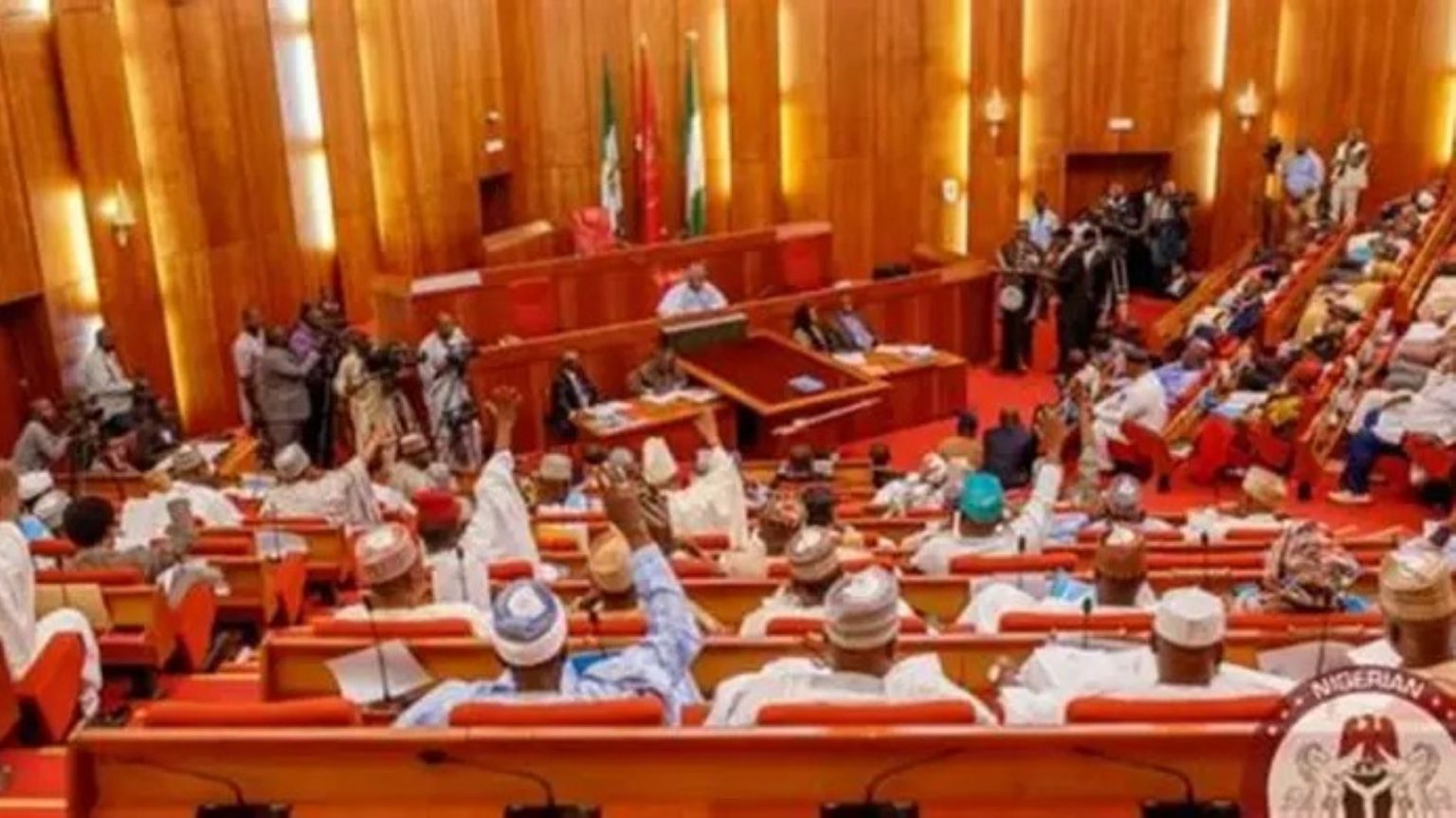

The latest confrontation between the Senate and the Federal Ministry of Finance over unresolved findings in the Nigeria Extractive Industries Transparency Initiative (NEITI) audit has exposed a deeper problem than accounting discrepancies: the government’s difficulty in tracing the movement and final destination of petroleum revenues across its own institutions.
At the centre of Thursday’s hearing was an uncomfortable question: How can the Federal Government account for billions of dollars in oil-related transactions when the agencies that executed or received the funds are not providing the records needed to reconcile them?
That question became particularly pointed when the Permanent Secretary of the Ministry of Finance, Raymond Omachi, told the Senate Committee on Public Accounts that the ministry could not adequately respond to several NEITI queries because it lacked records from agencies, notably the Nigerian National Petroleum Company Limited (NNPCL) and the Nigerian Upstream Petroleum Regulatory Commission (NUPRC).
The revelation effectively shifted the focus of the hearing from whether the transactions occurred to who has custody of the records and who ultimately bears responsibility for accounting for public money.
One of the most striking cases is the $3 billion pre-export financing facility secured in 2012 to address petroleum subsidy obligations.
More than a decade later, NEITI says the mechanism for recovering the facility from monthly Federation revenue proceeds under the Pre-Export Financing and Project Eagle arrangements remains unclear.
The issue raises a broader accountability concern: if a financial arrangement involving billions of dollars is still difficult to reconcile years after it was initiated, what mechanism exists to independently track the full life cycle of such transactions?
The $722.6 million NLNG dividend and interest payment raises an even more direct question.
NEITI found that the money paid by Nigeria LNG Limited in 2021 to the then NNPC, representing dividends and interest due to the Federation, was neither remitted to the Federation nor properly accounted for.
For a government struggling with revenue shortages and mounting fiscal pressures, the whereabouts and accounting treatment of such a substantial sum are unlikely to remain a technical bookkeeping issue.
The refinery expenditure adds another layer to the controversy.
NEITI observed that about N200 billion had been spent on refinery rehabilitation, yet none of the refineries was operational in 2021. The ministry was also unable to answer questions surrounding $221.283 million in overhead costs incurred by NAPIMS during the year.
Taken together, the queries point to a recurring weakness in Nigeria’s petroleum revenue architecture: money may be appropriated, transferred or spent through several institutions, but establishing a clear and independently verifiable audit trail can become remarkably difficult.
Omachi’s explanation was that the Finance Ministry was not directly involved in every transaction and therefore depended on the agencies responsible for providing the relevant records.
He said the ministry had engaged Arthur Andersen LLP to conduct a forensic audit and reconcile the transactions.
But that explanation appears to have created another problem for the Senate: if the ministry itself does not possess the underlying records, how long should the country wait before obtaining definitive answers?
That concern explains the committee’s insistence on bringing the Finance Ministry, NNPCL, NUPRC and other relevant agencies into the same room.
Committee Chairman, Senator Ibrahim Hassan Dankwambo, made clear that the Senate was no longer prepared to treat the matter as an internal administrative disagreement.
He directed the ministry to organise a joint meeting with the affected agencies, stressing that the issues were being monitored internationally.
The significance of the hearing therefore extends beyond the individual queries contained in the NEITI report.
It exposes what could be described as an accountability chain with missing links—where the Finance Ministry is expected to answer for public finances but says it lacks crucial records, while the agencies that hold or control some of those records must be compelled to provide them.
The Senate’s next move will be critical.
If the proposed joint session merely produces another request for documents, the controversy could linger. But if the committee succeeds in establishing a transaction-by-transaction trail covering the $3 billion financing, the $722.6 million NLNG payment, refinery rehabilitation expenditure and NAPIMS costs, it could reveal whether the problem is simply poor documentation or something more fundamental in the management of Nigeria’s oil revenues.
For now, the most revealing statement from Thursday’s proceedings may not be the figures themselves, but the admission that the government institution being asked to explain the money says it cannot do so without records controlled by other government institutions.
That is the accountability gap the Senate must now close.