

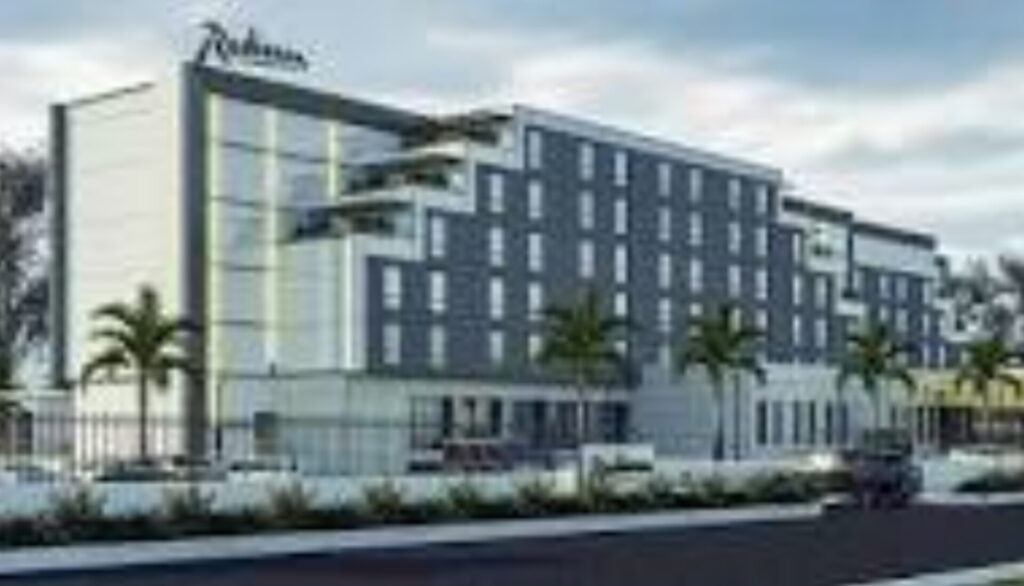

The Edo State Government’s decision to invest N19.5 billion in a Radisson Hotel franchise has ignited widespread criticism, with many questioning the prudence of such an investment at a time when the state is grappling with fundamental infrastructural and social challenges.
The controversial decision, taken towards the end of Governor Godwin Obaseki’s administration, has been described by critics as a misplacement of priorities, given the state’s pressing needs in education, healthcare, security, and transportation.
The government raised N17.5 billion through bonds from the capital market, tied to the state’s allocation from the federation account via an Irrevocable Standing Payment Order (ISPO), in addition to N2 billion drawn directly from the state treasury.
Investments of this magnitude, especially by a state government, are typically preceded by thorough cost-benefit analyses, risk assessments, and evaluations of public interest.
However, many argue that in the case of the Radisson Hotel, such critical due diligence was either insufficient or entirely absent. The decision appears to have been driven more by other motives than the public interest, raising concerns about transparency and fiscal responsibility.
As of November 2024, 11 out of 18 Local Government Areas (LGAs) in Edo were reportedly cut off from Benin City due to dilapidated road networks.
This isolation hindered the movement of over one million people across Edo Central and Edo North senatorial districts. While Governor Obaseki attributed this to federal government neglect, governors in states like Lagos, Delta, and Kaduna invested in federal roads within their jurisdictions to alleviate their citizens’ suffering.
At the time of this hefty hotel investment, Edo’s public schools were grappling with a severe shortage of over 5,500 teachers, according to data from the State Universal Basic Education Board (SUBEB).
Although the government initiated a late-stage recruitment drive, it was widely perceived as a knee-jerk reaction. Furthermore, 69% of schools lacked basic infrastructure such as proper classrooms, toilets, and clean water, highlighting glaring neglect in the education sector.
The state’s primary healthcare system was in shambles, with citizens relying heavily on federal institutions like UBTH and Irrua Specialist Hospital for basic ailments such as malaria and dysentery.
Most general hospitals were understaffed, with a critical shortage of Community Health Extension Workers (CHEWs). Basic amenities like water and electricity were absent in many health centers, while nearly N900 million was reportedly paid to a consultant overseeing renovations at Stella Obasanjo Hospital—a project critics argue was inflated and poorly prioritized.
During the same period, Edo grappled with a spike in cult-related violence, claiming hundreds of young lives between 2023 and 2024. Despite the worsening security situation, the state government invested in used Toyota Sienna buses for security agencies, a move widely criticized as inadequate.
Critics argue that the funds could have been better used to strengthen security infrastructure rather than diverting resources to a luxury hotel project.
In Benin City, several critical urban roads such as Ihama Street, Etete Road, Golf Course Road, Boundary Road, and Adesuwa Street were in deplorable condition. Markets like Oba Market, Ibillo Market, and Ekiosa Market required urgent renovations, while waste management posed a public health crisis.
Despite these glaring needs, the administration prioritized the hotel project, further alienating citizens who felt abandoned by the government.
Critics have also pointed out that Benin City was not lacking in quality hotels, with established private-sector ventures like Protea/Marriot, Otis, View Point, Prestige, and Constantial Hotels already thriving.
The government’s entry into the hospitality sector, therefore, seemed unnecessary and commercially questionable, raising suspicions about ulterior motives behind the investment.
While the ownership and control of the Radisson Hotel remain shrouded in controversy, the state’s public transport system has been left to deteriorate.
Edo City Transport Services (ECTS) continues to rely on an aging fleet inherited from the Adams Oshiomhole administration, forcing commuters to depend on exploitative private transporters. Many argue that investing in modernizing the state’s transport infrastructure would have had a more direct and positive impact on the lives of Edo citizens.
The N19.5 billion Radisson Hotel project is being viewed as emblematic of an administration disconnected from the needs of its people. While Edo citizens were struggling with poor roads, underfunded schools, inadequate healthcare, and rising insecurity, the government opted to channel scarce resources into a luxury hotel venture.
As the controversy continues, many are left wondering whether this investment truly serves the public interest or if it reflects deeper issues of mismanagement and misplaced priorities.
The people of Edo State, who entrusted the Obaseki administration with a second term in 2020, now face the sobering reality of policies that appear at odds with their most urgent needs.