


The Human Rights Writers Association of Nigeria (HURIWA) has urged the National Assembly to halt what it calls Nigeria’s dangerous slide into debt dependence, warning that the country risks mortgaging the future of generations yet unborn.
This was contained in a statement signed and made available to to the media by HURIWA’s National Coordinator, Comrade Emmanuel Nnadozie Onwubiko.
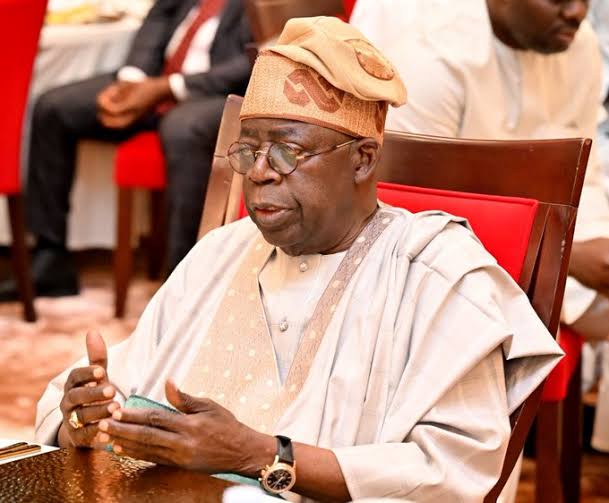
The group in the statement also asked President Bola Ahmed Tinubu to stop further external borrowing and heed former President Olusegun Obasanjo’s warning that excessive debt destroys generations.

Citing the World Bank’s International Debt Report 2026, HURIWA said Nigeria’s external debt stood at $145.02 billion as of December 2025, up from $83.21 billion in 2015. That is an increase of about $61.8 billion in 10 years.
The report shows the total is made up of $62.4 billion in public and publicly guaranteed debt, $54.476 billion in private nonguaranteed debt and $28.139 billion in short-term obligations.
The group said the figures are especially worrying at a time when millions of Nigerians are battling rising living costs, unemployment, poverty and falling purchasing power.
The cost of servicing that debt is also climbing, HURIWA noted.
Nigeria’s debt-service-to-exports ratio rose by 9.6 per cent in 2025, while debt service relative to gross national income increased by 6.9 per cent. According to the association, this raises serious questions about how much national income will go to repayment instead of critical public services.
It also flagged the country’s $2.3 billion sovereign bond issuance in 2025, which comprised a 10-year bond at 8.625 per cent and a 20-year bond at 9.125 per cent, saying such high rates should warn against reliance on expensive foreign financing.
HURIWA further drew attention to the World Bank’s disclosure that Nigeria entered a $5 billion Total Return Swap in 2026 with a three-year maturity. Under the deal, the country reportedly pledged domestic securities worth about $6.7 billion as collateral, a ratio of roughly 133 per cent.
The group warned that such arrangements could expose Nigeria to collateral, margin-call, refinancing and transparency risks, and asked the Federal Government to disclose the securities pledged, repayment obligations, maturity terms and other conditions attached.
The association said Obasanjo’s recent criticism of excessive borrowing deserves serious consideration. Speaking at a symposium in Abeokuta, Ogun State, the former president described debt as worse than leprosy and disagreed with Tinubu’s position that borrowing is not a problem if the government can repay.
Tinubu has defended his administration’s plans, arguing that long-term loans are needed to finance infrastructure, improve electricity supply, upgrade ports and support his ambition of a $1 trillion economy by 2030.
HURIWA countered that infrastructure development cannot justify endless borrowing without transparent assessments of returns, repayment capacity and long-term consequences.
It challenged the government to show how past loans have measurably improved the lives of ordinary Nigerians, and questioned the push for more foreign loans when the government claims higher revenue following the removal of the petrol subsidy.
The group noted that the Nigeria Labour Congress has also raised concerns over the Federal Government’s request for approval to borrow $20.5 billion and €1.45 billion.
It urged lawmakers to use their constitutional oversight powers to scrutinise all new borrowing requests, and to demand a full account of existing loans, their use, repayment schedules and the benefits of the projects they funded.
HURIWA also called for an independent assessment of Nigeria’s debt exposure, including contingent liabilities and complex financing arrangements that may not appear in conventional debt figures.
Beyond borrowing, the association insisted that Nigeria must build an economy that relies on productive capacity, industrial development, exports, agriculture and efficient revenue generation.
It warned that future generations should not be condemned to servicing debts accumulated by successive administrations without development to show for it, and asked Tinubu to halt external borrowing until the country’s debt obligations and borrowing strategy undergo a transparent, independent review.