

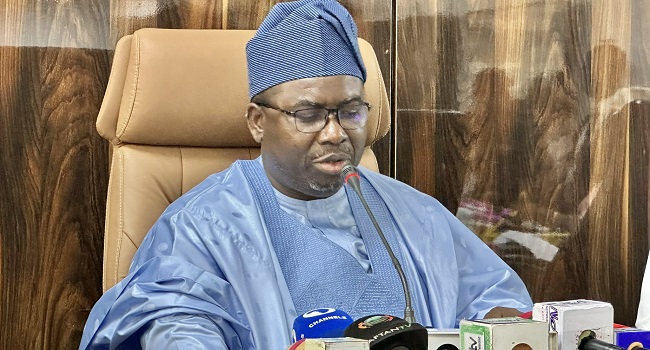

The Independent National Electoral Commission (INEC) has approved higher pay for its staff and 150 per cent more monthly funding for its state offices as it prepares for the 2027 general elections.
INEC Chairman, Prof. Joash Amupitan, announced this on Friday at a meeting with staff in Lokoja. The meeting was held to check how ready the North-Central states are for the elections.
He said the new salary structure started on January 1, 2026, and that work to provide the cash for it is still ongoing.


The extra funding for state offices started on July 1, 2026. Staff will also get better field and hazard allowances.
INEC has also bought vehicles for its offices. Pick-up vans have been given to state and local government offices across the country.
The commission bought 20 SUVs for Resident Electoral Commissioners, and Administrative Secretaries will get new vehicles too.
But the chairman said good pay must come with good conduct. Staff have been told to stop taking annual leave for now.
He warned that anyone who is absent from work, takes sides in politics, is careless or misuses money will be punished.
“Every staff member must remain neutral, professional and committed to the electoral process,” he said.
Amupitan also spoke about the tools INEC will use for the elections. About 57,000 new BVAS machines are being set up to check and accept voters.
The systems used to send results from polling units to the IReV portal are being checked to make sure they are open and honest.
INEC has also launched printable voter cards and an online portal to help people find their cards.
He said the first version of the voters’ register is out for the public to check.
The final register will be released on December 15, 2026. He said the photographs people have raised concerns about will be checked before then.
The chairman named insecurity and fake news as the biggest dangers to the elections. To improve security, INEC will bring all security agencies together down to the local government and ward levels.
These include the military, police, DSS, Civil Defence, Customs, Immigration, Correctional Service and Road Safety Corps.
He warned that anyone who threatens or harms election workers, including NYSC members, will face the law.
He also warned about fake videos and photos made with artificial intelligence.
He said the best way to fight false stories is to run elections openly and well, because late starts and technical problems give rumours room to spread.
The North-Central zone has 15,448,869 registered voters. They are spread across Benue, Kogi, Kwara, Nasarawa, Niger, Plateau and the Federal Capital Territory.
Across the country, more than 103 million voters are registered at 176,846 polling units.
Amupitan said INEC has finished nine of its 14 major tasks on the election timetable. The presidential and National Assembly elections will hold on January 16, 2027.
The governorship and State House of Assembly elections will follow on February 6, 2027.
The Kogi State Resident Electoral Commissioner, Dr Alhaji Shehu L. Wahab, said his office is stepping up its preparations.
He said it also has extra work because 12 state constituencies have been restored.
He added that the office is working with security agencies to change the idea that Kogi is a violent state during elections.
The Lokoja meeting was the last in INEC’s series of readiness checks across the country. Similar meetings were held earlier in the South-West, North-West, South-East, North-East and South-South zones.