


***Justice in Nigeria is only for the rich says Prof Yemi Akinseyi George
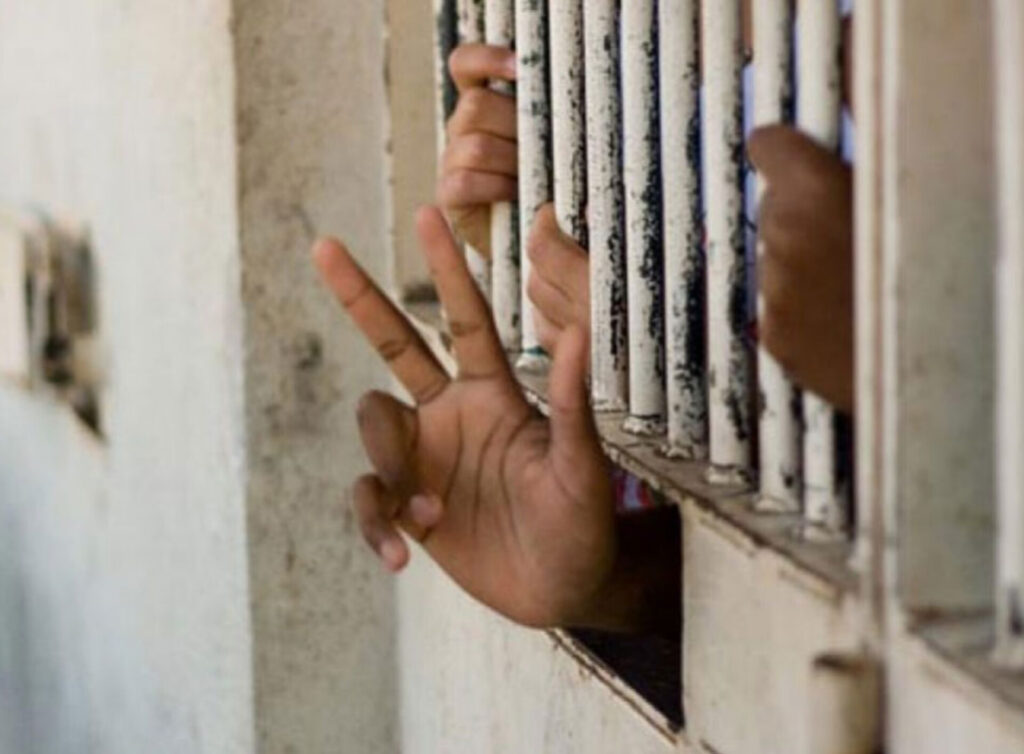
At an access to Justice in Nigeria Parley, the Nigeria Correctional Service on Tuesday raised issues over 5000 inmates who have been sentenced to death by hanging but have waited for decades without their sentences being carried out.
The Controller general Nigerian Correctional Service Haliru Nababa spoke on Tuesday at the launch of the Court Administration and Management and The Reforming Pre-Trial Detention in Nigeria Phase II projects in Abuja which was bankrolled by Public and Private Development Center (PPDC) a civil Society Organization.
Represented by Gimba Dumbulwa, Assistant Controller, Custody of the Service he said the delay is being linked to Governors of the various States and their reluctance to sign their death warrants which he said is contributing to Prison congestion issues


“Somebody who is sentenced to death by hanging, some have stayed for 10 years, 15 years and even 20 years in custody while their death sentence has not been signed by the governors.
He called on stakeholders from the respective states to use their Attorney generals to influence their state Governors to see that those inmates who have been sentenced to death by hanging to commute their sentences to imprisonment. This he said is expedient so that those that have spent the years of sentence could be released
“We are pleading with you so that the respective governors who are not interested in signing the death warrant let them commute their sentence to imprisonment.
According to him, there 80, 020 inmates with 5,076 awaiting trial which he said is 70% of inmates hroughtout the country.
The
Professor Yemi Akinseyi George (SAN) of the Center for Socio-Legal Studies who presented the keynote address on “Opening the Path to Justice: Current Challenges and Prospects of the Nigerian Justice system” said justice in Nigeria is for the rich adding that he agree with that absolutely.
According to him, Only the rich can afford the services of a lawyer.
“Only the rich can afford to pay for their witnesses to come to court and it should not be so, this is a democracy we must not purnish the poor people unjustly but the justice system we run now is only for the rich.
“The Legal Aid System is not properly funded. Many persons can not aford the services of lawyers, therefore government needs to invest more on funding legal aids, Lawyers should be engaged in all our local governments to stand up for the poor, not just to defend them in court but to bring claims for the enjoyment of their rights to help the poor get their entitlement from the States, even things that we have promised them. “They need lawyers to stand for them. So we need lawyers all over the country. Government should engage more lawyers at the Local Governments, at the ward level, who will be representing the poor.
Explaining futher, he said the problem of the criminal justice system in Nigeria is delay, very embarrassing delay.
“One of the major reason for this delay is lack of effective pretrial case managements. Effective pre-trial case management would create a situation where the judge, the prosecutor, the witnesses and all the parties including the complainant to agree on a timetable before the trial begins.
“In Nigeria we don’t conduct effective pre-trial case managements even though the law provides for it. So it is important that all heads of courts, Attorney’s general must begin to insist that court in trial of criminal cases must conduct Pre-trial case management whereby before a suspect is arraigned for trial we have agreed on a timetable for the trial, how many witnesses we are going to call, how we are going to get the witnesses in to court and pay their expenses, those who needs protection, how they are going to be protected.
“So what Public and Private Development Center is doing in collaboration with UN embassy and INL is to begin to insist, to begin to build the capacity of the Nigerian legal system to conduct effective Pre-trial case management before trial commences.
“That is what all this process is all about and without that pre-trial all these effort to fatstrack justice would not be effective.
“The criminal justice system has not been able to expediciously deliver justice. The justice sydtem is too slow, we keep on adjuorning and adjuorning cases whereas we should have in place case management system so that criminal cases can commence and be concluded.
“But a situation where trial goes on ad infinitum, indefinatly does not augur well for democracy.
“This is why criminality continues. A lot of people opted for crime, those who are in court are not getting out.
“We are not seen to be purnishing wrong doers that is why wrong doing and impunity appears to be increasing so all stakeholders, Attorney General, chief judges, civil Soviety all of us needs to come together under the leadership of the Attorney General of the Federation Lateef Fagbemi.
“He has already begun to call for all stakeholders. Let us collaborate with him, work with the development partners, the organizations like Private Public Development Center (PPDC) so that together we can improve acces to justice because without access to justice Democracy is a nightmare, without access to justicw democracy is meaningless because everybody must be able to have their day in court.
“We are not saying everybody should be convicted but what we are saying is that they should go through the system and know that they have been tried, they have been given opportunity to say whether they are guity or they are not guilty. How can we keep over 70 persons in detention without trial it is an embarrasment.
“We all need to get up as stakeholders, lawyers, media and the whole of the society must deal with this problem because we have been dealing with this problem for years.”
PPDC’s board chairman Chibuzo Ekwekwuo in his speech said the gathering of distinguished legal minds, policymakers, and civil society representatives is a testament to the shared commitment to promoting and upholding the fundamental right to justice for all Nigerians.
“Access to justice is a cornerstone of a just and equitable society. It is the bedrock upon which the rule of law is built and the foundation for a thriving democracy.
“Without access to justice, individuals are unable to protect their rights, hold those in power accountable, and ensure that the law applies equally to all.
“Effective access to justice is often generally cited as one of the biggest obstacles to the realization of human rights.
“There is obvious social and economic inequality in Nigeria. The fundamental essentials of existence, including food, shelter, health care, water, land, and a means of subsistence, are often denied to many ordinary citizens and residents, who also typically have less access to education and the state’s protection. “Although legal assistance or free legal services are provided for by the 1999 Constitution and provided in some measure by the Legal Aid Council, many if not most citizens or residents, especially the poor and disadvantaged, nevertheless believe that access to justice does not exist for them.
“According to Nigeria’s 1999 Constitution, Section 46(4), the National Assembly must pass laws to provide financial aid to any impoverished citizen whose fundamental rights have been violated in order for them to be able to hire a lawyer. The budget for this organization, despite its existence, is insufficient to meet the demands of the populace.¹
In Nigeria, we have made significant strides in expanding access to justice. The enactment of the Administration of Criminal Justice Act, 2015, establishment of legal aid clinics, the expansion of pro bono services, and the recent adoption of innovative technologies have all contributed to making justice more accessible to more people.
“However, there are still challenges in accessing justice in Nigeria. These challenges include normative legal protection, legal awareness, legal aid and counsel, adjudication, enforcement and civil society oversight amongst others². There has been a sustained struggle for the protection of the human rights of individuals, groups and communities in Nigeria³.
We must therefore acknowledge that there is still much work to be done. Too many Nigerians remain unaware of their rights, unable to afford legal representation, and hindered by a complex and often intimidating legal system.
“Our awaiting trial population in our custodial centers has over the years maintained a steady range of 65-80% of the total prison population.
“Our judges still write in longhand, the speed of our justice system is still less than desired, the ACJA is still yet to gain full implementation amongst other challenges.
PPDC’s board chairman Chibuzo Ekwekwuo in his speech said the gathering of distinguished legal minds, policymakers, and civil society representatives is a testament to the shared commitment to promoting and upholding the fundamental right to justice for all Nigerians.
“Access to justice is a cornerstone of a just and equitable society. It is the bedrock upon which the rule of law is built and the foundation for a thriving democracy.
“Without access to justice, individuals are unable to protect their rights, hold those in power accountable, and ensure that the law applies equally to all.
“Effective access to justice is often generally cited as one of the biggest obstacles to the realization of human rights.
“There is obvious social and economic inequality in Nigeria. The fundamental essentials of existence, including food, shelter, health care, water, land, and a means of subsistence, are often denied to many ordinary citizens and residents, who also typically have less access to education and the state’s protection. “Although legal assistance or free legal services are provided for by the 1999 Constitution and provided in some measure by the Legal Aid Council, many if not most citizens or residents, especially the poor and disadvantaged, nevertheless believe that access to justice does not exist for them.
“According to Nigeria’s 1999 Constitution, Section 46(4), the National Assembly must pass laws to provide financial aid to any impoverished citizen whose fundamental rights have been violated in order for them to be able to hire a lawyer. The budget for this organization, despite its existence, is insufficient to meet the demands of the populace.¹
In Nigeria, we have made significant strides in expanding access to justice. The enactment of the Administration of Criminal Justice Act, 2015, establishment of legal aid clinics, the expansion of pro bono services, and the recent adoption of innovative technologies have all contributed to making justice more accessible to more people.
“However, there are still challenges in accessing justice in Nigeria. These challenges include normative legal protection, legal awareness, legal aid and counsel, adjudication, enforcement and civil society oversight amongst others². There has been a sustained struggle for the protection of the human rights of individuals, groups and communities in Nigeria³.
We must therefore acknowledge that there is still much work to be done. Too many Nigerians remain unaware of their rights, unable to afford legal representation, and hindered by a complex and often intimidating legal system.
“Our awaiting trial population in our custodial centers has over the years maintained a steady range of 65-80% of the total prison population.
“Our judges still write in longhand, the speed of our justice system is still less than desired, the ACJA is still yet to gain full implementation amongst other challenges.