

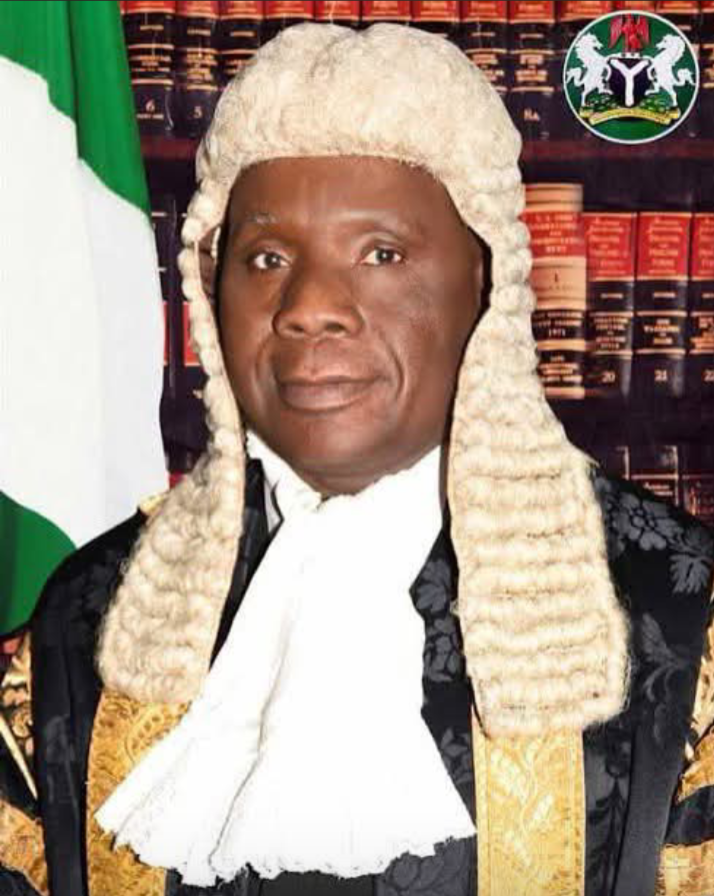

A retiring Supreme Court Justice, Ibrahim Saulawa, has challenged Nigeria’s judiciary to confront a practice he considers a threat to its credibility: politicians showering judges with cows, rams and other gifts.
Saulawa, who retired on attaining the mandatory age of 70, urged the Chief Justice of Nigeria, Kudirat Kekere-Ekun, to take action against the practice, warning that gifts to judicial officers can undermine public confidence in the courts.
“Why should a politician send a ram, cow or other items to a Supreme Court Justice? It is unheard of in other countries,” he said.


The jurist spoke at a valedictory session held in his honour, drawing on experiences from his 44-year career in the legal profession to make a case for greater vigilance against attempts to compromise judicial officers.
He revealed that he once rejected a brand-new Peugeot offered by an influential man whose case he later decided against, despite efforts by prominent personalities to persuade him to accept the vehicle.
“Prior to the case, the Alhaji had donated to me a brand new Peugeot motor vehicle, which I flatly rejected,” Saulawa said.
He explained that the man subsequently sought the intervention of the Emir, Alhaji Muhammadu Kabir Usman, and a district head, Alhaji Balan Goggo, among others, but the efforts did not change his position.
For Saulawa, the incident illustrated the pressure judges may face and the need to protect judicial decisions from personal interests and outside influence.
He urged judicial officers nationwide to uphold integrity, honesty and morality, adding that he had also turned down several invitations to social gatherings to protect his principles.
The retiring justice’s warning comes amid persistent public scrutiny of the judiciary and concerns about the influence of political and financial interests on public institutions.
Beyond judicial ethics, Saulawa revisited one of Nigeria’s most contentious political episodes, the annulment of the June 12, 1993 presidential election.
He recalled how conflicting court orders emerged over the election, with an FCT High Court restraining the National Electoral Commission, then led by Professor Humphrey Nwosu, from conducting the poll and announcing its results, while some state high courts issued opposing directives.
Saulawa, who was Chief Registrar of the Court of Appeal at the time, accused the military of orchestrating the confusion through forum shopping.
He said he travelled from Lagos to Kaduna on the directive of the then President of the Court of Appeal, Justice M. Akanbi, to take control of the appellate court’s registry and supervise the registration of appeals filed by the electoral commission.
After returning to Lagos, he briefed Akanbi, who convened an emergency meeting of presiding justices to address the crisis.
Saulawa maintained that the judiciary resisted attempts by the military to manipulate the legal process before then Head of State, General Ibrahim Babangida, annulled the election.
“We actually did all we could do to frustrate the military,” he said, insisting that the judiciary deserved commendation for its actions during the crisis.
The Chief Justice of Nigeria, Kekere-Ekun, also praised Saulawa’s commitment to judicial integrity, recalling an incident during their time in the Court of Appeal when an attempt was made to place a personal benefit in the path of judicial duty.
She said both justices rejected the attempt, maintaining that judicial office must remain free from compromise and even the appearance of impropriety.
According to her, the episode strengthened her respect for Saulawa and reinforced the principle that judicial integrity is demonstrated not only through judgments delivered in court but also through private choices.
Meanwhile, the relatively low turnout at the valedictory session drew criticism from Damien Dodo, SAN, representing the Body of Senior Advocates of Nigeria.
Dodo disclosed that only six SANs and 13 other lawyers attended, describing the turnout as embarrassing. He, however, attributed it to miscommunication rather than a lack of respect for Saulawa.
He praised the retiring jurist for serving Nigeria with what he called “granite integrity”.