

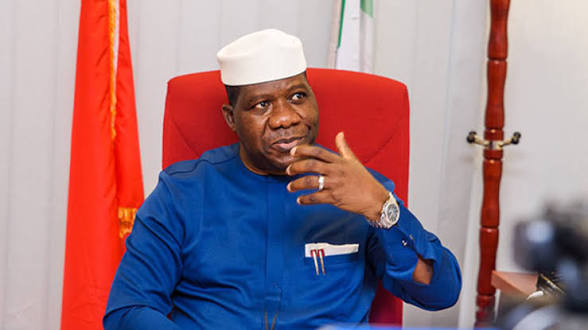

The National Assembly is considering a constitutional amendment that would create 74 additional seats for women in the Senate and House of Representatives, alongside three reserved seats in each state assembly, in a 16-year affirmative action plan.
The proposal would allocate one additional seat to women in each of the 36 states and the Federal Capital Territory in both chambers of the National Assembly. It would also expand female representation in state legislatures without displacing existing lawmakers.
Senate Leader Opeyemi Bamidele disclosed the proposal on Monday at the 2026 Law Week of the International Federation of Women Lawyers (FIDA), Ekiti State Chapter.


He described the initiative as a constitutional reform designed to address the persistent underrepresentation of women in Nigeria’s political institutions.
The plan provides for 37 additional seats in the Senate and another 37 in the House of Representatives, with each state and the FCT entitled to one seat for women in each chamber.
Under the proposed arrangement, every state House of Assembly would also have three additional seats reserved exclusively for women.
Bamidele, who is Vice Chairman of the National Assembly Committee on the Review of the 1999 Constitution, said the arrangement would operate for 16 years, covering four electoral cycles, before a comprehensive review.
He said lawmakers were considering a constitutional amendment to establish special seats for women at both federal and state levels.
“A Bill for an Act to alter the provisions of the Constitution of the Federal Republic of Nigeria, 1999 to provide for special seats for women in the National and State Houses of Assembly and for related matters is receiving our attention at the National Assembly,” he said.
According to Bamidele, the proposal followed extensive consultations and consensus-building, while engagements with state assemblies had begun to secure the approvals required for constitutional alteration.
He expressed optimism that at least two-thirds of state assemblies would support the proposal, a key requirement for its passage.
The Senate Leader argued that the initiative should be seen as a democratic reform rather than a partisan undertaking, saying a political system that excludes women from decision-making cannot adequately represent the population.
He also acknowledged the advocacy of First Lady Oluremi Tinubu and other stakeholders campaigning for increased female participation in governance.
Beyond political representation, Bamidele called for stronger protection for women and children, particularly victims of domestic violence and abuse.
He stressed the need for accessible and timely justice, legal assistance, medical care and psychosocial support for victims, alongside accountability for perpetrators.
The disclosure was made during FIDA Ekiti’s law week, themed “Justice in a Changing World: Responding to New Challenges Affecting Women and Children.”
The event was chaired by FIDA Ekiti Chairperson Ayobami Olowoyo-Richards. Other attendees included Steve Fatoba, Chairman of the House of Representatives Committee on Information and National Orientation, and Adeoye Aribasoye, Speaker of the Ekiti State House of Assembly.