

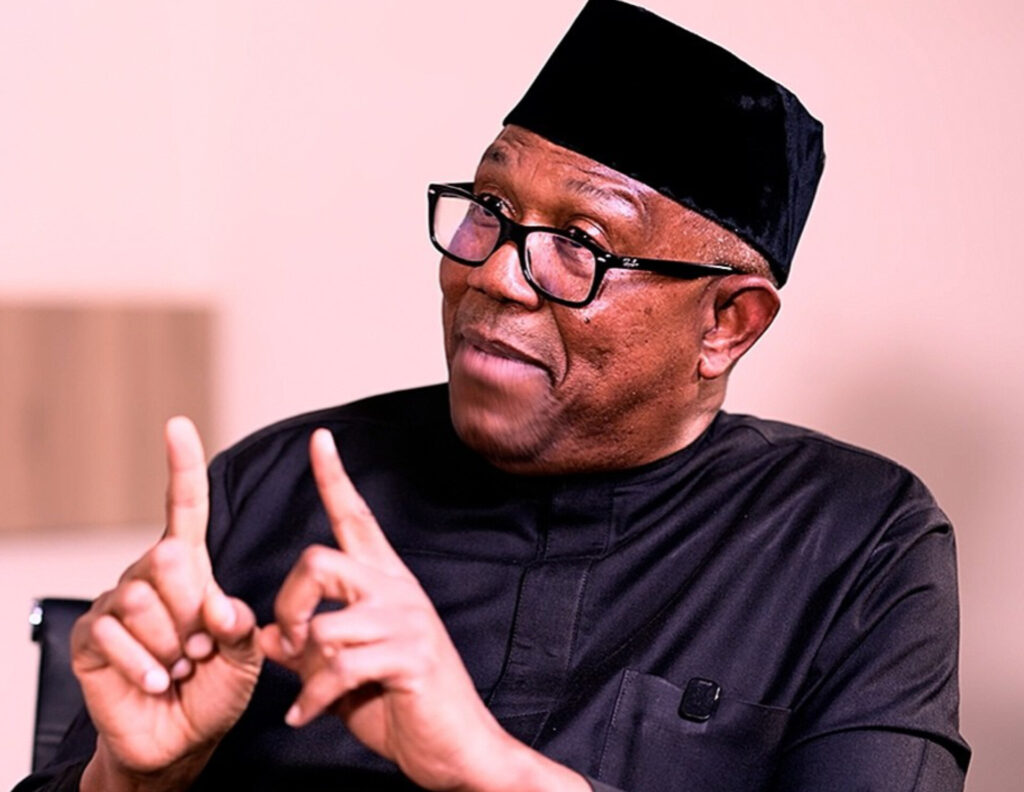

Peter Obi, presidential candidate of the Nigerian Democratic Congress (NDC), has dismissed President Bola Tinubu’s 30-day petrol discount as a stopgap that treats the symptoms of Nigeria’s hardship and ignores the causes.
In a statement on X titled “One Month Discount on Petrol: From Reactive Policies to Flawed Outcomes,” the former Anambra State governor said Nigerians need lasting relief, not short-term savings while households and businesses keep struggling with rising costs.
Obi said he held back his reaction to see how the policy played out. His verdict: “Now, having assessed the outcomes, the policy is a substitution of political optics for sound policy.”
He traced the current pain to the removal of the petrol subsidy on May 29, 2023, and the reforms that followed, including the floating of the naira and tax changes.
They were carried out, he said, without adequate consultation, proper sequencing or enough thought for their impact on ordinary Nigerians. He blamed their combined effect for rising prices, falling purchasing power, deeper poverty and mounting pressure on businesses.
He also pointed to unemployment, insecurity, inequality and the emigration of young Nigerians as problems that call for a far broader response than a fuel discount. Major reforms, he argued, should come with impact assessments, stakeholder engagement and protection for vulnerable households.
Then he turned to the discount itself. “What really does the President Bola Tinubu-led government want to achieve with a one-month discount of less than five per cent on fuel cost?” he asked.
Obi challenged the administration to explain how the measure would reduce poverty, unemployment and inequality, or lift productivity and exports.
He also asked whether it signals a shift in subsidy policy or an intervention shaped by the 2027 general election, though he offered no evidence that it was politically motivated.
“Too many questions, no answer!” he said.
The criticism puts the discount on trial. Cheaper petrol may bring some immediate relief to motorists and businesses, but it does not by itself contain inflation, restore purchasing power or cut the cost of doing business.
For the Tinubu administration, the test is whether 30 days of lower prices can deliver relief that people feel, and whether the government can show how the measure fits into a wider economic plan.