


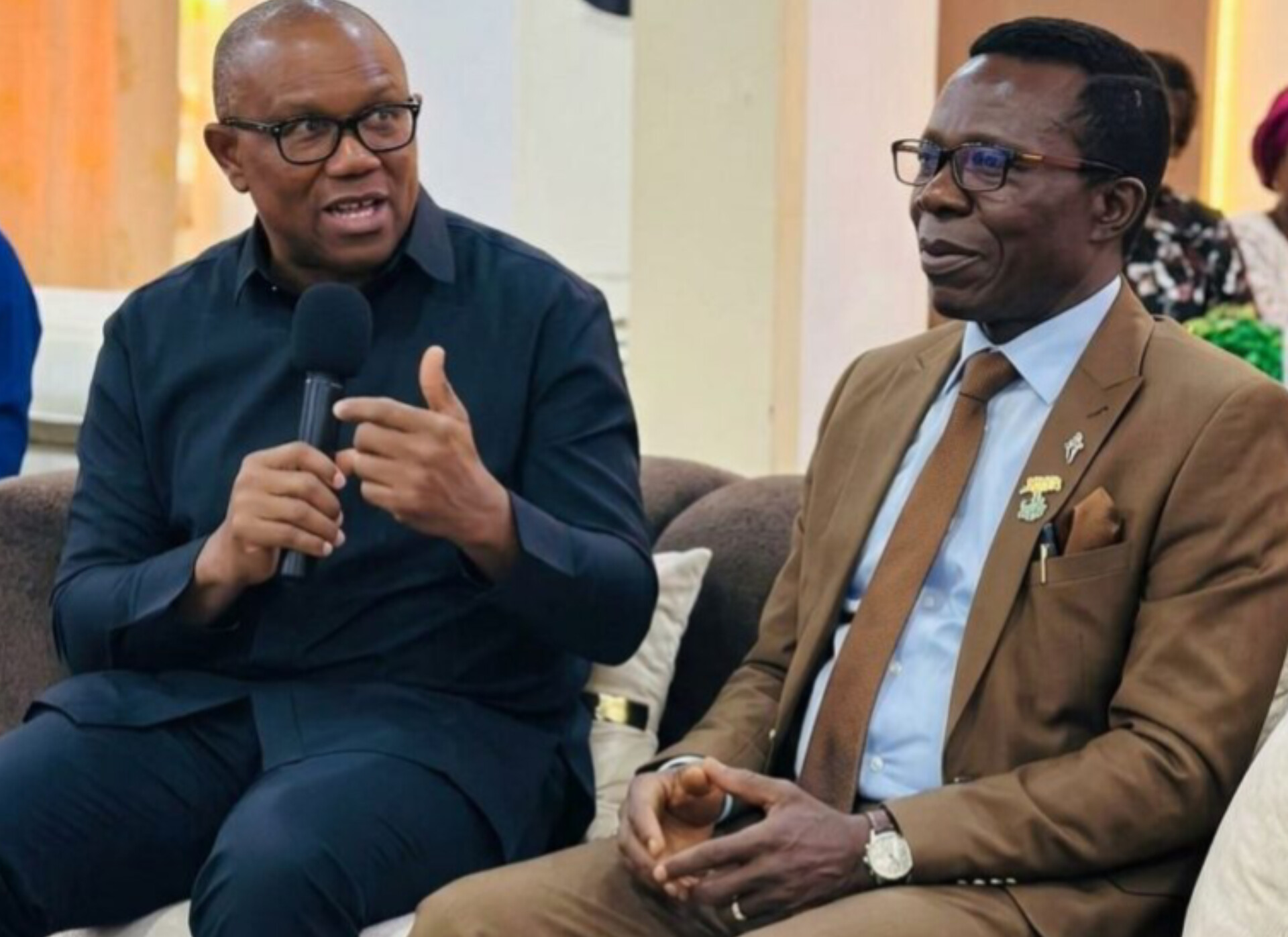
A recent revelation by Coscharis Motors Chief Executive Officer, Cosmas Maduka, about alleged attempts by government officials to inflate vehicle procurement invoices has sparked renewed debate over the financial record of former Anambra State governor and 2027 presidential candidate of the New Nigeria Democratic Congress, Peter Obi.
Maduka, in an interview cited in a recent commentary, disclosed that some government officials seeking to purchase vehicles from his company had attempted to inflate invoices, in some cases by as much as 100 per cent.
He said Coscharis had rejected such practices on ethical and moral grounds, adding that the company’s position had led some government offices to prefer transactions through third-party intermediaries.

One example cited in the commentary involved an alleged request by a state governor to increase the price of a vehicle from ₦40m to ₦80m.
The revelation has now been linked to questions about public procurement and financial accountability, with the commentary drawing attention to Obi’s administration in Anambra State.
The article noted that Obi had direct, multi-billion-naira business dealings with Coscharis Motors while serving as governor, arguing that Maduka’s account provides a basis for examining how such transactions were handled during the period.
It, however, did not provide specific contracts, invoices or independent audit records establishing that Obi personally participated in, or was implicated in, the alleged invoice-inflation practices described by Maduka.
The commentary instead used the Coscharis account to revisit claims about Obi’s fiscal management in Anambra, particularly figures relating to savings and the management of public resources.
According to figures cited by the writer, Obi left behind more than ₦75bn and over $150m in legacy savings for his successors.
The writer also cited Obi’s supporters’ claims of fiscal prudence and referred to his administration’s performance under the Millennium Development Goals, including interventions in education, healthcare and poverty reduction.
The Coscharis disclosure has therefore provided a fresh entry point into an old political argument over whether public office holders should be judged primarily by the resources they spend or by the systems they establish to protect public funds.
The commentary argues that the ability of public officials to resist inflated procurement and protect government resources is central to responsible governance.
It ultimately presents Obi’s record as an example of the kind of fiscal discipline it argues Nigeria needs, particularly as the country approaches the 2027 elections.
