


The Human Rights Writers Association of Nigeria (HURIWA) has challenged the Federal Government to produce the payment records behind its claim that more than ₦600 billion was transferred to over 10 million vulnerable Nigerians under the conditional cash transfer programme.
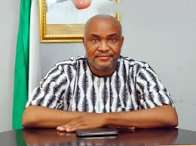
HURIWA said the explanation by the National Chairman of the All Progressives Congress, Prof. Nentawe Yilwatda, that many beneficiaries do not own mobile phones, watch television or use social media failed to answer the central accountability question.
The rights group said the issue was not whether beneficiaries were active on digital platforms, but whether the government could produce verifiable evidence that the money reached the people it claimed to have paid.
In a statement on Sunday, HURIWA said the government should publish an auditable breakdown showing the number of beneficiaries by state and local government, the amount paid to each household, payment dates and the channels used for the transfers.
The association said the conflicting accounts emerging from different states had made transparency more urgent.
According to HURIWA, while some state officials have confirmed beneficiaries of cash-transfer programmes, reports from other areas have raised questions about whether residents and even some officials could identify beneficiaries or establish clear records of the reported payments.
It said such discrepancies required documentary clarification rather than political explanations.
HURIWA also urged the Federal Government to distinguish between social intervention programmes inherited from previous administrations and those implemented under the Renewed Hope Conditional Cash Transfer Programme.
The association said if beneficiary databases, NIN, BVN, bank accounts and electronic payment systems were used, the government should be able to establish an independent audit trail for the funds.
It challenged the Ministry of Humanitarian Affairs and Poverty Reduction, the National Cash Transfer Office and relevant state agencies to disclose the source of the beneficiary register and explain the mechanisms used to prevent duplicate, fraudulent or diverted payments.
HURIWA said it was not claiming that all beneficiaries listed by the government were fictitious, stressing that its demand was for evidence capable of independent verification.
The group called for the release of an anonymised beneficiary database, payment records and state-by-state expenditure breakdown, with sensitive personal information protected.
It also urged the National Assembly and relevant accountability and anti-corruption institutions to examine the reported ₦600 billion expenditure and determine whether the amount claimed corresponds with verifiable payments.
“Poverty cannot be used as a shield against transparency,” HURIWA said.
The association added that poor Nigerians deserved government support, but also deserved a social intervention system in which public funds could be independently accounted for.