


Warns courts against convicting accused persons solely on confessional statements without establishing that offences occurred
By John Akubo, Abuja
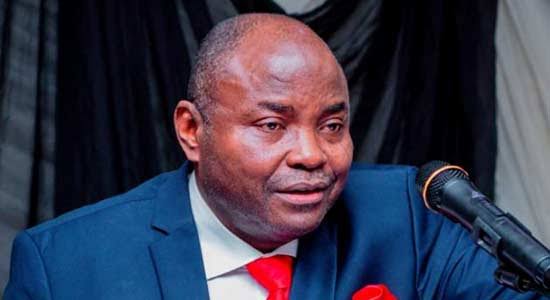
A Senior Advocate of Nigeria, Jibrin Samuel Okutepa, has warned Nigerian courts against allowing confessional statements to override established facts, arguing that an accused person cannot be convicted of an offence that never occurred, regardless of what he admitted in a statement.


Okutepa said the prosecution must first establish that the alleged crime was actually committed before relying on an accused person’s confession to secure a conviction.
In a legal commentary published on Wednesday, November 25, 2026, the senior lawyer challenged the tendency to treat confessional statements as conclusive evidence of guilt, stressing that admitting a confession in court does not automatically establish the truth of its contents.
He illustrated his argument with a hypothetical murder case, asking whether a person could legally be convicted of killing someone who is subsequently established to be alive simply because he confessed to the murder.
For Okutepa, the answer is clear: a confession cannot create a crime that never happened.
He acknowledged that Nigerian law permits courts to convict on a voluntary, direct, positive and unequivocal confession without independent corroboration. However, he said this principle does not exempt the prosecution from proving the essential ingredients of the offence beyond reasonable doubt.
Citing Sections 28 and 29 of the Evidence Act 2011, Okutepa explained that confessional statements must be subjected to legal scrutiny, particularly where questions arise about their voluntariness and reliability.
He also relied on the Supreme Court decisions in Fatai Busari v. The State, SC.364/2012, and Kasa v. The State (1994) 5 NWLR (Pt. 344) 269, as well as the judicial principles in R. v. Sykes (1913) 8 Cr. App. R. 233.
According to him, courts must examine whether a confession is possible, whether its details are consistent with established facts and whether the circumstances surrounding the alleged offence support the account given by the accused.
He clarified that the absence of a recovered body does not automatically defeat a murder prosecution where other credible evidence establishes that the victim died and the accused was responsible.
However, he said the situation is fundamentally different where credible evidence establishes that the supposed victim is alive.