

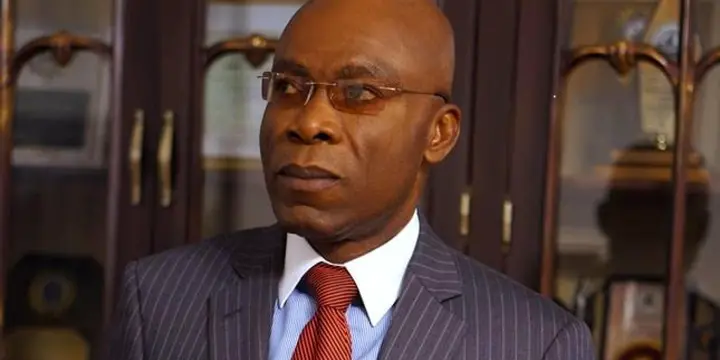

The police have been ordered to pay the Chief Executive Officer of Citadel Oracle Concepts Limited, Benjamin Joseph, ₦10 million and publicly apologise for unlawfully arresting and detaining him for seven days over a dispute involving Zinox Technologies Limited.
In a judgment that exposes serious lapses in the police handling of the case, the High Court of the Federal Capital Territory, Abuja, ruled that Joseph’s arrest and detention violated his constitutional right to personal liberty.
Justice Mohammed Zubairu, who delivered the judgment on October 28, 2026, also nullified a remand order obtained five days after Joseph was arrested, declaring that it could not retrospectively legitimise his detention.


The court directed the Inspector-General of Police and the Nigeria Police Force to publish a written apology to Joseph in a national newspaper within 14 days.
But in a twist that separates police culpability from the allegations against the technology company, the court cleared Zinox Technologies and the Attorney-General of the Federation, ruling that Joseph failed to establish their direct involvement in the violation of his rights.
Joseph was arrested on January 25, 2024, and detained until February 1, following a criminal complaint connected to the dispute involving Zinox.
He subsequently approached the court, accusing the company of using the police to facilitate his arrest.
He demanded ₦5 billion in damages, public apologies and protection against further arrest or harassment over the allegations.
However, the court’s examination of the police documents exposed conflicting accounts of the complaint and the legal grounds for keeping him in custody.
One of the most damaging findings was the police’s failure to produce an arrest warrant allegedly issued by Chief Magistrate Vincent Gwahemba of Karu, Nasarawa State.
Although the police claimed the arrest was authorised by a warrant, Justice Zubairu said no such document was tendered to substantiate their position.
The judge also questioned the reliance on a remand order issued on January 30, five days after Joseph had been taken into custody.
He held that a judicial order obtained after the commencement of detention could not cure the illegality of the preceding five days.
The court further uncovered inconsistencies in the allegations underpinning the detention.
While the remand order cited cyberstalking under Section 24 of the Cybercrimes Act, the direct criminal complaint presented before the court was based on criminal defamation.
There were also conflicting accounts over whether the complaint originated from Zinox Technologies or Senior Advocate of Nigeria, Simon Lough.
Justice Zubairu said the different accounts did not provide a consistent legal foundation for Joseph’s detention.
The police also failed to convince the court that the seven-day detention was necessary for any genuine investigative purpose.
They did not present an investigation report, a statement obtained from Joseph or documentary evidence of investigative steps taken while he was in custody.
The judge stressed that the power to detain a suspect pending investigation could not be used as a cover for arbitrary deprivation of liberty.
Relying on Section 35 of the 1999 Constitution, he declared that the arrest and detention breached Joseph’s fundamental rights.
Zinox Escapes Liability
Despite the damning findings against the police, the court rejected Joseph’s attempt to hold Zinox Technologies responsible for the arrest.
The company, through its counsel, Matthew Burkaa, SAN, denied being the complainant whose petition triggered the police action.
Justice Zubairu held that Joseph failed to present documentary evidence showing that Zinox directed, requested or procured his arrest.
He also found no established communication between the company and the police linking it to the arrest.
The judge explained that reporting suspected criminal conduct to law enforcement authorities does not, by itself, make a complainant liable for an arrest.
He consequently struck out the case against Zinox for want of a reasonable cause of action.
The Attorney-General of the Federation was similarly absolved because Joseph failed to establish any involvement by the office in his arrest or detention.
Why N5bn Demand Failed
Although Joseph sought ₦5 billion in compensation, the court settled for ₦10 million.
Justice Zubairu described the amount demanded as excessive and unsupported by evidence of financial losses.
He said the award was sufficient to reflect the gravity of the violation, particularly the seven days Joseph spent in detention without a valid judicial order covering the initial five days.
The court, however, refused to grant a perpetual injunction against future arrests, explaining that the judgment did not strip the police of their lawful powers to investigate crimes and arrest suspects where reasonable grounds exist.
The Inspector-General of Police and the Nigeria Police Force were ordered to jointly pay the ₦10 million and publish the apology within 14 days.
The suits against Zinox Technologies and the Attorney-General of the Federation were struck out, with each party directed to bear its legal costs.
The police authorities were not represented in court during the proceedings.