

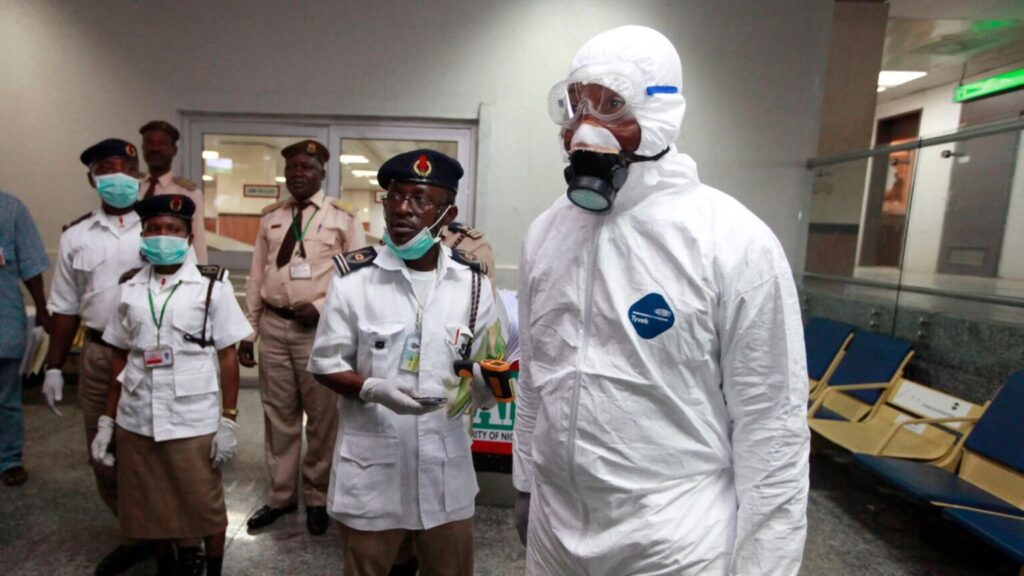

The Federal Government is tracing 44 contacts of Nigeria’s newly confirmed Ebola patient in Abuja, as health experts warn that delayed detection could trigger further infections and disrupt economic activities ahead of the festive season.
The patient, a woman who arrived in Nigeria on an international flight from Uganda, was treated at a private hospital in the Federal Capital Territory for several days before laboratory tests confirmed the infection on October 20.
The Coordinating Minister of Health and Social Welfare, Prof. Muhammad Ali Pate, said the government had activated emergency response measures involving the Nigeria Centre for Disease Control and Prevention (NCDC), the FCT Health Services Secretariat and other agencies.
The contacts include healthcare workers, patients, caregivers and travel contacts who may have been exposed. Authorities have intensified surveillance and directed hospitals nationwide to promptly identify, isolate and report suspected cases.
Infectious disease experts have urged the government to prioritise contact tracing, rapid diagnosis and public enlightenment rather than impose blanket travel restrictions without evidence of their necessity.
Dr Oladipo Elijah Kolawole, an associate professor of infectious diseases at Adeleke University, Ede, said enhanced surveillance at airports, land borders and transport hubs would be crucial to containing the outbreak.
He cited Nigeria’s successful response to the 2014 Ebola outbreak, stressing that accurate information and public cooperation were essential to preventing panic.
Similarly, Dr Ubong Okon, a technical adviser on epidemiology at APIN Public Health Initiatives, said Nigeria had strengthened its disease surveillance capacity since 2014 but needed to intensify contact tracing and infection prevention.
Okon warned that the 44 contacts identified so far might not represent every possible exposure.
“There may be more than those, more than this number of contacts that we mentioned. The question now is, are we able to try and get these contacts?” he asked.
He urged public and private hospitals to remain vigilant and called for renewed public education and improved handwashing facilities.
Kenyan consultant pathologist Dr Ahmed Kalebi also warned that delays in diagnosis could expose healthcare workers, caregivers and other patients to infection. He urged authorities to strengthen hospital surveillance and monitor everyone who might have been exposed.
However, he cautioned that the patient’s arrival from Uganda did not establish where she contracted the virus.
Meanwhile, the Africa Centres for Disease Control and Prevention has called for urgent international assistance, including funding, medical supplies, diagnostic equipment and trained emergency responders.
Its Director-General, Dr Jean Kaseya, commended Nigeria for reporting the case promptly and urged partners to support efforts to prevent further transmission.
The outbreak has also raised concerns about businesses that depend on festive-season spending. Tourism, hospitality and entertainment generated more than $71.6m in reported revenue in Lagos during the 2024 Detty December celebrations, according to figures published by The Guardian.
A prolonged outbreak could affect hotels, restaurants, transport operators and entertainment businesses if fear of infection discourages travel and reduces customer spending. The World Bank warned during the 2014 West African epidemic that fear could disrupt economic activity beyond areas experiencing significant transmission.
Nigeria recorded 20 cases, including 19 confirmed and one probable case, during its 2014 outbreak, with eight deaths. The World Health Organisation declared the country free of Ebola transmission on October 20, 2014, after 42 days without a new case.
The Federal Government has urged Nigerians to remain calm, avoid spreading rumours and cooperate with health officials.
Ebola spreads through direct contact with the blood or other bodily fluids of an infected person who has developed symptoms, or through contaminated materials. Symptoms may include fever, headache, fatigue, vomiting and diarrhoea.
Anyone who suspects exposure should contact public health authorities promptly, while people who develop symptoms after possible exposure should avoid close contact with others and seek guidance from health officials.
Authorities say investigations and contact tracing are continuing, with rapid identification of exposed persons critical to containing the outbreak.