


By Friday Idachaba,
The Federal Government has commenced moves to incorporate mental health, emotional intelligence and psychological leadership into Nigeria’s foreign service as part of efforts to strengthen diplomacy, governance and regional cooperation across Africa.
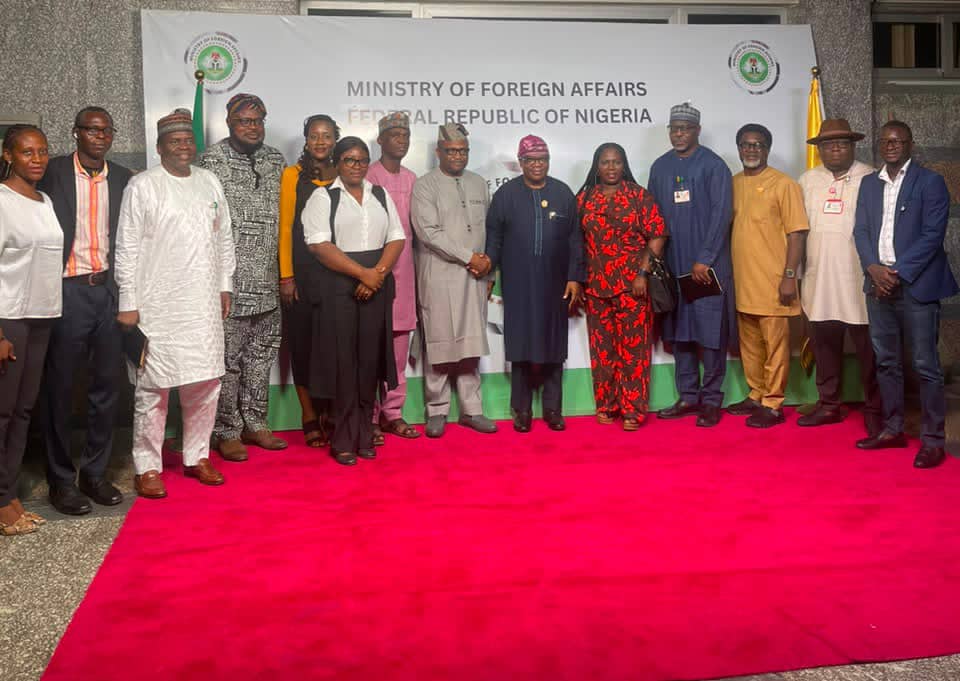
The Minister of State for Foreign Affairs, Ambassador Sola Enikanolaiye, disclosed this in Abuja when the President of the Pan African Psychology Union (PAPU), Professor Andrew Zamani, paid him a courtesy visit.


The meeting, attended by senior PAPU officials and representatives of the Nigerian Psychological Association, FCT Chapter, led by its Chairman, Adejoh Victor, focused on advancing collaboration in mental health, leadership development and diplomatic engagement.
It explored the adoption of the “Bridging Leadership” approach to improve staff capacity within the Foreign Affairs sector through psychological well-being, emotional intelligence, self-awareness and collaborative leadership.
Participants stressed that the increasing complexity of regional and continental challenges demands leaders who are emotionally resilient, culturally sensitive and capable of building trust and cooperation across institutions, communities and national boundaries.
Speaking during the meeting, Ambassador Enikanolaiye reaffirmed the Federal Government’s commitment to deepening relations among African countries through inclusive leadership, mutual trust and strategic partnerships.
He noted that effective diplomacy is strengthened by sound mental health, self-awareness and the capacity to foster collaboration among governments, institutions and citizens.
The Minister also welcomed closer collaboration between the Ministry, PAPU and the Nigerian Psychological Association to develop programmes that would enhance the well-being, leadership capacity and professional effectiveness of foreign service officers and other public officials.
Speaking earlier, Prof. Zamani said PAPU remained committed to promoting psychology as a critical tool for peacebuilding, conflict prevention, good governance and sustainable development across Africa.
He urged African governments to leverage the expertise of “licensed psychologists” in designing policies and programmes that strengthen mental health, organizational effectiveness, and leadership within public institutions and agencies responsible for foreign affairs.
Zamani, a Professor of Clinical Psychology at Nasarawa State University, Keffi, further advocated exploration of opportunities for joint initiatives to develop trauma-informed, psychologically responsive and culturally relevant capacity-building programmes for diplomats and government officials.
The collaboration, he added is expected to contribute to stronger regional integration, improved diplomatic engagement, and enhanced psychosocial support systems across Africa.
Participants expressed optimism that such partnerships would boost regional integration, improve diplomatic engagement and strengthen psychosocial support systems across the continent.
The PAPU delegation included Prof. Agatha Ogwo of Baze University, Abuja, Dr Simon Jurbe, Dr Ezekiel Onibiyo, Mary-Ann Ogbodo, Grace Edibo, Adeoluwa Olugbenge, Fagade, Charity Akor and Munirah Alhassan.
The meeting ended with a shared commitment to positioning mental health and psychology as strategic pillars for effective public leadership, peace, regional cooperation and sustainable development in Africa. (Ends)