

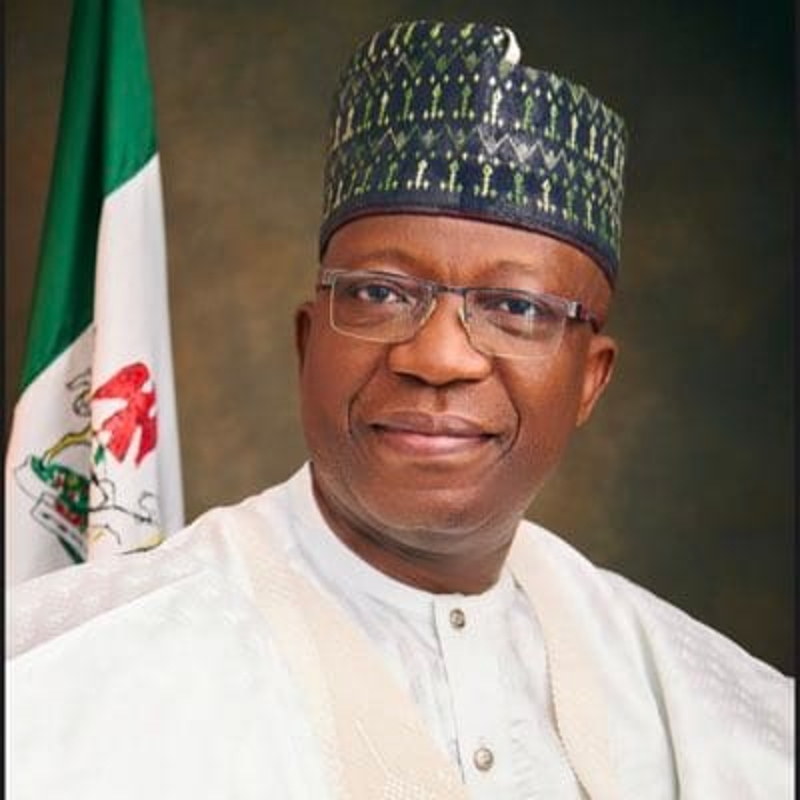

***Highlights institutional reforms, says people-centred management is key to sustainable growth
The Director-General of the National Institute for Legislative and Democratic Studies (NILDS), Prof. Abubakar O. Sulaiman, has challenged public office holders to measure their leadership by tangible results, institutional growth and improved human capacity rather than the prestige of their positions.
Sulaiman said effective leadership required the courage to make difficult decisions, manage competing interests and build institutions capable of delivering lasting benefits to society.
He spoke at the International Leadership Summit at the University of Brighton, United Kingdom, on October 14, 2026, where he delivered a keynote address titled “Leadership in Practice: Making Decisions, Managing People and Delivering Results.”
Drawing on his experience in academia, public service and institutional management, the former Minister of National Planning identified evidence-based decision-making, people-centred management and results-oriented execution as the foundations of effective leadership.
“Titles confer authority, but only character, competence and vision confer leadership,” he said.
Using NILDS as a case study, Sulaiman outlined reforms undertaken under his leadership to expand the institute’s operations, strengthen its institutional capacity and improve staff development despite financial and infrastructural challenges.
He recalled that when he assumed office in May 2019, the institute’s permanent complex remained unfinished after years of delay.
Following his reappointment in April 2023, he said he led the workforce to the completed complex on May 25, 2023, describing the relocation as a significant milestone in NILDS’ development.
He said the achievement provided a stronger institutional foundation for the institute’s work in legislative education and democratic development.
“Leadership, at its core, requires the courage to confront what is difficult rather than simply manage what is convenient,” he said.
Sulaiman disclosed that his administration had expanded NILDS from four operational departments to 13 professionalised departments to accommodate its growing responsibilities.
The institute also established the Legislative Centre for Security Analysis, the Centre for Advanced Executive Education Programme and Democracy Radio in 2023 to strengthen research, executive education, security analysis and public engagement.
On institutional management, he said NILDS had decentralised decision-making by empowering departmental heads to lead their teams within an accountability framework.
He warned that excessive centralisation could undermine institutional growth, stressing the need to give capable personnel the authority to make decisions while holding them accountable for results.
Sulaiman also highlighted staff development as a key component of the institute’s reforms, saying annual training programmes had increased from approximately 13 to 60.
He added that NILDS had delivered more than 200 capacity-building programmes in seven years, training over 3,000 legislators, parliamentary staff and public officials.
Other achievements, according to him, included partnerships with more than 20 universities and development organisations, strengthened legislative capacity across the 36 state Houses of Assembly and expanded initiatives to support women’s political leadership.
The NILDS director-general said staff welfare, professional development and career progression were essential to building an institution capable of fulfilling its mandate.
“An institution that does not care for its people cannot expect them to care deeply for its mission,” he said.
He also highlighted programmes designed to prepare young Nigerians for careers in governance, including legislative-drafting internships for young lawyers and professional development opportunities for more than 60 National Youth Service Corps members annually.
According to him, NILDS absorbs its best-performing corps member each year, subject to demonstrated merit and capacity.
Sulaiman urged leaders to look beyond personal accomplishments and focus on building institutions that would remain effective long after their tenure.
“The ultimate measure of leadership is not how much an individual accomplishes while in office, but how much stronger the institution becomes because that individual served there,” he said.
He maintained that leaders should prioritise institutional purpose over popularity, invest in people and measure success by lasting results.
He added that Africa needed leaders committed to strengthening democratic institutions, improving public service delivery and creating opportunities for citizens.
Caption: Sulaiman urges leaders to prioritise results, institutional growth and people-centred management.