

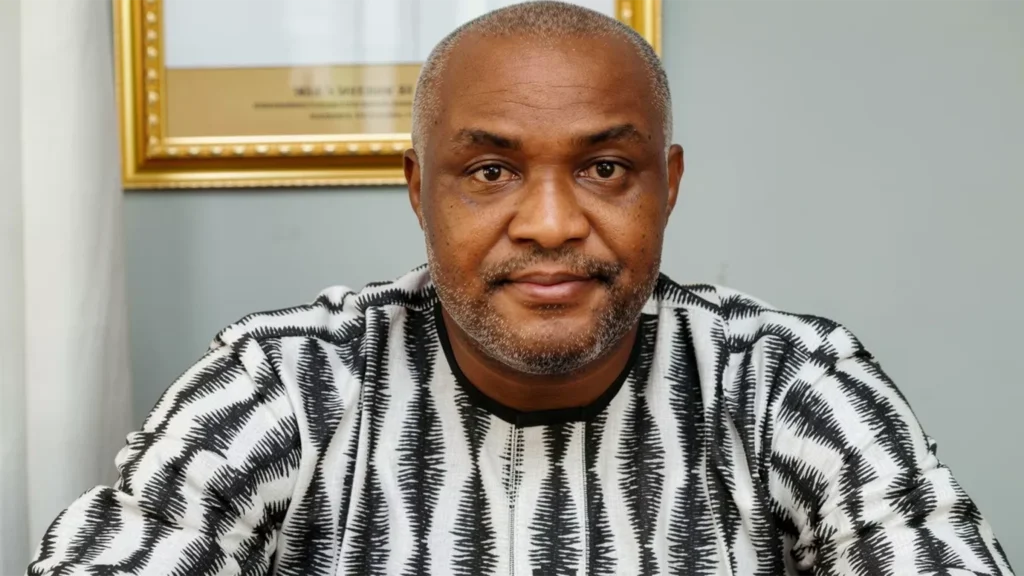

The Human Rights Writers Association of Nigeria (HURIWA) has warned the Federal Government against what it described as the dangerous mortgaging of Nigeria’s future crude oil production to meet present financial pressures.
HURIWA said the reported commitment of about 340 million barrels of future crude production to service three oil-backed loans valued at approximately ₦11.2tn raises serious concerns about fiscal responsibility, transparency and intergenerational justice.
The organisation said borrowing against future oil production may provide temporary liquidity, but could leave future generations with fewer national assets and a heavier debt burden if the funds are not deployed productively.

HURIWA National Coordinator, Comrade Emmanuel Nnadozie Onwubiko, likened the practice to a father selling the family’s most valuable assets to finance present needs while leaving his children with little to inherit.
“This is the danger Nigerians must confront.
“A father who sells the family’s prized assets to finance an extravagant lifestyle may enjoy temporary relief, but he leaves his children poorer and without an inheritance.
“The same principle applies when a government commits hundreds of millions of barrels of future crude simply to meet present financial pressures without demonstrating clearly what Nigerians are gaining in return.
“Borrowing against future oil production is not automatically illegal or inherently wrong. But when the scale becomes this enormous, Nigerians have every right to demand to know whether the country is receiving fair value and what future generations are being asked to surrender,” Onwubiko said.
HURIWA noted that crude oil is a finite national resource and argued that every barrel committed to debt repayment represents an economic asset that Nigeria permanently loses once produced and delivered.
The organisation therefore demanded that the Federal Government and the Nigerian National Petroleum Company Limited (NNPCL) disclose full details of the oil-backed financing arrangements, including amounts received, interest and other charges, crude volumes committed, pricing mechanisms, repayment schedules and outstanding obligations.
HURIWA also wants the authorities to explain what would happen to repayment obligations if crude production declines or market conditions change significantly.
The organisation said Nigerians must understand the opportunity cost of the arrangements, particularly if international crude prices rise substantially while Nigeria remains bound by previously agreed terms.
“Transparency is not optional when the resources being committed belong to the Nigerian people,” HURIWA said.
The rights group called on the National Assembly and relevant oversight institutions to subject all existing oil-backed financing arrangements to rigorous scrutiny.
It also demanded an assessment of whether Nigeria received commensurate value for crude already committed and whether adequate safeguards exist to prevent the misuse of future oil revenues.
HURIWA urged the government to move away from a fiscal model that repeatedly converts natural resources into short-term cash without building sufficient productive capacity.
The organisation said Nigeria’s oil wealth should instead be used to develop infrastructure, strengthen industries, create jobs and build sustainable sources of government revenue.
“We cannot continue to mortgage tomorrow’s resources simply because today’s finances are under pressure.
“Every government has a responsibility to manage national assets in a manner that protects both present and future generations.
“Nigeria’s oil wealth must be treated as a national asset, not simply as collateral for successive rounds of borrowing,” HURIWA said.