

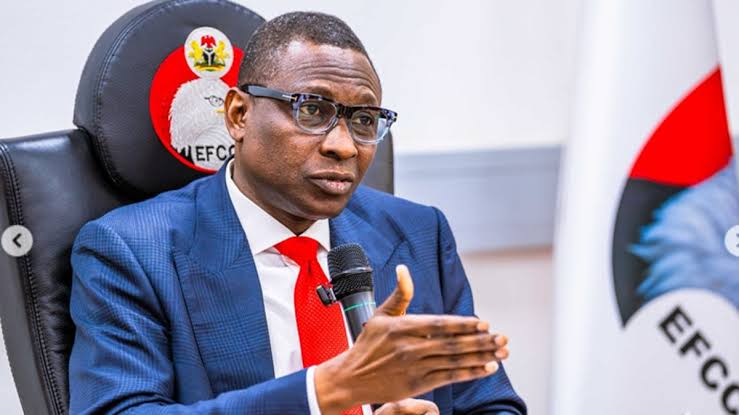
The Chairman of the Economic and Financial Crimes Commission, Ola Olukoyede, has alleged that about 75 per cent of government funds released for Christian and Muslim pilgrimages was stolen by officials entrusted with managing the programmes.
Olukoyede made the explosive disclosure in Abuja while speaking at the Nigeria Inter-Religious Council meeting and the presentation of the EFCC’s Interfaith Manual to religious bodies.
The EFCC boss said the alleged diversion was uncovered during investigations into the Christian and Muslim pilgrimage boards when he served in the commission.

He described the findings as “mind-boggling”, alleging that officials of the pilgrimage agencies diverted a substantial portion of public funds meant to sponsor religious pilgrimages.
Olukoyede further alleged that some officials established private companies in countries where Nigerian pilgrims travelled, creating what he described as criminal conflicts of interest.
He said the revelations should compel religious leaders to examine their own conduct before preaching accountability to their followers.
The EFCC chairman also warned pastors, imams and other faith leaders against mixing money belonging to religious organisations with their personal funds or businesses.
He said offerings, tithes, zakat and other contributions must be kept separately from personal resources.
“When money is paid to your organisation, don’t divert it to your business. That is criminal,” Olukoyede said.
The anti-graft czar challenged religious institutions to establish clear financial compliance systems so that leaders, treasurers and accountants would know exactly where institutional funds begin and personal money ends.
According to him, funds entrusted to religious leaders are held in trust for members of the faith and must be used for the purposes for which they were provided.
Olukoyede also turned his attention to unexplained wealth being brought into places of worship, warning religious leaders against accepting suspicious donations without questioning their sources.
He said it was unacceptable for a public servant to make a donation that appeared disproportionate to his legitimate earnings and for religious leaders to simply accept the money without asking questions.
The EFCC chairman said religious leaders risked giving moral legitimacy to corruption when they knowingly accepted questionable wealth and publicly blessed its donors.
He urged pastors and imams to become more active in the anti-corruption campaign, saying the battle against financial crimes should not be left to law enforcement agencies alone.
Olukoyede said corruption should not be protected by religion, ethnicity or political affiliation, stressing that alleged wrongdoing should be confronted regardless of who is involved.
He also rejected the idea that charitable donations could cleanse wealth allegedly obtained through the deprivation or suffering of others.
The EFCC boss called for a new social attitude in which legitimate wealth is respected, while illicit wealth loses its attraction and prestige within religious communities.
The presentation of the Interfaith Manual was part of the commission’s engagement with religious bodies on the role of faith communities in promoting integrity, accountability and the fight against corruption.