

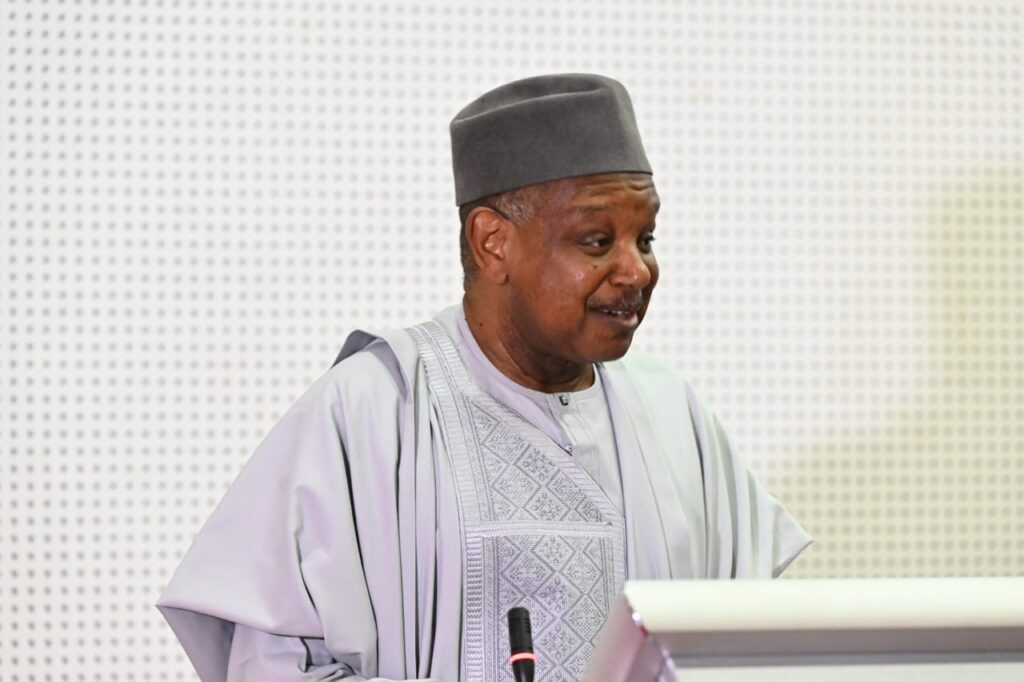

Minister of Budget and Economic Planning, Senator Abubakar Atiku Bagudu, has warned that Nigeria cannot deliver the scale of development it desires with a national budget that remains small compared with those of countries with similar populations.
Bagudu said Nigeria’s limited fiscal capacity was a more fundamental challenge than the controversies surrounding budget insertions, urging Nigerians to broaden the conversation around the size, funding and purpose of the national budget.
The minister spoke at a capacity-building workshop themed “Leveraging Legislative Oversight and Media Collaboration to Safeguard the National Budget from Unlawful Insertions.”
According to him, Nigeria has the smallest national budget among the world’s 10 most populous countries, raising questions about how the country expects to finance development on the scale required.
Using Brazil as a comparison, Bagudu said Nigeria has a population relatively close to that of the South American country but operates with a federal budget that is many times smaller.
“Do I expect to achieve the same outcomes as Brazil? Is it that these needs do not exist? I believe they do,” he said.
The minister said the debate should therefore move beyond whether the budget is being properly scrutinised to the bigger question of how much Nigeria needs to spend to transform its economy.
He said the Federal Government’s ambition of building a $1tn economy must be reflected in the size and structure of the national budget.
“The national budget should understandably be a product of that imagination,” Bagudu said.
He identified two possible approaches: continuing to prepare budgets around what government can currently afford or building the confidence, policies and public support required to mobilise substantially more resources.
Bagudu said the second approach would require difficult decisions on revenue mobilisation, investment and borrowing.
He, however, warned that government could not simply increase borrowing without securing public confidence.
“ If people do not support borrowing, the National Assembly will not allow borrowing,” he said.
The minister urged the media to help citizens understand Nigeria’s fiscal constraints and examine how countries that successfully transformed their economies expanded their revenue and financing capacity.
He said increased resources were required to address persistent deficits in education, security, roads, water and other critical sectors.
Bagudu also urged journalists to scrutinise alleged budget insertions without automatically assuming that every unusual project amounts to unlawful manipulation.
He said Nigeria’s federal structure means lawmakers often bring constituency-specific needs into the budget, some of which may not be immediately understood outside the affected communities.
He cited desertification, erosion, oil-related environmental degradation and inadequate access to water as examples of local challenges that could influence legislative priorities.
Bagudu recalled the controversy over the inclusion of freezers in the 2024 budget, saying further inquiry showed that the items were intended to help women in a fishing community preserve their catch.
He stressed that the explanation was not a defence of every legislative expenditure but an argument for evidence-based scrutiny.
“Without asking, you can come to judgment,” he said.
The minister said budget preparation and implementation involved several layers of human activity and that discrepancies could occur without necessarily amounting to deliberate manipulation.
He urged lawmakers and journalists to remain vigilant while distinguishing between errors, legitimate constituency needs and unlawful insertions.
Bagudu also called for a more nuanced debate over the amount of information government should disclose in budget documents, particularly where national security is involved.
He acknowledged the importance of transparency and citizens’ right to know but said indiscriminate disclosure of sensitive information could expose government operations to exploitation.
He also challenged the tendency to judge budget performance mainly by capital projects, arguing that recurrent expenditure was essential to keeping public services running.
According to him, salaries for teachers, security personnel and health workers should not automatically be regarded as less important than physical infrastructure.
“If I am fighting a war and I don’t pay security, what happens?” he asked.
Bagudu also defended debt-service payments as a necessary part of fiscal management, warning that failure to honour obligations could increase borrowing costs and eventually affect businesses.
He said Nigeria must therefore balance recurrent obligations with infrastructure needs while exploring greater private-sector participation in financing major projects.
The minister further cautioned journalists and lawmakers against allowing artificial intelligence to replace human judgment.
He said AI should help users ask better questions rather than supply conclusions that go unquestioned.
“AI should help us ask the right questions rather than conclusive questions,” he said.