


By Emmanuel Nnadozie Onwubiko
For a media practitioner and a Catholic, Thursday, September 24, 2026, will remain a remarkable day.
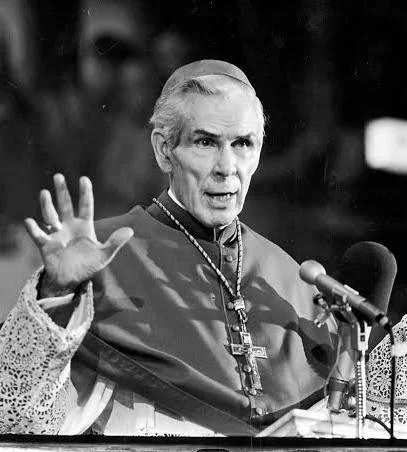
It was the day the Catholic Church formally beatified Archbishop Fulton J. Sheen, one of the world’s best-known Catholic clerics and one of the pioneers of using modern mass media as an instrument of evangelisation.


The significance of the occasion, however, went beyond the beatification of an eminent American churchman.
To me, the event represented something much broader: a moment when the Church appeared to remind the contemporary media world of the enormous responsibility that accompanies the power of communication.
That is why I describe September 24, 2026, as “the day the Church ‘blessed’ the media.”
Archbishop Sheen’s ministry demonstrated decades ago that radio and television could be used not merely for entertainment, commercial purposes or political messaging, but also for education, moral reflection, intellectual engagement and the communication of faith.
His beatification therefore offers an opportunity for journalists and media practitioners across the world to reflect on the responsibilities that come with the extraordinary power of the modern media.
The timing was also striking.
Only a day before the beatification, Pope Leo XIV paid tribute to the late Archbishop, highlighting his pioneering work in evangelisation through radio and television.
At his General Audience in St Peter’s Square, the Pope said:
«“Tomorrow in Saint Louis, Missouri, Venerable Fulton Sheen will be beatified.”»
He continued:
«“May the example and intercession of this holy bishop, known for his evangelizing work through the media, inspire many others likewise to find new ways of spreading the Gospel message with joyful enthusiasm.”»
The beatification Mass subsequently took place on Thursday afternoon, September 24, at The Dome at America’s Center in St Louis, Missouri.
Cardinal Luis Antonio Tagle, Pro-Prefect of the Dicastery for Evangelization, presided over the celebration.
According to information released ahead of the ceremony, thousands of pilgrims, bishops and priests were expected to gather for the historic occasion.
When the Church and the media intersect
The beatification of Archbishop Sheen occurred against the background of an extraordinary contemporary debate about the relationship between political power and the media in the United States.
President Donald J. Trump, who has frequently criticised news organisations that he considers hostile to his administration, also issued a message honouring Archbishop Sheen.
That coincidence deserves reflection.
Trump’s administration had been involved in a dispute with media organisations over access to the White House. The controversy raised questions about presidential authority, press access and the constitutional relationship between government and the news media.
At the same time, the United States was receiving Chinese President Xi Jinping, while the country continued to debate issues concerning press freedom and the treatment of journalists by governments around the world.
These developments created an unusual juxtaposition.
On one side was a Catholic archbishop whose extraordinary ministry demonstrated how powerful mass communication could become when placed in the service of evangelisation.
On the other was a contemporary political environment in which the relationship between political leaders and the press remained intensely contested.
It is this coincidence that makes the beatification particularly significant to me as a journalist and Catholic.
The Church was honouring a man who understood the power of the media at precisely the moment when journalists and political leaders were again debating who should have access to the public’s information and who should control the channels through which citizens receive it.
Trump honours the media pioneer
In his presidential message on the beatification, President Trump and First Lady Melania Trump celebrated Sheen’s life and legacy.
Trump described Sheen as:
«“The Catholic priest who pioneered the use of media to speak the truth, preach the Gospel, and bring many souls closer to Christ.”»
The President also recalled Sheen’s remarkable broadcasting career, noting that he spent more than two decades teaching, lecturing and broadcasting on radio before becoming an auxiliary bishop of New York.
Trump’s statement highlighted Sheen’s famous television programme, Life Is Worth Living, which brought the Catholic bishop into millions of American homes.
According to the presidential message, Sheen used a simple television set, a chalkboard and his distinctive preaching style to address theological, philosophical and social questions.
He became a national television personality and won an Emmy Award.
Trump’s statement said Sheen’s programme attracted an estimated 30 million weekly viewers and described his broadcasting career as one of the most significant religious television successes in American history.
The President concluded his tribute by expressing hope that Sheen’s example would continue to inspire Americans to strengthen their spiritual and moral lives.
There is an important irony here.
A political leader who has often been involved in public confrontations with sections of the American media was, on this occasion, celebrating a Catholic bishop whose historic ministry demonstrated the enormous potential of mass communication.
That irony should not be lost on journalists.
Who was Fulton J. Sheen?
Fulton J. Sheen was born Peter John Sheen on May 8, 1895, in El Paso, Illinois, the eldest of four sons of Newton and Delia Sheen.
He later became known by his mother’s maiden name, Fulton.
Raised in a devout Catholic family, he developed an early vocation to the priesthood and was ordained for the Diocese of Peoria on September 20, 1919.
His intellectual abilities soon became apparent.
He was sent to Europe for advanced studies and, in 1923, earned a doctorate in philosophy from the Catholic University of Leuven in Belgium.
His academic formation would become an important part of his later public ministry.
Sheen believed that the truths of Christianity could be communicated intellectually without losing their spiritual character.
He was not simply a preacher.
He was a philosopher, theologian, author, teacher, priest and bishop who became one of the most recognisable Catholic communicators of the twentieth century.
The Holy Hour behind the microphone
One of the most remarkable aspects of Sheen’s life was the relationship between his public communication and his private spiritual discipline.
His ministry was not built solely around microphones, cameras and audiences.
He placed prayer at the centre of his life.
According to accounts of his life, Sheen maintained a daily Holy Hour before the Blessed Sacrament from the beginning of his priesthood.
He described this as:
«“the hour that makes my day.”»
That spiritual discipline informed his understanding of communication.
Before speaking publicly about Christ, Sheen believed that he needed to listen privately in prayer.
There is an important lesson here for journalists.
Communication is not merely about speaking.
It is also about listening, reflection, discipline and a commitment to truth.
From radio to television
Sheen’s media apostolate expanded significantly in the 1930s.
Beginning in 1930, he presented The Catholic Hour, a radio programme that brought Catholic teaching into homes across the United States.
His clear reasoning, engaging delivery and pastoral style attracted a huge audience.
His broadcasting career eventually moved to television.
In 1951, he began Life Is Worth Living, the programme that would make him a household name across America.
With little more than a chalkboard and his distinctive presentation style, Sheen discussed faith, morality, suffering, family life, human dignity, philosophy and social questions.
His audience extended beyond Catholics.
He also attracted Protestants, Jews and people who were simply interested in his intellectual and moral reflections.
This was the genius of his communication.
He understood that the media could become a bridge between complex ideas and ordinary people.
He could take theological and philosophical concepts and communicate them in language that millions could understand.
The media as a moral responsibility
This is perhaps the most important lesson of Sheen’s life for contemporary journalism.
The media possesses extraordinary power.
A journalist can build reputations or destroy them.
A television programme can educate millions or mislead millions.
A newspaper can expose corruption or become an instrument of propaganda.
A social-media platform can disseminate verified information within seconds, but it can also spread misinformation and disinformation at extraordinary speed.
Sheen’s example therefore challenges journalists to ask a fundamental question:
What are we doing with the power of communication that has been placed in our hands?
The answer cannot simply be that we are giving audiences what they want.
Journalism has a social responsibility.
It has a responsibility to truth.
It has a responsibility to fairness.
It has a responsibility to accuracy.
It has a responsibility to distinguish fact from opinion.
And it has a responsibility to challenge power when power threatens the public interest.
Sheen and the politics of his time
Sheen did not restrict his public commentary to explicitly religious subjects.
His television programmes also addressed social and political developments.
In the 1960s, he warned about what he regarded as destructive tendencies in American society.
In one of his later broadcasts, he spoke of what he described as:
«“a new type of violence that’s sweeping our country, our schools, and our streets.”»
He further warned against what he saw as the destruction of institutions and social structures, asking:
«“Can you build anything down?”»
He then offered his own answer:
«“You cannot… Let’s begin now to use the word ‘Up.’”»
And he concluded:
«“Up—up to God.”»
Whether one agrees with Sheen’s particular social analysis or not, his willingness to use a mass-media platform to engage questions of morality, society and public life demonstrates how seriously he regarded the responsibility of communication.
A remarkable episcopal ministry
In 1950, Sheen became National Director of the Society for the Propagation of the Faith.
He was appointed an auxiliary bishop of the Archdiocese of New York in 1951.
He later participated in the Second Vatican Council and, in 1966, was appointed Bishop of Rochester, New York.
He retired from that position in 1969 and subsequently received the title of Archbishop.
Throughout his later years, he continued writing, preaching, giving retreats and engaging in prayer.
His autobiography, Treasure in Clay, reflected on his life, ministry and spirituality.
His devotion to the Eucharist, the Cross and the Blessed Virgin Mary remained central to his spiritual identity.
John Paul II’s final tribute
One of the most memorable moments in Sheen’s later life occurred in October 1979, when Pope John Paul II met him at St Patrick’s Cathedral in New York.
According to accounts of the encounter, the elderly and physically weakened Archbishop attempted to kneel before the Pope.
John Paul II lifted him up, embraced him and told him:
«“You have written and spoken well of the Lord Jesus Christ. You are a loyal son of the Church.”»
The words were a fitting tribute to a man whose entire public ministry had been devoted to communicating the Christian message.
Sheen died on December 9, 1979, in New York City.
The road to beatification
The cause for Sheen’s canonisation was opened in the Diocese of Peoria in 2002.
A reported miracle attributed to his intercession involved a child who was born without a heartbeat or respiration and was subsequently revived.
The Vatican later approved the miracle, clearing an important canonical step toward beatification.
His beatification in St Louis on September 24, 2026, therefore represented the culmination of decades of devotion, investigation and ecclesiastical consideration.
The occasion also carried particular significance because of Sheen’s connection with the American Catholic experience and his pioneering use of mass communication.
The Church’s message to journalists
This brings me back to my central theme: the day the Church “blessed” the media.
The Catholic Church did not, of course, canonically bless every activity of the modern media.
Rather, through the beatification of a bishop whose apostolate was inseparable from radio and television, the Church highlighted the potential of modern communication to serve evangelisation and the common good.
That message has relevance far beyond Catholicism.
For journalists, Sheen’s life should provoke a renewed commitment to the fundamental principles of professional journalism.
Truthfulness.
Accuracy.
Objectivity.
Fairness.
Balance.
Accountability.
And above all, a commitment to the public interest.
Journalists must resist becoming instruments for misinformation, disinformation, propaganda or deliberate falsehood.
They must also resist the temptation to allow political loyalty, religious affiliation, ethnic identity, financial interests or personal relationships to replace professional judgment.
The journalist’s responsibility is not to please the powerful.
Neither is it to automatically oppose the powerful.
The responsibility is to establish the facts, ask difficult questions, give relevant parties an opportunity to respond, distinguish verified information from allegations and present the truth as accurately as possible.
That lesson is as important for American journalists as it is for Nigerian journalists.
A lesson for Nigeria
Nigeria’s media environment is extraordinarily vibrant.
Our journalists work in difficult circumstances and often face enormous pressure from political actors, business interests, security agencies and other powerful institutions.
Yet the solution cannot be to abandon professional standards.
The more powerful the political, economic or religious interests involved in a story, the more important accuracy, independence and verification become.
The life of Fulton J. Sheen demonstrates that mass communication can reach millions.
But the reach of communication creates an equally enormous responsibility.
The modern journalist possesses something Sheen could hardly have imagined in his lifetime: instant global distribution through digital platforms and social media.
That power must be accompanied by an equally strong commitment to truth.
The final lesson
Archbishop Fulton J. Sheen understood something fundamental about communication: people listen when a communicator speaks with conviction, clarity and intellectual discipline.
But the ultimate test of journalism is not how many people click on a story.
It is whether the information presented to those people is accurate.
The ultimate measure is not how loudly a journalist can attack an opponent.
It is whether the journalist has faithfully pursued the truth.
The ultimate achievement is not becoming famous.
It is using one’s platform responsibly.
That, for me, is the enduring lesson of the beatification of Fulton J. Sheen.
The Catholic Church has elevated a media pioneer to the status of Blessed.
For journalists, that should be an invitation to examine our own vocation.
In an age of fake news, misinformation, disinformation, propaganda, political manipulation and the rapid circulation of unverified claims, the world needs journalists who understand that communication is a public trust.
Fulton J. Sheen used radio and television to communicate his faith to millions.
Today’s journalists have even greater technological power.
The question is whether we will use that power to enlighten or manipulate; to inform or deceive; to hold power accountable or become its instrument.
That is why September 24, 2026, will remain significant to me.
It was the day the Catholic Church celebrated the beatification of one of history’s great media evangelists.
And, in doing so, it offered the contemporary media profession a powerful reminder:
The microphone is powerful. The camera is powerful. The newspaper is powerful. The digital platform is powerful. But with that power comes responsibility.
That is the real meaning, in my view, of “the day the Church ‘blessed’ the media.”
EMMANUEL NNADOZIE ONWUBIKO is the Founder of the Human Rights Writers Association of Nigeria (HURIWA) and a former National Commissioner of the National Human Rights Commission of Nigeria.