


BY: Mohammed Manga, Public Policy Analyst
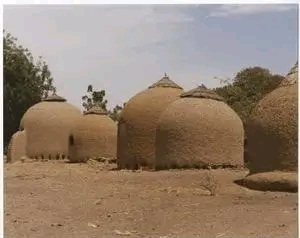
In the old granaries of Sokoto, the keeper does not open the door at the first knock. When harmattan presses and neighbours gather with empty bowls, he listens, he measures, he remembers who borrowed last planting and returned seed with thanks. The young men urge him to pour. The old keeper smiles and says, “Hunger that comes today was planted many seasons ago. The grain we give today must also plant tomorrow, otherwise we will gather here again, and again.” So he gives, but while giving, he separates — a portion for pot, a portion for seed, a portion for the child who will tend field when his own hands shake. That separation is not stinginess; it is how granaries survive drought.
That image has followed public service for generations. Societies that endure do not choose between compassion and capability; they make compassion produce capability. The granary that only empties becomes museum. The granary that only stores becomes cruelty.


Nigeria knows both sides of that granary. From Petroleum Trust Fund market stalls in 1995, to SURE-P maternal clinics in 2012, to National Social Investment Programme cash, school feeding and N-Power from 2016, to the renewed transfers after fuel subsidy reform in 2023, compassion has moved. Each wave answered real pain. To deny that movement would be untrue; to stop there would be unfinished.
In over three decades of public service, I learned that citizens do not ask whether government helped, they ask whether help helped them stand. A mother in Yenagoa does not count naira received, she counts whether her daughter stayed in school after receiving it. A farmer in Nsukka does not remember tonnage of fertilizer, he remembers whether extension officer came with it before rain, not after.
That shift — from counting what we give to counting what remains after giving — is where palliatives become human capital. And Nigeria has already shown it can be done.
When Home-Grown School Feeding began in 2016, it was called palliative. By 2019, Federal Government data reported by BusinessDay showed it was capability: 9.7 million pupils in 53,715 schools fed, enrollment rose by 20 percent nationwide, attendance rose, and 103,992 cooks — mostly women — found work. Systematic reviews of school feeding show 11 to 42 percent relative gains in enrollment where meal was consistent. That is compassion that kept child in class, not just filled stomach for a day. The lesson is sustainability — when meal arrives every morning, not some mornings, parents trust school enough to keep child there. When it stops, gain reverses. Capability requires continuity.
It begins with seeing clearly, without shame. In Morocco, programme Taysir began by linking school register to household; when attendance crossed threshold, transfer flowed. Impact evaluations reported by J-PAL and the World Bank found dropout 7.6 percentage points lower than comparison schools, re-enrollment almost doubled. The message changed from “prove you are poor” to “show you are in school.” In Philippines, 4Ps programme tied cash to growth monitoring at barangay health centre — not as condition to punish, but as signal that health is wealth. As Ibn Khaldun wrote, “The welfare of a people depends on their crafts and tools for living, not on bounty of ruler alone.” Clarity turns relief into record.
Then comes timing, which our elders call value itself. As an old Kanuri saying goes, “Water brought after fire has finished is not help.” Money that arrives in December cannot pay September school fees. When transfer aligns with school calendar, uniform is bought, not debt incurred. When drug fund arrives in first quarter, clinic does not ration in March. Flourishing begins when help keeps time with life, not with memo.
Then comes skill that outlives transfer. Mexico learned this after twenty years of Prospera. The IFPRI independent evaluation showed children gained on average about 0.7 years of extra schooling because of Progresa, and will have 8 percent higher lifetime earnings due to that schooling. Not because transfer was large, but because school was present, teacher was present, and mother was nudged to keep child there. Cash financed capability. In Colombia, Familias en Acción showed similar — secondary enrollment rose 8 percent, child labour fell. As Mother Teresa said simply, “Give them not only bread, but also wings.”
Why does this matter for GDP, jobs, poverty and health? Because the World Bank Human Capital Index 2023 shows a child born in Nigeria today will be only 36 percent as productive as he could be with full health and complete education, compared to 84 percent in frontier economies. The same literature shows each extra year of schooling raises earnings about 10 percent globally and cuts probability of poverty by about 9 percent. Jobs do not come from one-off support alone; they come from girl who stayed in school becoming nurse, cook becoming supplier, farmer who learned spacing hiring two boys. Health, jobs, poverty reduction — all start as capability kept in classroom and clinic.
Perhaps the quietest lesson is about the hand that delivers. A register is only as true as the teacher who marks attendance honestly, the nurse who records weight without favour, the extension worker who visits farm when road is bad. Those frontline keepers are the granary keepers. If they are paid late, supervised never, given paper instead of transport, even best policy leaks. When they are protected, policy holds.
If we listen to granary keeper of Sokoto, next chapter is clear. Keep register verified, keep transfer timed to school and planting seasons, keep frontline worker present. When those three hold, relief graduates to resilience.
For as the keeper says at dusk, closing granary door: the measure of harvest is not how much we poured out, but how many no longer need to knock.
Mohammed Manga is a public policy analyst and writes on governance and sub-national reforms. Email: mohammed.manga.policy@gmail.com