

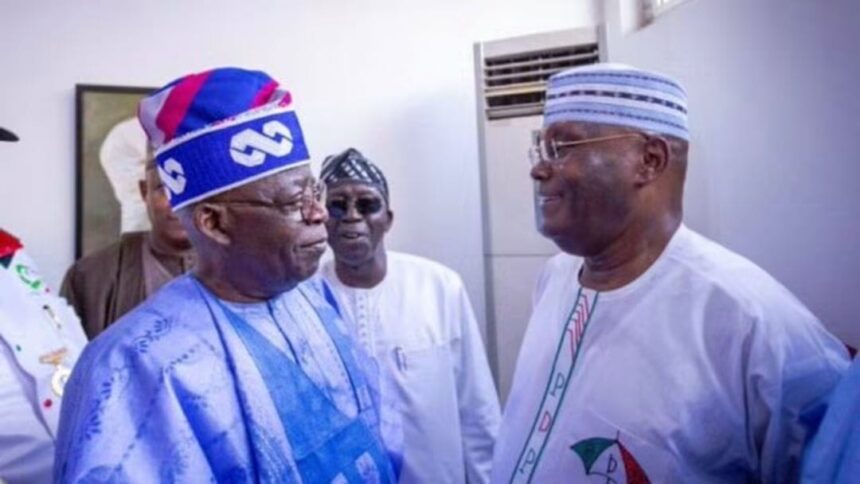
The Presidency has challenged former Vice President Atiku Abubakar to explain how he would fund his proposed fuel subsidy plan if elected president in 2027.
The government said any decision to restore petrol subsidy must clearly state its cost, funding source and legal basis.
Special Adviser to President Bola Tinubu on Information and Strategy, Bayo Onanuga, made the position known in a statement on Friday.

Onanuga said Atiku had the right to propose a different economic policy but argued that Nigerians must know the full implications of returning to fuel subsidy.
He said the previous subsidy system placed a heavy burden on government finances and was removed under the Petroleum Industry Act (PIA).
According to the Presidency, the PIA had already provided for the end of petrol subsidy by June 2023, while Tinubu only brought the policy forward by a few weeks.
The government also argued that Nigeria’s petroleum sector is no longer the same as it was before the subsidy removal.
It pointed to increased domestic refining capacity, including production by the Dangote Refinery, saying the country is gradually moving away from dependence on imported petrol.
The Presidency warned that a return to a broad subsidy system could put pressure on public finances and undermine investment in local refining.
It said the government would instead focus on policies aimed at reducing energy costs without returning to what it described as an opaque and costly subsidy regime.
The statement also cited the promotion of Compressed Natural Gas (CNG) as part of the government’s response to high fuel and transportation costs.
According to the Presidency, CNG can provide a cheaper energy option for taxis, buses and commercial vehicles.
The government asked Atiku to answer key questions about his proposal, including how much the subsidy would cost annually and where the money would come from.
It also asked whether the government would borrow to finance the programme and whether changes to existing petroleum laws would be required.
The Presidency further questioned how a new subsidy system would prevent the fraud and abuse associated with the previous arrangement.
It acknowledged that rising petrol prices have increased the burden on Nigerian households and businesses.
However, it maintained that the solution should be sustainable and based on Nigeria’s current economic and petroleum realities.
The Presidency urged political parties and candidates preparing for the 2027 elections to present Nigerians with clear details of how their proposed policies would be financed.
It said political promises should be supported by “fiscal arithmetic” rather than broad assurances.