


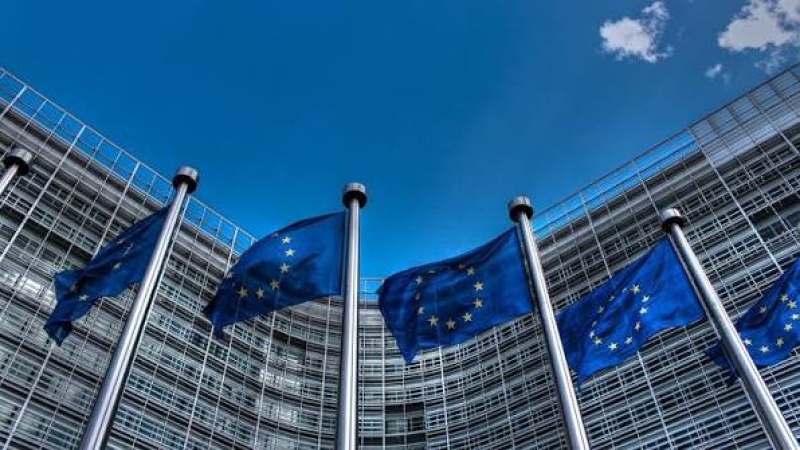
The European Union’s clarification that it will deploy a limited Electoral Expert Mission for Nigeria’s 2027 general elections, rather than a full-scale election observation mission, has failed to end concerns over the credibility of the country’s electoral process.
Instead, the controversy surrounding the EU’s role has triggered fresh scrutiny of the Independent National Electoral Commission (INEC), the security environment and the government’s commitment to ensuring a transparent and credible election in 2027.
The EU Delegation to Nigeria and ECOWAS said reports that it had withdrawn from observing the elections because of worsening insecurity and alleged hostility towards its officials were inaccurate.

In a statement signed by EU Ambassador to Nigeria and ECOWAS, Gautier Mignot, the delegation said it accepted INEC’s invitation but had decided to deploy a two-to-four-member Electoral Expert Mission (EEM).
The mission, it explained, would be formally accredited as observers by INEC and would assess the electoral process against international, regional and national obligations governing democratic elections.
The EU said the decision to deploy an EEM was based on its annual assessment of electoral missions, the circumstances of individual countries and available resources.
It also dismissed as “pure speculations” reports that insecurity and the alleged hostile treatment of its officials after its 2023 election report influenced the decision.
But the clarification came after the initial reports had already exposed the depth of anxiety surrounding the 2027 elections.
Opposition politicians and civil society groups swiftly interpreted the reported reduction in the EU’s presence as another warning sign about the state of Nigeria’s democracy, particularly coming ahead of an election that is already attracting intense political competition.
The Taminu Turaki-led Peoples Democratic Party (PDP) said the controversy reinforced concerns over what it described as weaknesses in election management under the All Progressives Congress (APC)-led Federal Government.
In a statement by its National Publicity Secretary, Ini Ememobong, the party alleged that the government had, since 2023, pursued measures capable of weakening opposition parties and making the 2027 election “uncontested in any meaningful sense.”
The PDP cited alleged crises in opposition parties, pressure on opposition governors and lawmakers, intimidation of political figures and inflammatory political rhetoric as evidence of what it described as an attempt to undermine genuine electoral competition.
It argued that the credibility of the electoral process was inseparable from the credibility of the 2027 election itself.
For the Human Rights Writers Association of Nigeria (HURIWA), the controversy was a reminder that insecurity remains one of the biggest threats to the next general elections.
Its National Coordinator, Emmanuel Onwubiko, said Nigeria must not allow terrorists and criminal groups to determine where citizens can travel, where candidates can campaign or whether voters can exercise their constitutional rights.
HURIWA warned that terrorists could effectively become the “invisible election observers” of 2027 if insecurity prevents voters, candidates and international observers from moving freely across the country.
The organisation urged President Bola Tinubu and the security agencies to intensify efforts against terrorism, banditry, insurgency and other violent crimes before the elections.
But security is not the only issue generating concern.
Questions are also emerging over INEC’s evolving results-management system and the extent to which Nigerians, political parties and election observers will be able to independently verify results in real time.
A coalition of 14 civil society organisations under the Nigerian Civil Society Situation Room has challenged INEC over the introduction of an electronic EC8A on the Bimodal Voter Accreditation System (BVAS) and a new backend validation process before results are published on the INEC Results Viewing Portal (IReV).
The groups argued that the 2026 Regulations and Guidelines for the Conduct of Elections do not adequately explain where data entered into the electronic EC8A will be transmitted or how it will interact with existing result-management procedures.
They also questioned the decision to subject transmitted results to a backend validation process that, they said, is not visible to polling agents, observers or the general public.
According to the coalition, the existence of the physical EC8A, scanned copies uploaded to IReV, results retained on BVAS and electronically transmitted e-EC8A could create multiple versions of the same polling-unit result.
That, it warned, could generate confusion and create opportunities for manipulation if discrepancies arise.
The CSOs therefore called on INEC to abolish the backend validation of transmitted results before publication on IReV or subject the process to independent and public scrutiny.
They also demanded a comprehensive results-transmission protocol explaining how results would move from polling units through the electronic system to final publication.
The controversy is particularly significant because the forthcoming Osun election is expected to provide an early test of the upgraded results-management system before the 2027 general elections.
While the EU has now made clear that it is not abandoning Nigeria’s electoral process, its decision to deploy a smaller expert mission rather than a full observation mission has nevertheless placed renewed attention on the country’s electoral environment.
The immediate controversy may have been settled by the EU clarification, but the larger questions remain: whether INEC can command public confidence, whether security agencies can guarantee a safe electoral environment, whether election results can be independently verified and whether political actors will accept the outcome of the 2027 polls.
