

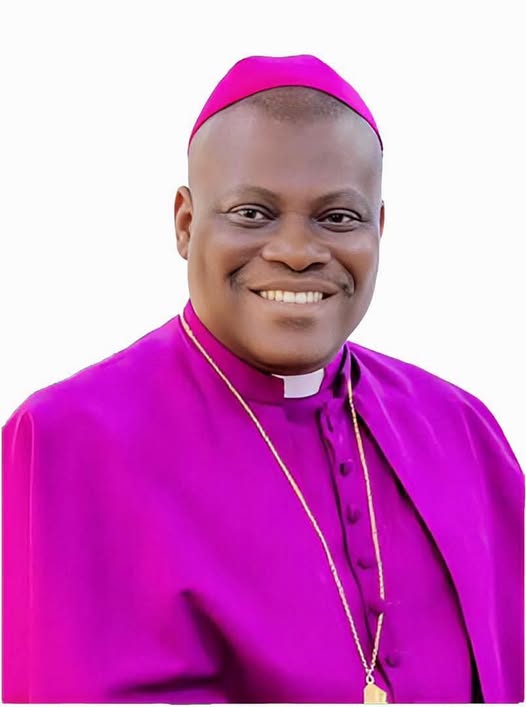

Former Minister of Youth and Sports, Solomon Dalung, has challenged the recent criticism of Catholic Bishops by Bishop Stephen Adegbite, questioning the independence of a government-appointed Christian leader who has repeatedly defended President Bola Tinubu’s administration.
Dalung, in a strongly worded intervention, said Nigerians should scrutinise Adegbite’s relationship with the Tinubu government before accepting his portrayal of Catholic Bishops as politically motivated for criticising the administration.
He said the issue was not about religion, denomination or ethnicity, but about the credibility and independence of public interventions by religious leaders.


Adegbite is the Executive Secretary of the Nigerian Christian Pilgrim Commission, having been appointed to the position by President Tinubu in January 2024 for an initial five-year term. He also serves as Chaplain of the Aso Rock Villa Chapel and Chairman of the Lagos State chapter of the Christian Association of Nigeria.
Dalung acknowledged that Adegbite had every right to support the President, defend his policies and express confidence in the administration.
However, he argued that such proximity to government made it legitimate for Nigerians to scrutinise his criticisms of other Christian leaders who had taken a different position.
“Bishop Adegbite has every right to defend the government,” Dalung said. “But Nigerians have the right to examine both positions.”
The former minister challenged Adegbite to produce evidence if he believed the Catholic Bishops had lied about insecurity, exaggerated the suffering of Nigerians or deliberately misrepresented the performance of the Federal Government.
“If the Catholic Bishops have lied about insecurity, let Bishop Adegbite tell us precisely what they lied about. If they exaggerated the suffering of Nigerians, show us where. If their intervention was politically motivated, establish it,” he said.
Dalung maintained that disagreement with the Catholic Bishops was legitimate, but alleged political motivation was a more serious claim requiring evidence.
He said criticising a government should not automatically be interpreted as hostility towards the President, arguing that religious leaders have a responsibility to speak on issues affecting society regardless of who occupies the Presidency.
According to him, the Catholic Bishops have the right to question the Tinubu administration just as Adegbite has the right to defend it.
“What is important is independence and credibility,” he said.
Dalung also took aim at what he described as Nigeria’s growing culture of equating support for government with patriotism and criticism with disloyalty.
“We have become so accustomed to partisan politics that we now seem to believe that anybody who criticises government must be an enemy of government, while anybody who praises government must be patriotic,” he said.
“That is not how democracy works.”
The former minister said the true test of a religious leader’s moral authority was not the ability to praise those in power, but the courage to confront them when they were wrong.
“I would have no problem with Bishop Adegbite praising Tinubu today if he believes Tinubu deserves praise,” Dalung said.
“But I would be much more impressed if tomorrow, when Tinubu gets something fundamentally wrong, he can stand before that same government and say: ‘Mr President, on this matter, you are wrong.’
“That is where moral authority is tested. Not when you praise the powerful, but when you have the courage to correct them.”
Dalung further warned against allowing partisan politics to influence the role of the Church in society.
“The Church should not be a government department. It should not be an opposition party either. It should be the conscience of society,” he said.
He insisted that religious leaders must remain free to criticise or commend governments based on their assessment of national realities rather than political allegiance.
The former minister, who acknowledged his opposition to the Tinubu administration, said he wanted the government questioned, scrutinised and its claims subjected to public examination.
However, he said his position went beyond partisan politics, insisting that Nigerians must preserve the freedom of religious leaders to speak truth to power.
Dalung ultimately posed a question he said should concern Nigerians: whether the Catholic Bishops were being criticised because they were wrong or because they had refused to tell those in power what they wanted to hear.
“Are the Catholic Bishops really the problem because they criticised the government, or are we simply uncomfortable with anyone who refuses to tell power what it wants to hear?” he asked.
He warned that when government becomes so comfortable that the pulpit begins defending it against legitimate criticism, Nigerians should be concerned.