

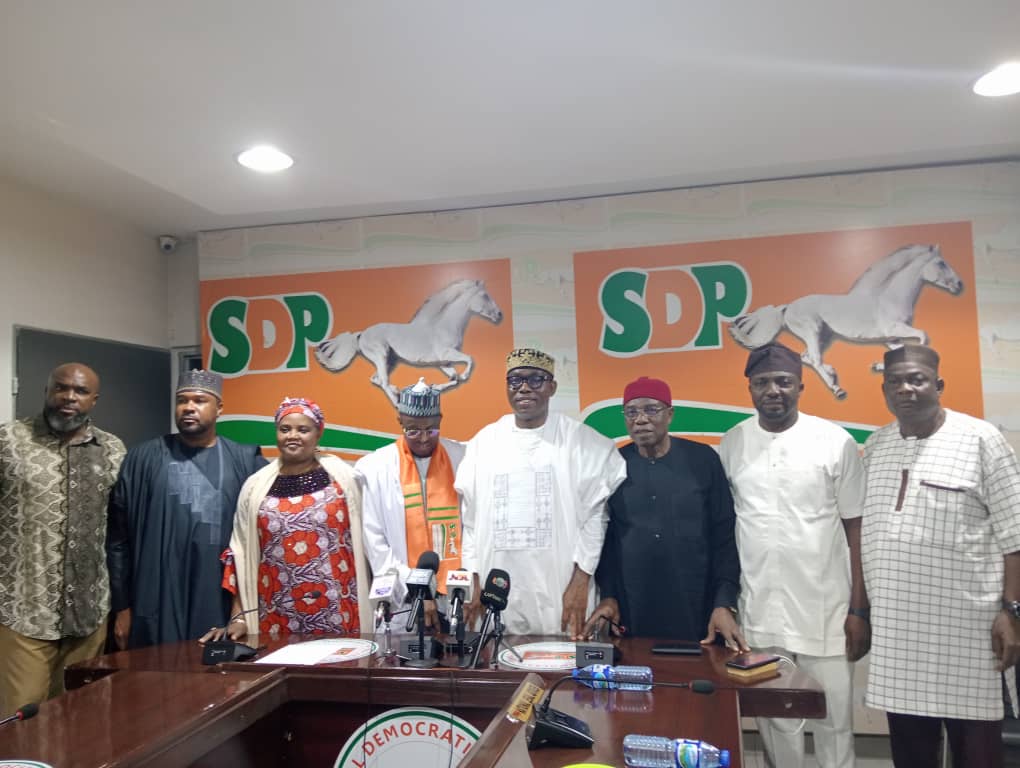

The presidential candidate of the Social Democratic Party (SDP) has described President Bola Ahmed Tinubu’s directive ordering the Economic and Financial Crimes Commission (EFCC) to vacate the freezing of the Osun State Government’s accounts as a breach of the Constitution, insisting that the President—not the anti-graft agency’s chairman—should resign over the controversy.
Reacting to calls for the resignation of EFCC Chairman Ola Olukoyede, the SDP standard-bearer argued that the commission merely exercised powers granted to it under the law by obtaining a court order, while the President’s intervention amounted to executive interference in a judicial process.
According to him, the constitutional violation lies not in the EFCC’s action but in the President’s directive reversing a court-backed process.
“The person who should resign is President Bola Ahmed Tinubu. I don’t have enough evidence to suggest that the EFCC chairman should resign. The only person who is at fault here is the President himself.”
He maintained that if the Osun State Government considered the freezing order unlawful, the proper course was to challenge it before the courts rather than seek executive intervention.
Describing the President’s action as unconstitutional, he said:
“If EFCC wrongly froze the account of Osun State Government, there are legal remedies… The President ordering the EFCC is already an impeachable offence because EFCC is part of the legal process in Nigeria.”
The SDP candidate stressed that anti-corruption institutions must be allowed to operate independently, warning that political directives overriding judicial processes undermine constitutional democracy and the rule of law.
He said he has consistently defended law enforcement institutions, including the EFCC, the Nigeria Police Force, the Department of State Services and the Armed Forces, arguing that disputes over their actions should always be resolved through legal channels rather than executive fiat.
The opposition flag bearer further pledged that under his administration, the EFCC would enjoy operational independence and would not be subjected to political pressure.
“When we come to government, the EFCC chairman will not be disturbed. He will be free to act within the law.”
He concluded by calling on Nigerians to defend constitutional governance, arguing that the controversy over the Osun account freeze raises fundamental questions about the separation of powers and the independence of institutions in Nigeria’s democracy.