

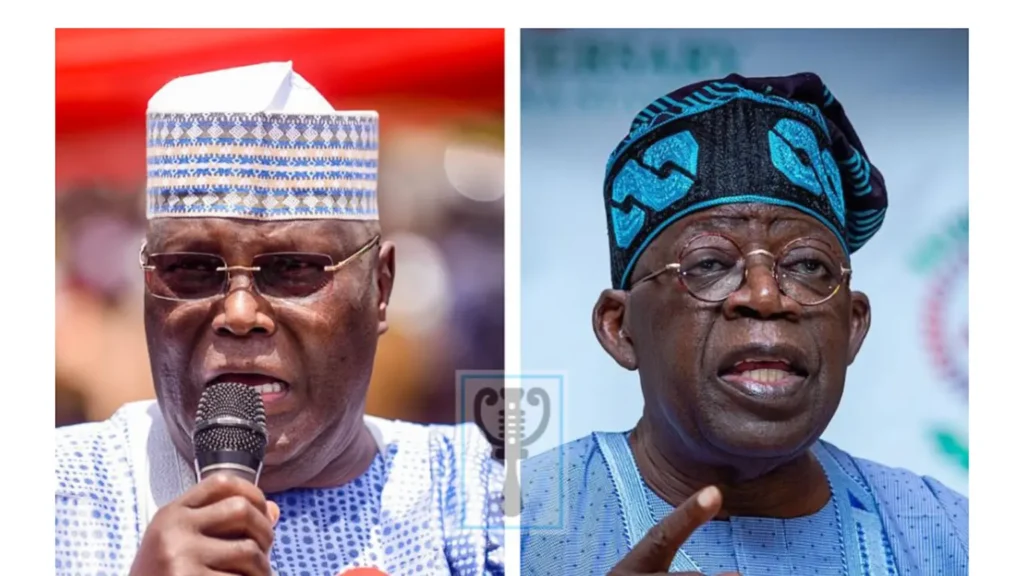

Former Vice President and African Democratic Congress (ADC) presidential candidate, Atiku Abubakar, has challenged President Bola Tinubu’s administration to explain why it has accelerated domestic borrowing despite what he described as an estimated **₦7.98 trillion windfall from higher-than-budgeted crude oil prices**.
Atiku, in a statement by his Senior Special Assistant on Public Communication, Phrank Shaibu, questioned the rationale behind the Federal Government’s reported borrowing of about ₦5 trillion from the domestic bond market in the first half of 2026, arguing that the scale of borrowing was difficult to reconcile with improved oil earnings.
He said the government’s borrowing spree would ordinarily be understandable if public revenues had collapsed.
“But the exact opposite is the case,” Atiku said.
According to him, the 2026 Appropriation Act pegged the benchmark price of crude oil at $64.84 per barrel, while Brent crude, the international benchmark for Nigerian oil, averaged about $92 per barrel between March 1 and July 14.
Atiku said Nigerian crude typically trades at a premium to Brent, suggesting that the country’s actual oil receipts could be even higher than the figures implied by the benchmark price.
He calculated that the difference between the budget benchmark and the prevailing Brent price represented an additional **$27.15 per barrel**.
Based on an estimated production rate of 1.5 million barrels per day, he put the additional daily revenue at about **$42.7 million**.
Over 135 days, he estimated the cumulative windfall at approximately **$5.76 billion, or ₦7.98 trillion.
The former vice president consequently posed two questions to the administration: why was Nigeria borrowing at almost twice the pace of the previous year despite the oil windfall, and where had the additional revenue gone?
“Nigerians deserve a full accounting of this windfall,” Atiku said, demanding greater transparency over excess crude earnings and the management of oil revenues.
Atiku argued that previous administrations had mechanisms for managing and reporting excess crude earnings through fiscal buffers, including the Sovereign Wealth Fund.
He said Nigerians were now being left without sufficient information about how additional oil revenues were being deployed.
“A government that cannot explain what it has done with an estimated ₦7.98 trillion in additional oil receipts has no moral authority to continue plunging the country deeper into debt,” he said.
The ADC presidential candidate also questioned why Nigerians were yet to see what he described as commensurate improvements in living standards despite higher oil prices and the removal of fuel subsidy.
He cited recent United Nations findings, as referenced in his statement, that about 80 per cent of Nigerians cannot afford a decent meal daily, while infrastructure remains under pressure.
Atiku said the situation raised questions about the administration’s claim that savings from subsidy removal would support investment in critical sectors including infrastructure, healthcare and education.
He accused the government of pursuing “endless borrowing” while Nigerians continue to experience economic hardship.
The former vice president used the criticism to outline what he said would be a different fiscal approach under an ADC government.
He pledged that revenues earned above the budget oil benchmark would be transparently accounted for and managed under a rules-based framework.
Rather than using excess revenues to fund increased borrowing, Atiku said his administration would deploy them towards reducing public debt, strengthening fiscal buffers and financing productive sectors capable of generating jobs and economic growth.
He also promised regular publication of reports on excess crude earnings and greater scrutiny of public finances.
According to him, an ADC administration would seek to reduce the cost of governance, block leakages and limit borrowing to productive investments capable of generating measurable economic returns.
Atiku said the objective would be to prevent borrowing from becoming a substitute for sound fiscal management.
“Nigerians deserve answers. They deserve accountability,” he said.
He maintained that the country’s oil wealth should translate into tangible improvements in the lives of citizens rather than increased debt obligations for future generations.
The former vice president’s intervention comes as the management of public debt, oil revenues and the broader cost of living crisis remain central issues in the political debate ahead of the 2027 general election.