The Nigeria Democratic Congress (NDC) has unveiled sweeping reductions in its nomination and expression of interest fees, targeting women, youths, and persons living with disabilities (PWDs) in a bid to widen political participation ahead of the 2027 general elections.
In a statement issued by the party’s National Secretary, Ikenna Morgan Enekweizu, the NDC said the policy is designed to dismantle financial and structural barriers that have long limited access to elective offices in Nigeria’s democratic space.
According to the party, the initiative reflects its broader commitment to inclusivity, equality, and the strengthening of democratic representation both within Nigeria and among citizens in the diaspora.
Enekweizu noted that economic hardship, age restrictions, gender bias, and disability should not serve as obstacles to leadership ambition or civic participation.
He said: “Being young or economically disadvantaged, or living with a disability, should not disqualify anyone from contributing meaningfully to nation-building.”
The party also highlighted the persistent underrepresentation of women in politics, describing it as a consequence of long-standing cultural and institutional barriers that continue to weaken democratic balance.
“Women have historically faced structural challenges in politics. Affirmative support is necessary to help correct this imbalance,” the statement added.
Under the new policy, female aspirants will pay only 50 percent of the cost of both Expression of Interest and nomination forms. Youths aged 18 to 35 will also benefit from a 50 percent reduction, while Persons Living with Disabilities will pay just 25 percent of the standard fees.
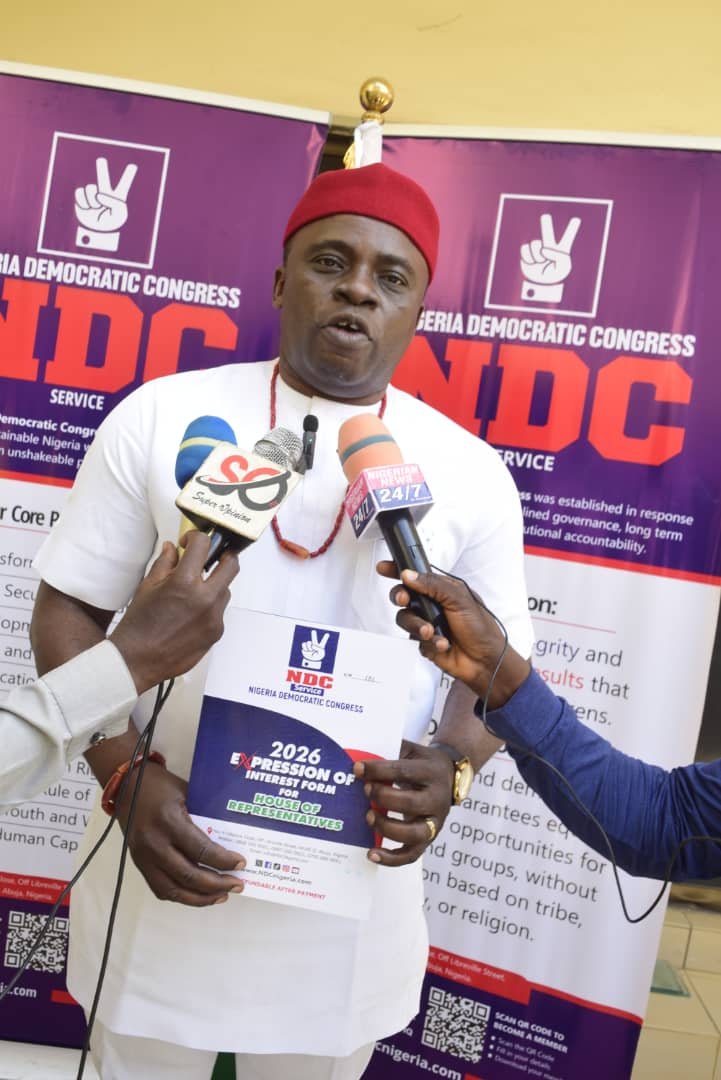
The party clarified that presidential, governorship, and National Assembly nomination forms will be issued at its national headquarters in Abuja, while aspirants for state assemblies will obtain forms from state party offices.
Political analysts say the move aligns with growing national pressure for expanded youth participation, stronger gender representation, and improved accessibility in Nigeria’s political system ahead of the 2027 elections.
2027: NDC Cuts Nomination Fees to Boost Youth, Women, PWD Participation