By John Akubo
A fast-moving political convergence is quietly reshaping Nigeria’s opposition landscape, and at its centre are Peter Obi and Rabiu Musa Kwankwaso, two of the most consequential figures heading into the 2027 election cycle. What is unfolding is not a dramatic, overnight defection but a calculated, layered realignment driven by urgency, grassroots pressure, and a narrowing window of opportunity. Barring any last-minute disruption, both men are widely expected to make a defining political move on Monday—one that could anchor them within the emerging Nigeria Democratic Congress (NDC).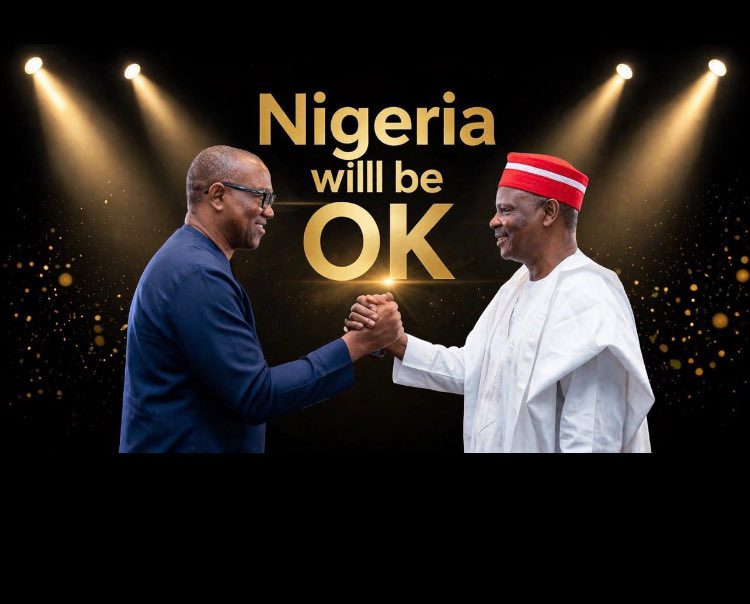
Although the NDC has publicly maintained that discussions remain within the realm of possibility rather than certainty, insiders suggest the process has moved far beyond speculation. Behind the scenes, consultations are said to have reached advanced stages, with the anticipated declaration now more about timing and optics than substance. As one source familiar with the negotiations put it, the real question is no longer whether the move will happen, but how it will be unveiled.
A key factor accelerating this convergence is what many now describe as “deadline politics.” When NDC National Leader Seriake Dickson issued a blunt warning during a recent reception, he effectively reframed the political calculus. He urged intending entrants to act immediately, stressing that the party’s registration window would soon close and that only those who moved before the 4th or 5th would fully participate in its internal processes. His warning—“Don’t waste time, delay is dangerous”—was widely interpreted as a direct signal to high-profile political actors weighing their options. For Obi and Kwankwaso, waiting suddenly became riskier than moving.
At the same time, the Obidient Movement has been sending increasingly pointed signals, even without making a formal declaration. Its messaging has gradually shifted from defending existing platforms to emphasizing the need for stable, credible, and litigation-free political structures. References to “clean platforms,” “policy-driven governance,” and the dangers of legal entanglements have been read by observers as a deliberate effort to prepare supporters for a possible transition. Rather than a sudden pivot, what is emerging is a carefully managed psychological shift—aligning a large, politically active base with a decision that appears to be nearing completion.
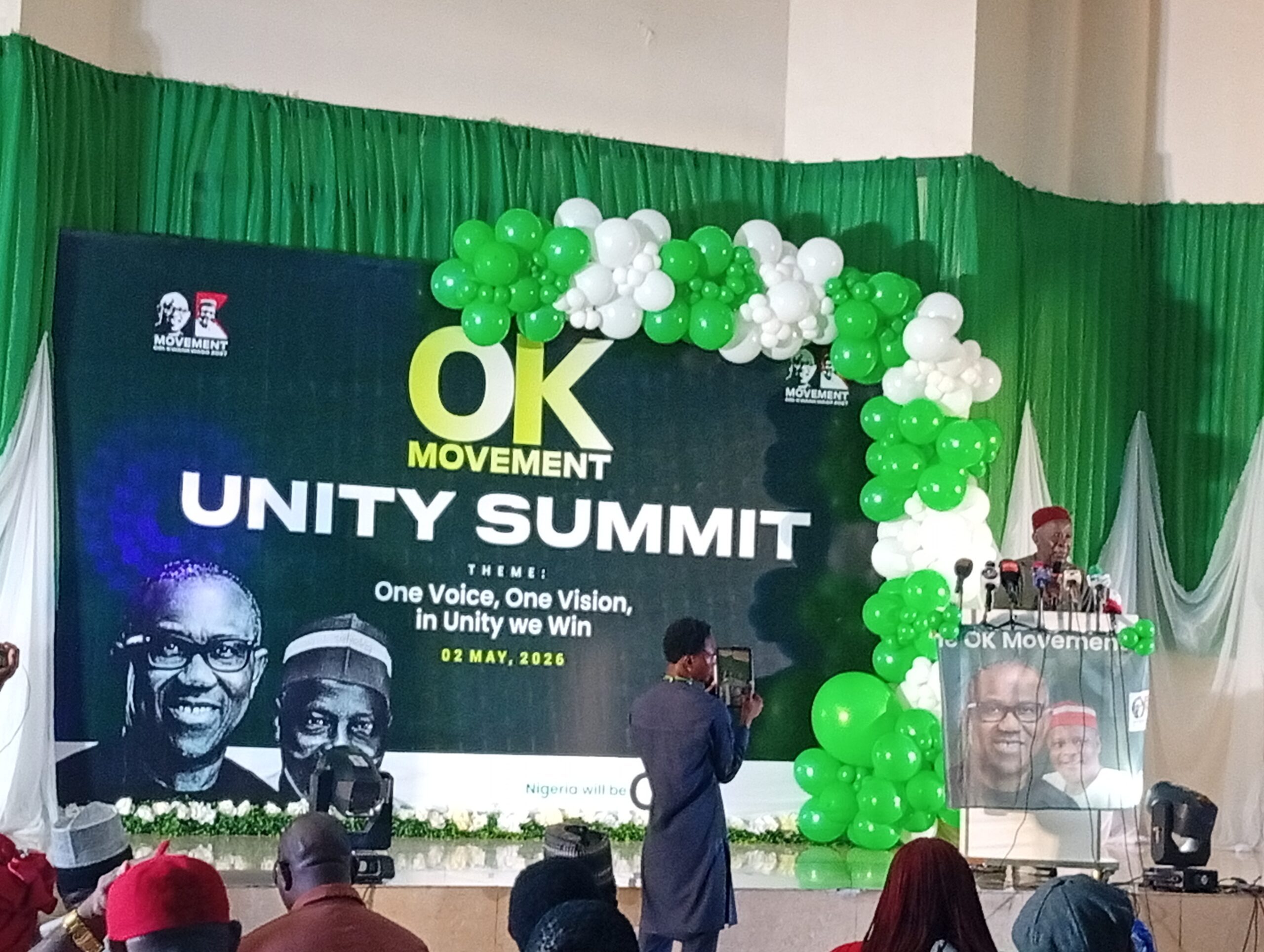
Driving this alignment further is the growing influence of the OK Movement, a fusion of Obidient and Kwankwasiyya political networks. More than a coalition of leaders, it represents a convergence of voter bases—something rarely achieved in Nigeria’s political history. At its recent unity summit, speakers delivered a mix of urgency, warning, and defiance that reflected both strategic calculation and popular frustration. Buba Galadima framed the moment in stark terms, warning that power is never permanent and that political dominance can collapse quickly. His remarks, laced with historical and biblical analogies, underscored a belief that a new political force could emerge to challenge the status quo.
That sense of urgency was echoed more bluntly by Isaac Fayose, who captured the raw mood among many supporters. He spoke of hardship, frustration, and a growing willingness among Nigerians to act decisively. Across the summit, recurring themes of economic strain, institutional breakdown, and political distrust reinforced the idea that the electorate is no longer passive. Instead, it is becoming increasingly organised and ready to assert itself.
Within this shifting landscape, the NDC is gaining traction not just because of who may join it, but because of what it currently represents. Unlike many existing parties, it is free of internal litigation, factional disputes, and leadership crises. Its relatively new structure offers flexibility and space for incoming political heavyweights to shape its direction. For figures like Obi and Kwankwaso, this presents both an opportunity and a strategic advantage—a platform that is still being built, rather than one weighed down by entrenched conflicts.
If the expected Monday declaration materialises, the immediate impact could be profound. It would signal the consolidation of significant opposition blocs, transform the NDC into a serious national contender almost overnight, and likely trigger a wave of defections from politicians seeking relevance before internal deadlines close. However, if the move is delayed or falters, it would expose the complexities of coalition politics and the challenges of aligning diverse interests under a single platform.
Beyond the immediate calculations, a deeper shift is underway. For years, political parties dictated the direction of movements. Now, movements are increasingly dictating the future of parties. The Obidient base brings mass mobilisation and national spread, the Kwankwasiyya network contributes strong northern structure, and the NDC offers a neutral institutional framework. Together, they form the outline of a new political force that is still taking shape but already influencing the balance of power.
As the countdown to Monday continues, what is clear is that this is no longer just about defections or party switches. It is about the reconfiguration of opposition politics in Nigeria—driven by urgency, dissatisfaction, and the recognition that the path to 2027 may depend less on loyalty to existing platforms and more on the ability to adapt quickly to a rapidly changing political environment.