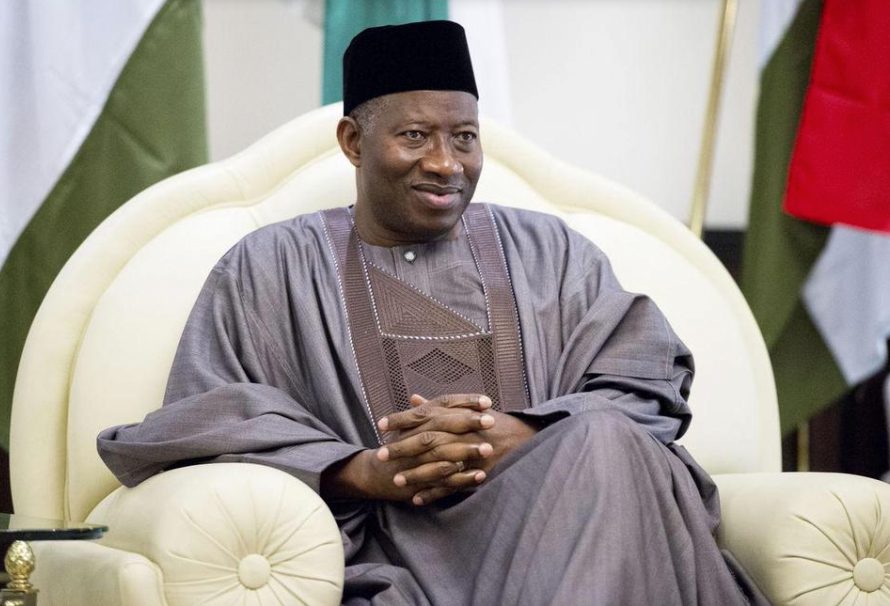
Former President Goodluck Jonathan has firmly pushed back against recent criticisms from Atiku Abubakar, setting the stage for a renewed debate over leadership, experience, and political legacy ahead of future electoral battles.
Jonathan’s response came after Atiku, speaking during a televised interview, dismissed his presidency as hampered by inexperience—remarks that have reopened old political fault lines among Nigeria’s elite.
Rather than directly escalating the exchange, Jonathan adopted a measured but pointed tone. Speaking in Abuja, he acknowledged that mistakes are inevitable in leadership but rejected the notion that age or experience alone defines competence.
“No one governs without errors,” he said, subtly reframing the criticism as unrealistic. “Even those who see themselves as perfect are still human.”
At 53, Jonathan assumed Nigeria’s presidency under turbulent circumstances in 2010 and exited in 2015. His rhetorical question—whether leadership requires reaching “100 years” before qualification—served as a quiet but effective rebuttal to Atiku’s argument.
A Battle of Narratives
Atiku’s critique is not happening in isolation. As a key figure in the emerging opposition coalition, he is positioning himself against a crowded field that includes Peter Obi, Rotimi Amaechi, and Rabiu Kwankwaso.
By questioning Jonathan’s competence, Atiku appears to be doing more than revisiting history—he is shaping a narrative about leadership readiness, likely aimed at strengthening his own credentials in a competitive political landscape.
Jonathan, however, countered not with political attacks but with institutional achievements. He pointed to Nigeria’s successful elections into the United Nations Security Council during his tenure as evidence of diplomatic competence—an implicit argument that his administration delivered results on the global stage.
Interestingly, Jonathan used the moment to pivot beyond personal defense, drawing attention to broader governance issues in West Africa. His remarks on regional instability and the struggles of Economic Community of West African States highlighted a recurring theme: that political instability remains the region’s biggest obstacle to economic progress.
“We cannot progress economically if our societies are politically unstable,” he warned, underscoring the tension between national sovereignty and regional intervention—an issue that continues to challenge ECOWAS.
Jonathan’s response signals restraint but also strategic positioning. Rather than engage in direct political combat, he reinforces his image as a statesman—calm, reflective, and focused on legacy.
Atiku, on the other hand, is clearly in campaign mode—drawing contrasts, defining opponents, and sharpening arguments about leadership capacity.
The exchange, while subtle, reflects a deeper reality: Nigeria’s political space is gradually heating up, and past administrations are becoming key battlegrounds for present ambitions.
In the end, this is no longer just about whether Jonathan made mistakes—it is about who gets to define what those mistakes mean in the context of Nigeria’s future.
‘I Did My Best’ — Jonathan Pushes Back as Atiku Questions His Legacy