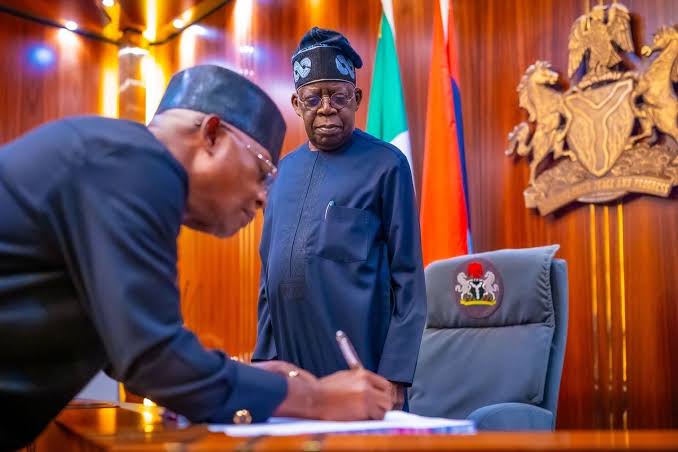
The controversy surrounding remarks attributed to the Chief of Staff to the President, Femi Gbajabiamila, has taken a sharper turn as political activist Timi Frank moves to elevate the issue beyond partisan politics, framing it as a fundamental question about the health of Nigeria’s democracy.
Frank’s decision to petition the United States is less about diplomacy and more about pressure—an attempt to force accountability by spotlighting what he views as a dangerous normalization of political overreach at the highest levels of government.
The remarks in question, allegedly made in a private setting, have now become a public flashpoint, not necessarily for their content alone, but for what they appear to suggest: that those in power may be comfortable discussing the internal destabilisation of opposition parties and the possible influence of judicial outcomes.
For Frank, this is the real issue. He argues that when such statements are linked to a senior official in the administration of President Bola Ahmed Tinubu, they blur the line between political strategy and institutional interference—an erosion that could weaken already fragile public trust.
His reaction taps into a wider unease within Nigeria’s political environment, where opposition parties—from the Peoples Democratic Party to the African Democratic Congress—have faced internal crises, defections, and leadership disputes. Whether coincidental or not, Frank suggests that such instability cannot be divorced from the broader climate of power politics.
Yet, his call for foreign scrutiny introduces a provocative twist. By urging U.S. authorities to investigate Gbajabiamila, Frank is effectively questioning the capacity—or willingness—of domestic institutions to hold powerful figures accountable. It is a move that may resonate with critics of the system, but also raises concerns about externalising Nigeria’s internal political disputes.
His demand for resignation, meanwhile, is framed not just as punishment but as a standard—an assertion that democratic leadership must be held to higher ethical expectations, especially when public confidence in institutions is already under strain.
Ultimately, the unfolding episode is no longer just about a viral video. It has become a broader referendum on governance: how power is exercised, how institutions are protected, and whether Nigeria’s democracy can withstand the pressures of political dominance without compromising its core principles.
As the debate deepens, the real question may not be what was said—but what it reveals about the evolving character of power in Nigeria
Frank petitions US over Gbajabiamila, sparks democracy accountability debate