By John Akubo
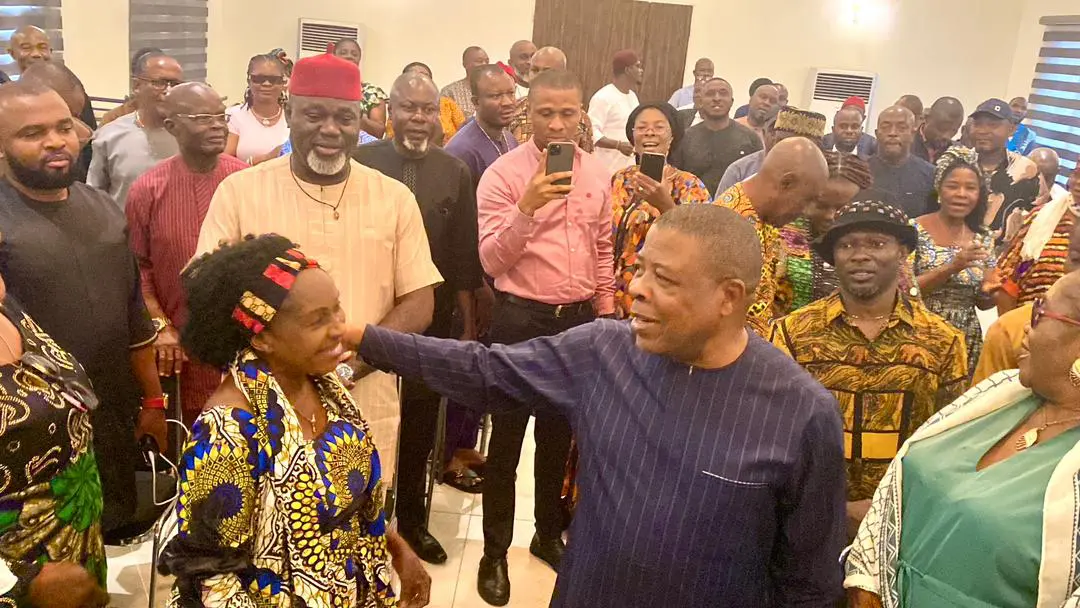
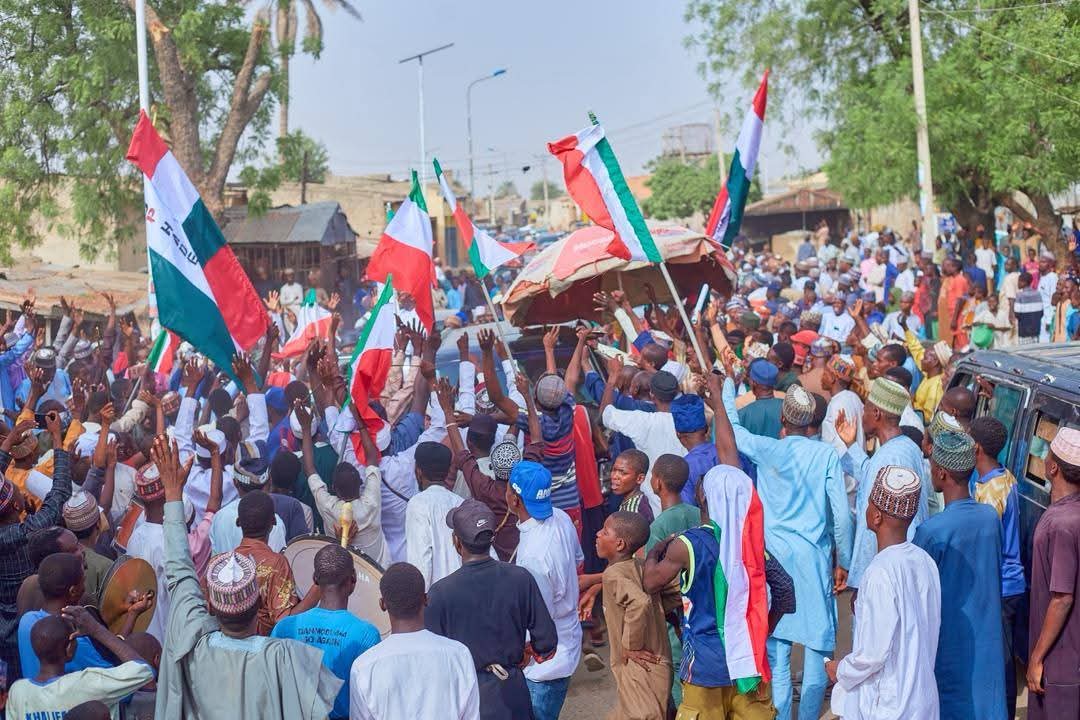
In Nigerian politics, moments that appear ordinary often carry deeper meaning. The wedding ceremony of Malam Alhasan Abdullahi Sarawa in Hadejia on Saturday provided one such moments. What should have been a private celebration quietly transformed into a political spectacle, as supporters clad in party colours gathered in solidarity around Mustapha Sule Lamido.
It was not a campaign rally. There were no official speeches or political banners. Yet, the symbolism was unmistakable. In a state where political allegiance is often carefully measured, the spontaneous show of support around Lamido sent a clear message: his influence remains intact, organic, and deeply rooted at the grassroots.
That moment captures the essence of Jigawa’s evolving political equation ahead of 2027—a contest that may ultimately be less about party platforms and more about strategic personalities.
A State in Flux
Jigawa State, long considered a stronghold of the All Progressives Congress (APC), is entering a period of quiet but consequential political realignment. While the ruling party retains structural advantages through incumbency, emerging developments suggest that its grip is no longer as secure as it once appeared.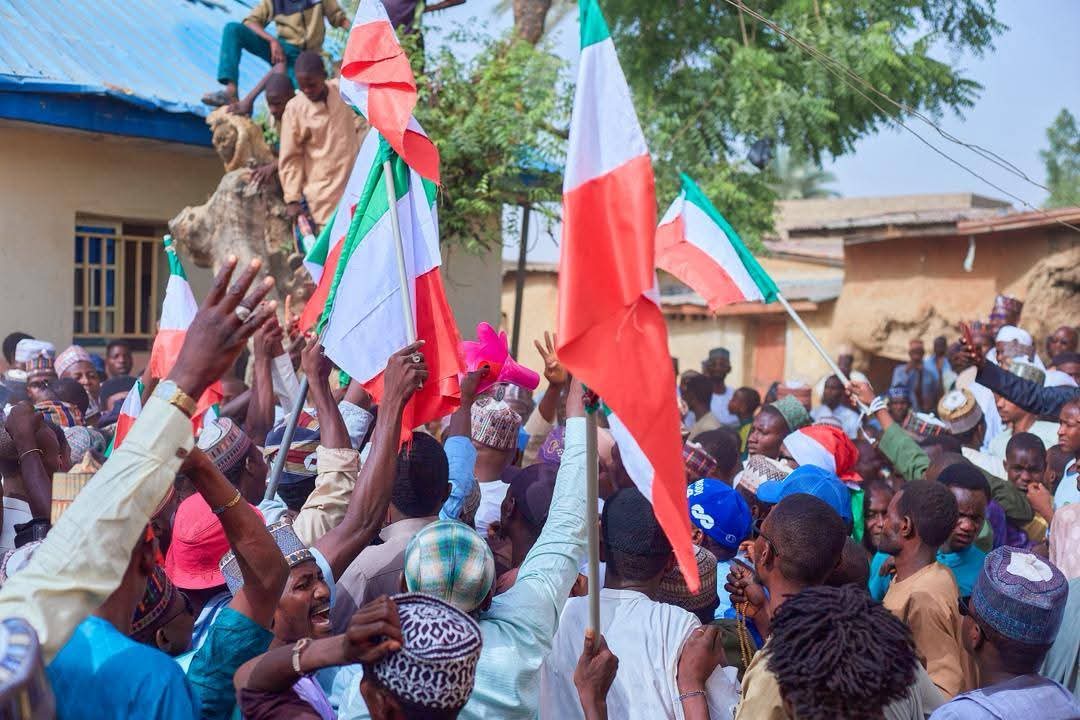
The rise of the African Democratic Congress (ADC) as a third-force platform, coupled with reported internal frictions within the APC, has introduced new uncertainties into the political landscape. Defections of key actors and shifting loyalties are gradually redrawing the state’s political map.
At the centre of these recalibrations is Lamido, the 2023 governorship candidate of the Peoples Democratic Party (PDP), whose political relevance has only grown since his electoral outing.

The Numbers Behind the Influence
Lamido’s continued prominence is not built on rhetoric alone—it is anchored in measurable electoral performance. In the 2023 presidential election, APC secured 421,390 votes in Jigawa, while the PDP, powered significantly by Lamido’s mobilisation network, garnered 386,587 votes. The margin, fewer than 35,000 votes, revealed a competitiveness that challenged assumptions of APC dominance.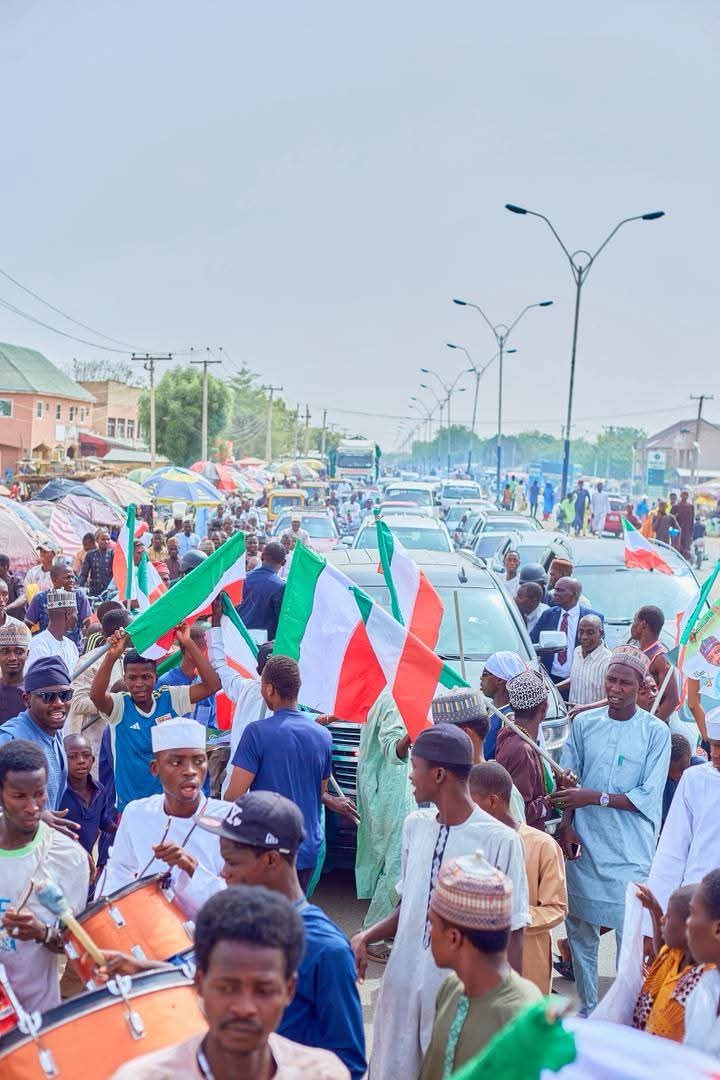
More telling, however, was Lamido’s cross-tier influence. His political machinery delivered a senatorial seat, two House of Representatives seats, and multiple State Assembly positions for the PDP—an uncommon feat for an opposition figure in a state historically tilted toward incumbency.
Even in defeat, his governorship performance was instructive. Polling 368,726 votes against Governor Umar Namadi’s 618,449, Lamido emerged not as a peripheral challenger but as the only credible alternative power bloc in the state.
Why APC Is Watching Closely
These realities have not gone unnoticed within the APC. Behind the scenes, efforts to court Lamido are gaining traction, driven by strategic concerns that go beyond state-level politics.
Governor Namadi, who is expected to seek re-election in 2027, faces a dual challenge: consolidating his own mandate while contributing to the broader objective of delivering strong presidential votes for Tinubu. In a region as politically decisive as the North-West, such expectations carry significant weight.
For the APC, the arithmetic is clear. Incumbency alone may no longer guarantee electoral dominance. Alliances, grassroots structures, and voter loyalty will likely determine outcomes in 2027.
Lamido, with his demonstrated ability to mobilise across constituencies and influence electoral outcomes beyond his immediate candidacy, represents a strategic asset in that calculation.

The Opposition Factor
Complicating the equation further is the growing relevance of alternative platforms. The ADC’s emergence as a credible third force introduces a new variable, particularly as disaffected politicians seek viable alternatives outside the traditional APC-PDP binary.
There are also indications of internal disagreements within the APC, including reported tensions between Governor Namadi and his predecessor, Mohammed Badaru Abubakar. While such dynamics are not uncommon in Nigerian politics, they create openings that opposition forces can exploit.
In this context, Lamido’s political structure becomes even more valuable—not only as a vote generator but as a stabilising force capable of shaping alliances.
Two Roads to 2027
As Jigawa inches closer to the next general election cycle, two plausible scenarios are beginning to emerge—both centred around Lamido’s political trajectory.
The first is an opposition consolidation scenario. Should Lamido align with other influential actors outside the APC, possibly under a platform like the ADC, the result could be a formidable coalition capable of challenging the ruling party’s dominance. Such an alliance would likely fragment APC’s support base and introduce a level of unpredictability into the electoral contest.
The second scenario is strategic integration. If the APC successfully brings Lamido into its fold, the political landscape could shift decisively in its favour. Such a move would not only neutralise opposition strength but also significantly boost the party’s grassroots reach.
For Governor Namadi, this could translate into a smoother path to re-election. For Tinubu, it could mean securing a more comfortable margin in a vote-rich state that remains critical to his broader electoral strategy.
Why Tinubu Cannot Look Away
Jigawa is not just another state in Nigeria’s political arithmetic. Situated in the North-West—the region with the largest voting population—it holds substantial weight in determining presidential outcomes.
Tinubu’s 2023 victory was built on a coalition of regional strengths. To sustain that coalition in 2027, the focus will inevitably shift from merely holding ground to expanding margins in key states. Jigawa is one such state.
Lamido’s political capital—his ability to mobilise voters, influence legislative outcomes, and maintain grassroots loyalty—places him at the centre of that strategy. Ignoring such a figure would be politically costly; engaging him could be electorally transformative.
A Kingmaker in Motion
What the Hadejia wedding moment revealed, perhaps more clearly than any statistic, is that Lamido’s influence is not manufactured—it is lived, visible, and responsive. Supporters did not gather because they were instructed to; they showed up because they remain connected to a political identity he represents.
In a political environment where structures often weaken after elections, his appears to be consolidating.
This is what makes him more than a former candidate. It positions him as a potential kingmaker—one whose decisions could shape not just Jigawa’s governorship race, but also the presidential dynamics in the North-West.
Conclusion: Politics Beyond Party Lines
As 2027 approaches, Jigawa’s political story is evolving into something more complex than a contest between parties. It is becoming a test of influence, alliances, and strategic foresight.
For the APC, the challenge is clear: adapt to changing realities or risk complacency. For the opposition, the opportunity lies in building credible coalitions. And for Tinubu, the imperative is unmistakable—recognise and engage the forces that can deliver not just victories, but margins.
At the centre of this unfolding narrative stands Mustapha Sule Lamido—a figure whose relevance is no longer in question, and whose next political move may well define the future of Jigawa politics.