


Lamara Garba Azare
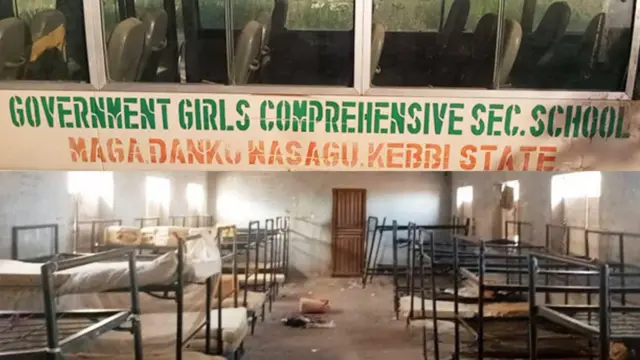
Nigeria woke up once again to the heartbreaking reality that its children are no longer safe in their own country. In the early hours of Monday, November 17, 2025, armed men stormed Government Girls’ Comprehensive Secondary School in Maga, Danko Wasagu Local Government Area of Kebbi State, kidnapping about 25 schoolgirls and killing a vice principal, Hassan Yakubu Makuku, along with a security guard who dared to stand in their way. The scene was brutal, tragic, and deeply symbolic of a nation that has abandoned its most vulnerable.
This is not the first tragedy of its kind. It is part of a grim pattern stretching back to the Chibok abduction in 2014, followed by Dapchi, Kagara, Jangebe, Tegina, and countless others. More than 1,500 schoolchildren have been kidnapped in northern Nigeria in the last decade, yet the federal government continues to offer the same tired responses: condemnation, promises, directives, committee inaugurations, and empty assurances. Nothing changes. The criminals grow bolder. The attacks become more daring. And citizens are left wondering whether their leaders even grasp the weight of what is happening.
What makes the Kebbi incident even more infuriating is the ease with which the attackers carried out their mission. According to community leaders, the gunmen entered through the vast Zamfara forests and operated on school grounds for several hours without a single obstruction. No early-warning signal. No engagement. No rapid deployment. No intervention of any kind. The question every Nigerian is asking is simple: How is it possible for armed men to terrorise a community for hours in a country that claims to have a functioning security architecture?
The truth is bitter—these attacks keep happening because the system is broken, and those responsible for fixing it have grown comfortable with failure. In a serious, organised, and civilised society, the Ministry of Defence and the entire security leadership would have resigned honourably after such a disgrace. There would be outrage, accountability, and consequences. But in Nigeria, the usual cycle has already begun: press statements, condolences, and yet another round of lamentation from government officials who behave like helpless observers rather than leaders entrusted with protecting lives.
This repetitive script is insulting to citizens who are forced to live with fear as a daily companion. It is demoralising to parents who send their daughters to school only to have them snatched away in the dead of night. And it is dangerous for the country’s future because no nation can develop when its classrooms become breeding grounds for trauma, disappearance, and death.
The government’s attitude towards insecurity has become casual, almost dismissive. Communities have raised concerns for years. Security analysts have warned about the open flow of armed groups across forests in Zamfara, Kebbi, Kassina, and Niger States. Civil society organisations have repeatedly highlighted the vulnerability of rural schools. Yet nothing meaningful has been done. The forests remain sanctuaries for criminals. Schools remain unprotected. And federal officials continue to talk, sympathise, and move on.
The abduction in Kebbi must not be allowed to fade into the long list of tragedies Nigeria has normalised. This is a national disgrace—an alarming reminder that the country’s security blueprint is no blueprint at all. It is time for the government to confront this failure with honesty rather than excuses.
Nigeria needs coordinated intelligence networks that actually work, security presence that is proactive and not reactionary, and leadership that takes responsibility instead of issuing statements. The forests that have become operational bases for criminals must be cleared decisively. Technology must replace guesswork. And those occupying key security positions must either show results or step aside for people who can deliver.
Nigeria can no longer afford a leadership that reacts only after lives have been lost. A leadership that waits for tragedies before issuing hollow assurances. A leadership that has forgotten that the protection of citizens is not a favour—it is its foremost obligation.
The 25 schoolgirls taken from Kebbi are not just numbers in a tragic statistic. They are daughters, sisters, students, and human beings whose dreams have been violently interrupted because those who swore to protect them failed. Every passing hour without their rescue is a reminder of a government that has grown comfortable with national sorrow.
Nigeria must demand better. The country cannot continue like this—where criminals operate freely and the state responds with nothing but sorrowful speeches. Our children deserve safety. Their parents deserve peace. And the nation deserves leaders who act with courage, competence, and accountability.
Until then, every abduction will remain a painful reminder that Nigeria has not just lost control of security—it has lost its conscience.
Lamara Garba Azare, writes from Kano


1 Comment
Thanks for sharing your knowledge. This added a lot of value to my day.