

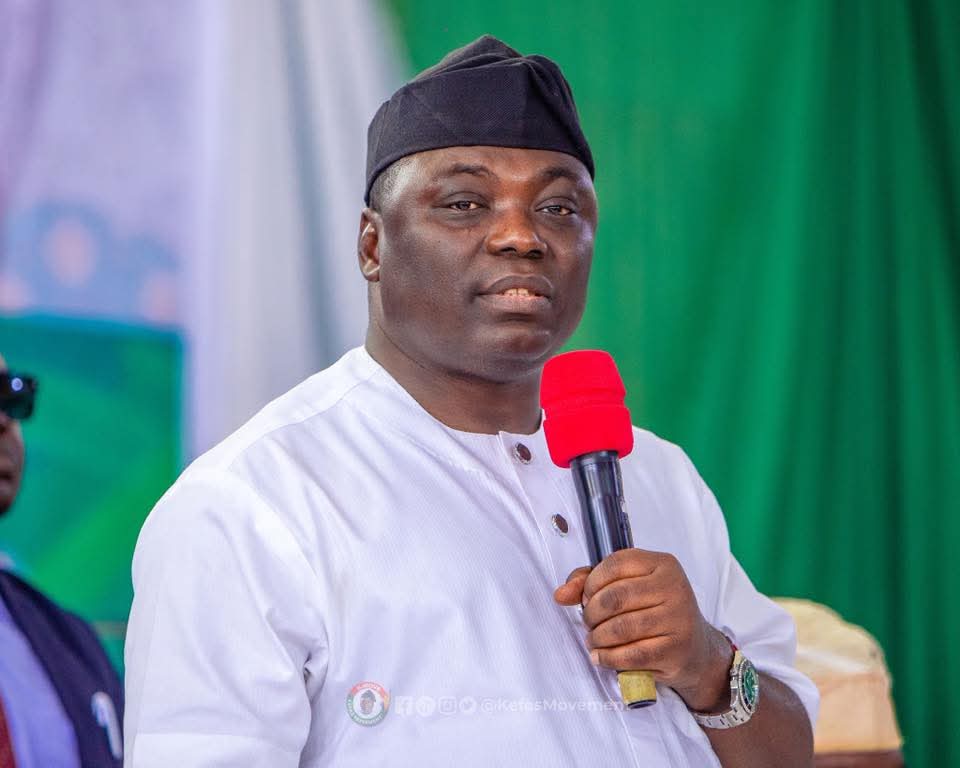

By Ben Adaji, Jalingo
Within the past two years, the Governor of Taraba State, Dr. Agbu Kefas, has prioritised security, education, healthcare, agriculture, and the welfare of civil servants as the cardinal points of his administration.
To many, Kefas has performed commendably in these key areas. But to the larger population of the state, his performance so far is not enough within the two-year lifespan of a serious government.
In addition to improving security of lives and property, provision of free education, enhancing agriculture through modern inputs, rehabilitating healthcare facilities, and improving civil servants’ welfare, the people also expected construction and rehabilitation of both township and rural roads, provision of electricity, potable water, and other developmental projects to receive equal attention.
It is indeed a statement of fact that Taraba is in dire need of numerous basic and social infrastructure across the sixteen local government areas. Jalingo, the state capital, is itself yearning for access roads and other social services, just like the other local government areas and their rural communities.
Understandably, Governor Agbu Kefas acknowledged this reality when he promised, shortly after assuming office in 2023, to hit the ground running in tackling the state’s challenges.
But after two years in office, Kefas’ main achievements — in security, agriculture, civil service, and partly in education — appear not to have met the expectations of Tarabans. This perception is further clouded by his several foreign trips which are yet to yield tangible results.
Again, the people are grumbling over some hasty promises made by the Governor at the onset of his administration that are yet to materialise.
All these have given Kefas’ two years in office a bad name — criticism, disappointment, and disenchantment — with some even losing hope in the administration. Many have concluded that at the end of his first four years, Kefas may be rated as the worst Governor in Taraba’s history.
Last week, however, Governor Kefas emerged from the shadows, promising to prove the doubting Thomases wrong. He argued that the best masquerade in a dancing competition does not just jump into the arena unprepared.
He admitted that critics of his governance style may have valid opinions, but insisted they were being impatient.
According to Kefas, the challenges of Taraba were greater than he imagined when he assumed office. “I needed time and planning to confront the challenges head-on,” he said.
One of the biggest challenges, according to him, was that since its creation, Taraba State had no “development plan.” In fact, he revealed that even Jalingo, the state capital, lacked a master plan for future development. This, he argued, made it difficult for any serious-minded Governor to embark on sustainable projects.
To do things differently from his predecessors, he said he assembled technocrats from across the three senatorial zones of the state to design a 30-year development plan.
This singular move, he explained, required time, resources, and energy, which accounted for the delay in his administration swinging into action to create the necessary impact.
A few days ago, during an interactive session with journalists at the EXCO Chambers of Government House, Jalingo, the Governor announced that the long-awaited Taraba State Development Plan had finally been delivered to him. He reiterated his administration’s commitment to begin holistic infrastructural development in October 2025.
To feel the pulse of the people and set the ball rolling, Governor Kefas embarked on a tour of the three geopolitical zonal headquarters — Wukari, Bali, and Jalingo — for town hall meetings with stakeholders. According to him, this approach was meant to provide firsthand knowledge of the problems confronting the zones and the priority needs of the people.
At the meeting in Wukari, headquarters of the Southern Zone, he acknowledged the challenges facing the area and assured the people of his commitment to their well-being. He stressed the importance of security, assuring citizens of his resolve to ensure they can live safely, access their farms, and conduct business without intimidation.
On education, he emphasised that every Taraba child must have access to free and quality schooling. While admitting challenges of poor infrastructure and a shortage of teachers, the Governor restated his commitment to transform the sector. This, he said, informed his declaration of free and compulsory primary and secondary education, as well as a 50% reduction in tuition fees for tertiary institutions.
“My administration has prioritised the timely payment of salaries, pensions, and all workers’ entitlements because every labourer deserves their wages,” he said.
He added: “This administration has laid the foundation by developing a master plan for Taraba, 34 years after its creation. Projects, especially road construction, will commence immediately after the rainy season.”
The town hall approach has been widely seen as a step towards inclusive governance, allowing citizens to contribute to decision-making.
In Bali, headquarters of the Central Zone, residents presented their needs. Kefas listened attentively, admitting that Central Taraba faces many challenges, including the glaring absence of the National Grid in all five local government areas of the zone. He promised that construction and other projects would commence immediately after the rains.
“I appeal for your patience. The problems are many, but resources are limited. Some of the major needs presented during the meeting are better roads, electricity, health facilities, and other basic services,” he said.
In Jalingo, headquarters of the Northern Zone, stakeholders called on the Governor to complete the Mararaba–Pantisawa Road in Yorro LGA, abandoned by the previous administration. They also requested township roads and electricity, noting that of the three substations in Jalingo, only the TADP station is currently functioning.
In response, Kefas said: “I have forgotten about my comfort. Up till now, I have not moved into my official residence. The state has no master plan. Thank God former Governor Jolly Nyame is here. He can attest to the fact. I don’t know the magic he did to govern this state without a master plan. It’s not easy. All of us need to put our heads together.”
He announced that the remodelling of the Taraba State Airport runway had been executed at a cost of ₦24 billion, and reassured that massive road construction would begin in Jalingo and other parts of the state after the rainy season.
“People complain about road construction, but this October, you will see earth-moving equipment. Things will happen in terms of infrastructure this October,” he promised.
Observers believe the Governor can do better, but signs suggest the administration is beginning to shift towards tangible development projects.
Meanwhile, the Taraba State Government has secured a total of $268.63 million (over ₦400 billion) from the ECOWAS Bank to boost agriculture, energy, and industrial development. Expectations are high for meaningful utilisation of these funds.
The investment will cover four major projects: a 10,000-hectare rice farm with integrated irrigation, a state-of-the-art 16-tonne capacity rice mill, a new industrial park with agro-processing and logistics clusters, and a 50-megawatt solar power plant to strengthen renewable energy capacity.
Stakeholders have described this funding as the culmination of months of strategic planning and engagement, aligned with Kefas’ agenda of prioritising security, infrastructure, industrial growth, and investment attraction.
If applied transparently and sincerely, these funds could leave an indelible mark in Taraba’s history, transforming agriculture, energy, and industrialisation in the state.
As Kefas himself recently told journalists: “I have been blessed by God and it is now time to work for the people.”
From October 2025, Tarabans will be watching closely to see if his promises finally translate into visible development.
1 Comment
69te53