Sixty-five years after its establishment, the Nigerian Army still cannot manufacture its own weapons—and the consequences are becoming harder to ignore.
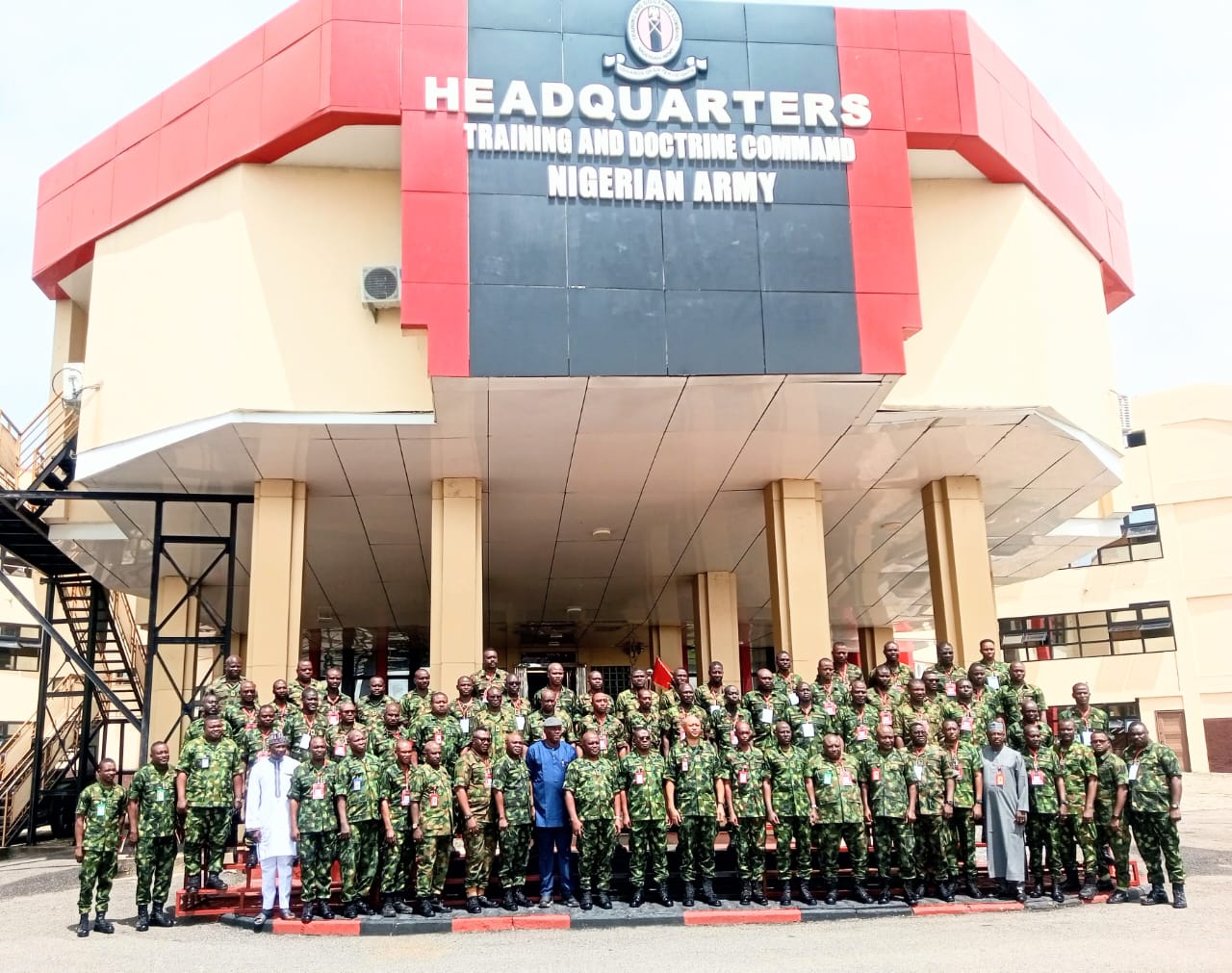
That was the sobering message from Major General Kelvin Aligbe, Commander of the Training and Doctrine Command (TRADDOC), as he declared open the 2025 Doctrine Development Workshop in Minna, Niger State, on Tuesday.
Delivering a keynote titled “The Soldier First in Focus”, Aligbe described the Army’s failure to achieve local production of military equipment as a glaring weakness in its operational architecture—despite decades of investment in training and tactical development.
“We have one of the most trained forces in Africa,” he said. “But we are still unable to produce our own military hardware. This single gap continues to threaten our combat effectiveness.”
Aligbe warned that unless the Nigerian Army shifts toward homegrown solutions, the country will remain at the mercy of foreign suppliers—an unsustainable approach in the face of growing insurgency, banditry, and transnational threats.
“Until we build local capacity to equip our soldiers, we will continue to face unnecessary setbacks on the battlefield,” he added.
While the workshop focused on enhancing doctrinal alignment across the Army, Aligbe challenged participants to rethink how strategy and self-reliance must go hand in hand.
“Doctrine is the military’s constitution,” he said. “But a constitution without tools is powerless. If we don’t apply our doctrine through self-made instruments of war, we undermine our own strategic principles.”
The event, themed “Enhancing Doctrine Development for Effective Training and Operations within a Joint Environment”, brought together military leaders from across all formations to discuss standardization, training, and interoperability.
In his welcome address, Chief of Doctrine and Combat Development, Major General Jamiu Jimoh (represented by Major General Mohammed Babayo), emphasized the centrality of doctrine in joint operations.
“Doctrine isn’t just theory—it’s the glue that binds our forces and ensures unity of purpose,” Jimoh said. “It’s what allows diverse units to operate seamlessly, especially in joint and multi-agency contexts.”
He added that the workshop aligns with the Chief of Army Staff’s current leadership philosophy—transforming the Army into a combat-ready, motivated force grounded in doctrine, discipline, and innovation.
The four-day workshop comes at a time when security analysts continue to question Nigeria’s overdependence on foreign arms and technologies—often delivered late, overpriced, or restricted by diplomatic bottlenecks.
Major General Aligbe’s comments, though framed within doctrinal development, were unmistakably a call for strategic independence—an appeal for Nigeria to match its military training with industrial self-sufficiency.
“We cannot continue like this,” he said. “If we want to win tomorrow’s wars, we must start building tomorrow’s weapons—ourselves.”
65 Years On, Nigerian Army Still Depends on Foreign Weapons — TRADDOC Chief