

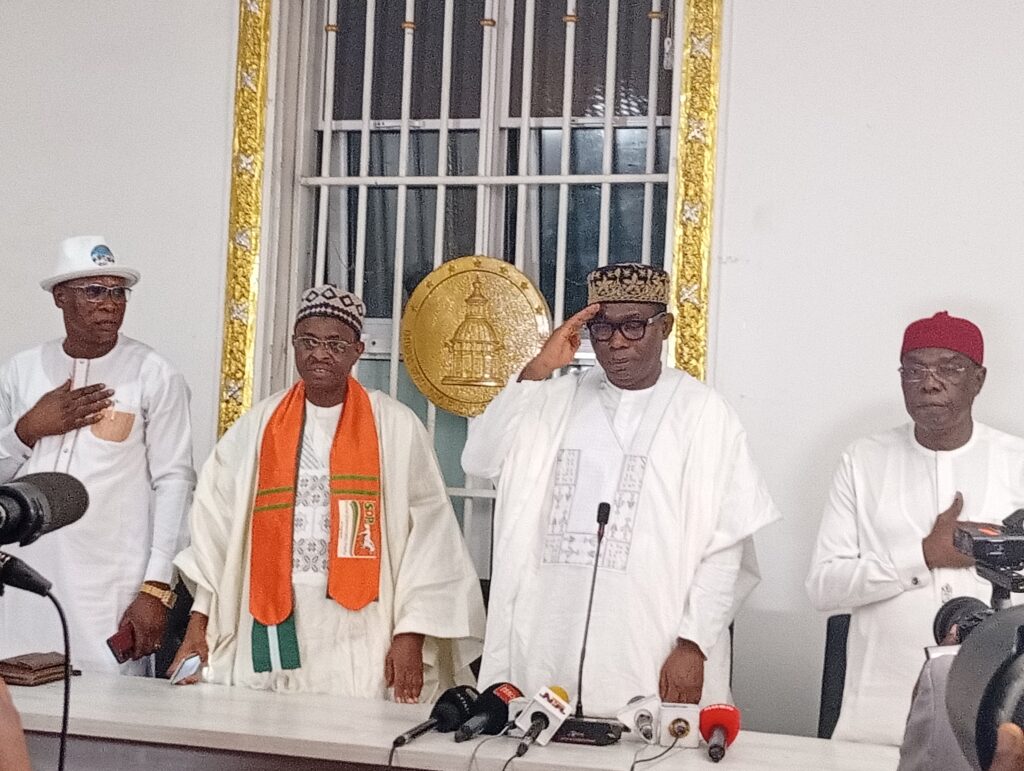

Allocating 445,000 barrels of crude oil daily to local refineries and using revenue from other petroleum products to support cheaper fuel are central to the plan of Social Democratic Party (SDP) presidential candidate, Prince Adewole Adebayo, to bring petrol prices down to N200 per litre.
Adebayo said the proposed arrangement would prioritise domestic refining and reduce the exposure of Nigerian consumers to international oil market prices.
He outlined the proposal at a dinner organised by the SDP leadership on Sunday, arguing that Nigerians should not bear the full burden of global petroleum prices while earning predominantly local wages.


“Any government that says to you that you should buy petrol in Nigeria at international market rates, that government is a liar, is wicked and irresponsible,” he said.
Under the plan, crude oil designated for export would continue to attract international market prices, while a separate allocation would be reserved for domestic refineries.
Adebayo proposed supplying 445,000 barrels daily to local refineries without upfront payment. In return, the facilities would process the crude and supply petroleum products for the Nigerian market.
He said petrol and aviation fuel would be prioritised for domestic consumption, while other products, including naphtha, asphalt and fuel oil, would be sold commercially to generate additional income for refinery operators.
According to him, revenue from these products would help sustain refinery operations and reduce dependence on petrol sales alone.
The proposal is built around the argument that Nigeria’s crude oil resources should support domestic energy needs rather than expose consumers entirely to international price movements.
However, Adebayo did not provide a detailed financial breakdown showing how the arrangement would cover crude oil, refining, transportation and distribution costs while maintaining the proposed N200-per-litre price.
Adebayo also unveiled a public transportation plan aimed at reducing the pressure of rising commuting costs on households.
He proposed establishing a dedicated transport fund, supported by revenue from his proposed petroleum arrangement, to provide 100 new buses annually to every local government area.
The buses, he said, would run on compressed natural gas, electricity and solar energy, with partnerships involving international manufacturers and Nigerian companies to encourage local production.
Students and National Youth Service Corps members would be entitled to free rides under the proposed scheme, using identification cards fitted with QR codes or barcodes.
Workers would also be registered through their employers, with five per cent of their salaries contributed monthly to finance the service.
Adebayo said the initiative would make public transportation more affordable and reduce household spending on daily commuting.
The SDP candidate also identified crude oil theft as a challenge requiring urgent attention, arguing that improved protection of petroleum resources would help secure supplies for local refining.
He linked his proposed fuel pricing policy to a wider economic agenda focused on poverty, insecurity and the rising cost of living.
The proposals come amid continuing public debate over petrol prices and transportation costs following the removal of fuel subsidies in 2023.
While Adebayo has outlined how crude allocation and revenue from other refined products could support his plan, the financial viability of selling petrol at N200 per litre would depend on the full cost of production, refining, distribution and the funding arrangements involved.
The SDP candidate urged Nigerians to assess his proposals ahead of the 2027 general elections, saying his administration would prioritise domestic energy security and reducing the cost of living.