


Douglas Baye-Osagie
dbayeosagie@yahoo.com
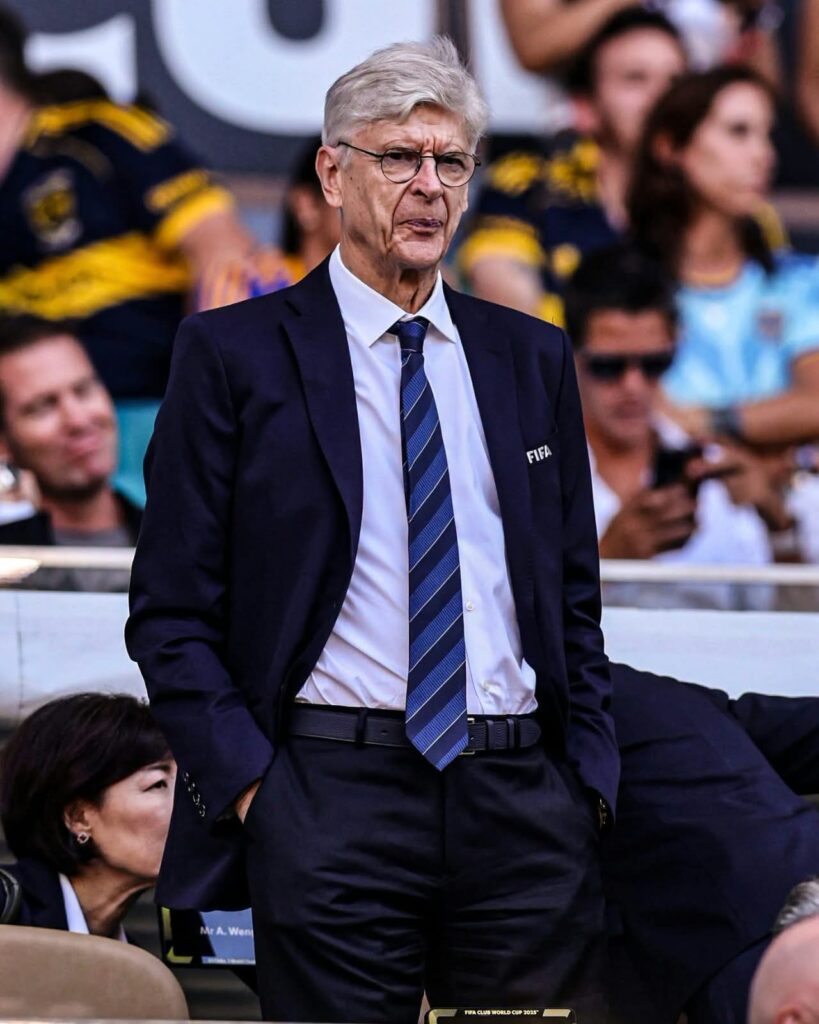
November 18 is almost here. That is the deadline for anyone who wants to challenge Gianni Infantino for the FIFA presidency to pick a nomination, and one name will not go away – Arsene Wenger.
It is not a coincidence. For over a year football has been discussed in a very bad light. Since America started preparing for and eventually hosting the 2026 World Cup, the conversation has been about money, expanded tournaments, sponsorships and politics. After the tournament itself, FIFA led by Giovanni Infantino almost sold stakes in its own competitions but for the protest of UEFA and major stakeholders who shouted down the idea. The players, the actual game, have been secondary. FIFA needs a reset going forward.

Infantino will not be a pushover. He goes into March 2027 seeking a fourth and final term and he enjoys almost total support from Africa, CONMEBOL and Asia – the blocs that deliver the numbers. He controls the purse through the FIFA Forward programme. Many federations will not bite the hand that funds them.
And there are no serious football contenders. That is the problem. The only man who has officially declared is Ramon Vega, a former Spurs defender turned property developer with no administrative base. The other names floated by UEFA – Michele Kang, the billionaire owner of Lyon and Washington Spirit, and Lise Klaveness, the brave Norwegian FA president – are respected but have no global electoral machine. We are left with political figures, business figures, but no football figure. That is why senior figures inside UEFA and inside FIFA itself have been begging Wenger to stand.
And Wenger should, because football needs a man of the game – and for once, a challenger who meets Infantino on his own turf.
Take languages. FIFA is 211 nations. Infantino likes to remind everyone he is fluent in seven – Italian, French and German as mother tongues, plus English, Spanish, Portuguese and Arabic, the latter added after his marriage to his Lebanese wife Leena Al Ashqar.
Wenger is at par. He speaks six fluently – French, English, German, Spanish, Italian and some Japanese from his two years at Nagoya Grampus. In a body that stretches from Dakar to Doha to Berlin, that matters. Both men can walk into a room and speak football without an interpreter. It would be the first FIFA election where both candidates are true polyglots since Joao Havelange.
Infantino is a brilliant politician and lawyer. Wenger is a football man with a face, a philosophy and a track record that no administrator can match.
He has been a friend of African football long before it was fashionable. He signed George Weah from Liberia in 1988 while at Monaco and gave him the platform that turned him into Africa’s only Ballon d’Or winner. The rest is history. At Arsenal the list is even longer – Africans he didn’t just buy, but built and won trophies with: Nwankwo Kanu (2 Premier Leagues, 2 FA Cups), Kolo Toure (Invincible, Premier League champion), Lauren (Invincible), Emmanuel Adebayor, Alex Song, Emmanuel Eboue, Gervinho, Marouane Chamakh, Mohamed Elneny.
That builder’s philosophy is what he took to FIFA in 2019 as Chief of Global Football Development, even though he was appointed by Infantino – the man he may now face.
What has he done inside? Four quiet reforms:
1. _Talent Development Scheme_ – his plan to ensure every member association has at least one elite academy, so talent does not need to leave at 12 to be seen.
2. _Offside daylight law_ – proposing the attacker should be onside if any part of his body is level with the defender, to bring back goals.
3. _Automated VAR_ – pushing for faster, less intrusive technology.
4. _Calendar reform_ – one of the few insider voices warning about player burnout.
His chances are slim. To get on the ballot he needs five federations, and few will risk Infantino’s wrath.
But a contest is good for the game. An unopposed coronation would confirm FIFA is a closed shop. A Wenger candidacy, matched language for language, idea for idea, would finally force a debate about football, not just money.
He is 76. He has nothing to prove. Which is exactly why football needs him to run.