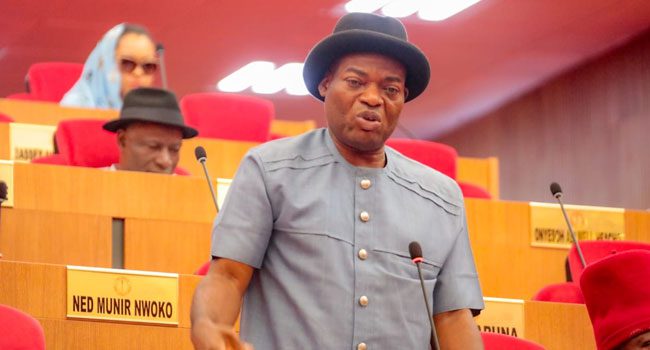
The emergence of Tony Nwoye as Minority Whip in the Senate may appear, on the surface, as a routine internal adjustment. In reality, it is a symptom of a deeper political drift—one that raises uncomfortable questions about the future of opposition politics in Nigeria.
At the heart of the matter is not Nwoye’s appointment, but the circumstances that made it necessary.
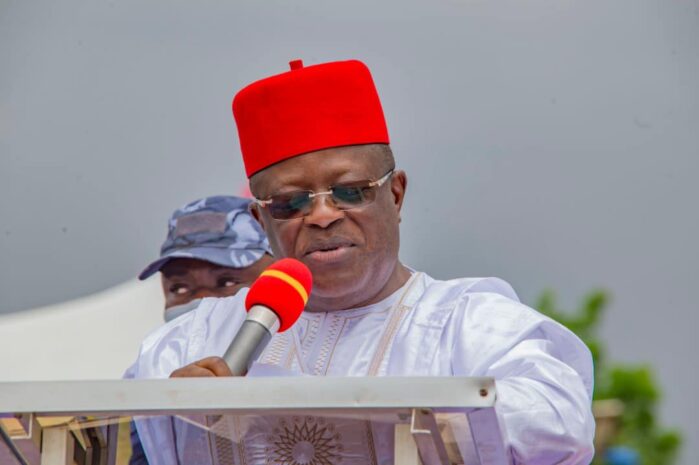
A wave of defections—most recently by Osita Ngwu and Anthony Siyako Yaro to the ruling All Progressives Congress (APC), alongside Aliyu Wadada’s exit from the Social Democratic Party—has not only thinned opposition ranks but hollowed out its institutional strength.
What remains is a bloc forced into reactive politics—plugging leadership gaps as they emerge, rather than setting the national agenda.
In a functioning democracy, defections are not unusual. What is troubling, however, is the pattern: lawmakers abandoning opposition platforms with minimal ideological justification, often citing “alignment” with state or federal power structures. This is less about political conviction and more about proximity to power.
The implication is stark—Nigeria’s party system is becoming increasingly fluid, not in a healthy, competitive sense, but in a way that erodes accountability.
When opposition lawmakers steadily migrate to the ruling party, the Senate risks evolving into a chamber of consensus without scrutiny. Debate weakens. Oversight softens. And governance tilts dangerously toward one-sided dominance.
It is within this context that Nwoye’s role becomes both critical and constrained.
As Minority Whip, he is expected to coordinate strategy, enforce discipline, and rally a caucus that is not just numerically disadvantaged, but psychologically on the defensive. His task is not merely administrative—it is existential.
Can he hold together a bloc that is shrinking in real time? Can he inspire coherence in a coalition where political loyalty appears negotiable? Can the opposition still function as a credible counterweight?
These are not personal questions—they are structural ones.
Meanwhile, the All Progressives Congress continues to consolidate its hold, benefiting from defections that expand its legislative reach without the rigours of electoral contest. For the ruling party, this is strategic advantage. For the system, it raises concerns.
Democracy thrives on tension—on the push and pull between competing visions of governance. When that tension weakens, so too does the quality of decision-making.
There is also a longer-term political risk. An over-consolidated ruling bloc may appear stable, but it can breed complacency internally and disillusionment externally. Voters begin to question whether electoral choices truly matter if political actors can simply switch sides without consequence.
For now, Nwoye’s emergence offers the opposition a moment to regroup. But whether it marks the beginning of a rebuild or merely a pause in a steady decline will depend on what follows.
If defections continue at the current pace, the issue will no longer be who leads the minority—it will be whether a meaningful minority still exists.
And that is a question that goes beyond the Senate. It goes to the heart of Nigeria’s democratic balance.
Opposition weakened further as Nwoye takes Senate Minority Whip role