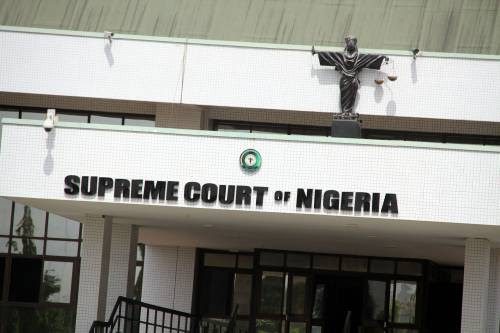
A quiet but consequential political battle is set to unfold at the Supreme Court of Nigeria on April 22—and its outcome could reshape the future of the Peoples Democratic Party (PDP) and the broader opposition landscape.
What appears on the surface as a legal dispute over a disputed convention is, in reality, a struggle for control, legitimacy, and political survival ahead of the 2027 general elections.
At the heart of the case is the faction led by Kabiru Turaki, which is seeking to overturn court rulings that nullified the party’s Ibadan convention of November 2025. That convention had produced a leadership structure now rejected by lower courts over alleged procedural breaches.
But insiders say the real issue runs deeper than compliance—it is about who holds the keys to the PDP’s future.
The crisis has exposed fault lines within the PDP, pitting rival blocs against each other in a prolonged contest for dominance.
One camp, linked to powerful figures including Nyesom Wike, insists on strict adherence to party rules and court judgments. The other argues that internal party matters should not be dictated by the judiciary.
Complicating matters
further is a separate legal challenge by Sule Lamido, who claimed he was unfairly excluded from contesting the party’s chairmanship—an argument that helped trigger earlier court interventions.
The result is a party caught between legal technicalities and political realities, with multiple factions claiming legitimacy.
The decision by the Supreme Court to fast-track the appeals has raised eyebrows—and expectations. With timelines compressed and briefs ordered within days, the court appears determined to avoid a prolonged vacuum in the leadership of a major opposition party.
Observers say the urgency is tied not just to legal clarity but to the ticking clock of the Independent National Electoral Commission (INEC), which is gradually setting the stage for 2027.
“A divided opposition weakens democracy,” a legal analyst noted. “The court knows this case has consequences beyond the PDP.”
The stakes are enormous.
A ruling in favour of the Turaki faction could restore the disputed leadership and reset internal alignments. A loss, however, may deepen fractures—possibly triggering defections or parallel party structures.
For a party already battling internal distrust, the verdict could either force reconciliation or accelerate disintegration.
This is not just a PDP story—it is a reflection of a broader challenge in Nigerian politics: the increasing reliance on courts to resolve internal party disputes.
As the Supreme Court of Nigeria prepares to sit, the question is no longer just who wins the case, but whether the PDP can survive it intact.
Because in the end, April 22 may not just decide a leadership tussle—it may define the strength, credibility, and direction of Nigeria’s opposition heading into 2027.
PDP’s Courtroom Gamble: April 22 Hearing May Redraw Nigeria’s Opposition Map