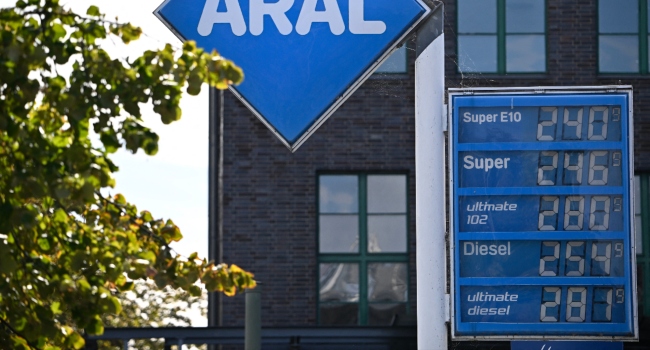

Germany has cut petrol and diesel prices under a new emergency fuel subsidy, but the biggest test of the intervention may be whether the full benefit reaches motorists or is absorbed by energy companies.
The German government’s latest move took effect Thursday as the country grapples with a sharp energy shock linked to disruptions in Middle Eastern fuel supplies amid the ongoing US-Iran conflict.
Average petrol prices fell by about 14 cents to €2.06 per litre, while diesel dropped by roughly 15 cents to €2.20, according to automobile association ADAC.
The government has set the subsidy at 17 cents per litre, although the actual reduction at filling stations can vary with international oil prices and exchange rates.
But Germany is already confronting a problem that could determine the success of the latest intervention: how much of the government’s relief actually reaches consumers.
During an earlier fuel subsidy programme in May and June, energy companies reportedly retained about €200m of the €1.6bn paid out by the government, according to the country’s Monopolies Commission.
That experience has prompted motoring groups to demand tighter monitoring of the latest subsidy.
The Auto Club Europa has called for the new fuel discount to be passed on to motorists in full, warning against a repeat of the earlier situation in which part of the government support did not translate into equivalent savings at the pump.
For German motorists already facing elevated fuel costs, the reduction has provided some relief but has not eliminated concerns over affordability.
Andrea Hoecker, a 33-year-old public relations worker, described the reduction as “a drop in the ocean,” saying the measure could help in the short term but would not address the underlying problem.
A teacher, Lorena Konle, also said fuel prices remained unsatisfactory despite the reduction.
The intervention has meanwhile opened another debate over who benefits most from fuel subsidies.
Clemens Fuest, head of the Ifo Institute, criticised the measure on the grounds that it could redistribute benefits towards frequent motorists and people driving larger vehicles rather than households most affected by rising living costs.
Germany’s experience is therefore highlighting a broader policy dilemma confronting European governments: when fuel prices surge, should governments subsidise consumption broadly or target assistance at households most vulnerable to the energy shock?
Other European Union countries have adopted different approaches, including fuel-tax reductions and direct payments to citizens.
For Germany, however, the immediate challenge is ensuring that the latest public intervention produces a visible reduction at the pump rather than becoming another costly subsidy whose benefits are partly captured elsewhere in the supply chain.
AFP