

Close Menu
National Update
    Facebook X (Twitter) Instagram
    Trending
    • Bamidele: Southwest States Must Plan Beyond Boundaries to Unlock Regional Economy
    • Sokoto Passenger Killings: HURIWA Demands Security Offensive, Warns Against More Bloodshed
    • Kogi Water Crisis: KONGONET Demands Probe of Waterworks Equipment Auctions
    • HURIWA Demands Release of Kaduna Journalist Sentenced to Four Years
    • ‘Every Short Litre Is a Hidden Tax’: FG Targets Traders, Fuel Stations
    • Obasanjo: Tinubu’s Reforms Deepened Poverty as Naira Lost Value
    • PAAU Don Demands State of Emergency on Teachers’ Welfare, Education Funding
    • Ex-Deputy Governors Seek Reserved Seats for Women, Youths
    Facebook X (Twitter) Instagram
    National UpdateNational Update
    Subscribe
    • News
    • Politics
    • Opinion
    • Economy
    • Entertainment
    • Health
    • Security
    National Update
    Home»World

    Germany Moves to Shield Motorists as Fuel Relief Faces Oil Industry Test

    By National UpdateOctober 2, 2026 World No Comments3 Mins Read
    Share
    Facebook Twitter WhatsApp LinkedIn Email

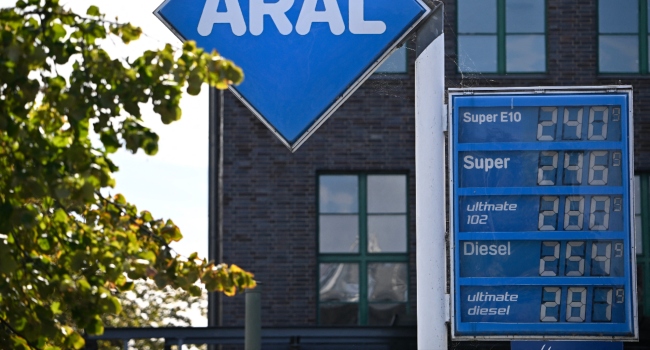
    Germany has cut petrol and diesel prices under a new emergency fuel subsidy, but the biggest test of the intervention may be whether the full benefit reaches motorists or is absorbed by energy companies.
    The German government’s latest move took effect Thursday as the country grapples with a sharp energy shock linked to disruptions in Middle Eastern fuel supplies amid the ongoing US-Iran conflict.
    Average petrol prices fell by about 14 cents to €2.06 per litre, while diesel dropped by roughly 15 cents to €2.20, according to automobile association ADAC.
    The government has set the subsidy at 17 cents per litre, although the actual reduction at filling stations can vary with international oil prices and exchange rates.
    But Germany is already confronting a problem that could determine the success of the latest intervention: how much of the government’s relief actually reaches consumers.
    During an earlier fuel subsidy programme in May and June, energy companies reportedly retained about €200m of the €1.6bn paid out by the government, according to the country’s Monopolies Commission.
    That experience has prompted motoring groups to demand tighter monitoring of the latest subsidy.
    The Auto Club Europa has called for the new fuel discount to be passed on to motorists in full, warning against a repeat of the earlier situation in which part of the government support did not translate into equivalent savings at the pump.
    For German motorists already facing elevated fuel costs, the reduction has provided some relief but has not eliminated concerns over affordability.
    Andrea Hoecker, a 33-year-old public relations worker, described the reduction as “a drop in the ocean,” saying the measure could help in the short term but would not address the underlying problem.
    A teacher, Lorena Konle, also said fuel prices remained unsatisfactory despite the reduction.
    The intervention has meanwhile opened another debate over who benefits most from fuel subsidies.
    Clemens Fuest, head of the Ifo Institute, criticised the measure on the grounds that it could redistribute benefits towards frequent motorists and people driving larger vehicles rather than households most affected by rising living costs.
    Germany’s experience is therefore highlighting a broader policy dilemma confronting European governments: when fuel prices surge, should governments subsidise consumption broadly or target assistance at households most vulnerable to the energy shock?
    Other European Union countries have adopted different approaches, including fuel-tax reductions and direct payments to citizens.
    For Germany, however, the immediate challenge is ensuring that the latest public intervention produces a visible reduction at the pump rather than becoming another costly subsidy whose benefits are partly captured elsewhere in the supply chain.
    AFP

    Previous ArticleSUPER EAGLES: No 2027 AFCON With These Complacencies
    Next Article Group Challenges Uzodinma Over Abduction of 20 Corps Members in Imo

    Keep Reading

    UN: Mahmoud Redefines Governance with a Focus on Human Security

    Ratko Mladić: The Butcher of Bosnia and the Shadow He Leaves Behind

    Pentagon Plans Nigeria Operations After Trump Signals Possible Intervention

    Nigeria Urges Halt to Nuclear Arms Race

    Trump Slaps Fresh 15% Tariff on Nigeria, Other African Nations

    Owolabi Salis Becomes First Nigerian in Space, Blazing a New Trail for Africa

    Add A Comment

    Comments are closed.

    Advert
    VGC Advert
    Most Viewed Posts
    • Breaking: Intrigues, as ADC suspends its presidential candidate, Kachikwu, accuses him of blackmail (1,865)
      The African Democratic Congress (ADC) has suspended its presidential candidate Dumebi Kachikwu, from the party, accusing him of false, misguided and defamatory video he made and circulated, among other infractions. The party also considered Kachikwu's action as "smacks of crass irresponsibility, gross indiscipline, disingenuous scandalization and blackmail, and completely unfit of someone who wants to
    • Ex-Kogi Gov’s Arraignment Stalled at the instance of EFCC Counsels (1,540)
      The arraignment of the former Governor of Kogi State, Yahaya Bello, on an alleged money laundering case instituted against him by the Economic and Financial Crimes Commission (EFCC), has been adjurned to June 27, by the Federal High Court, in Abuja, based on an agreement by the counsels to the two parties. A new date,
    • Concerned Religious Prayer Forum Responds to Criticism of National Prayer Initiative (1,321)
      The Concerned Religious Prayer Forum has issued a statement clarifying its mission and responding to recent criticisms surrounding its seven-day national prayer initiative. Established as a non-governmental organization on January 9, 2024, the Forum emphasizes that it is an independent group composed of citizens motivated by a shared desire to promote peace, unity, and prosperity
    • North Central Serving Governor withdrew N60 billion cash in six years ― EFCC (1,277)
      A serving Nigerian governor has allegedly withdrawn N60billion from his state’s purse. The Economic and Financial Crimes Commission (EFCC) said that he has lifted about N60 billion cash from state coffers in about his six years in office. The governor remains unnamed and his state, partially identified as domiciling in the North Central of the
    • Qatar Charity Empowers 60 Jigawa Widows, Vulnerable Persons with ₦300m (1,233)
      By Ahmed Rufa’i, Dutse The Qatar Charity Organization has donated economic empowerment equipment valued at over ₦300 million to 60 widows and vulnerable persons across the 27 local government areas of Jigawa State. The items were distributed during a ceremony held at the Banquet Hall of the Government House, Dutse, and presided over by the

    Latest News

    Bamidele: Southwest States Must Plan Beyond Boundaries to Unlock Regional Economy

    October 22, 2026

    Sokoto Passenger Killings: HURIWA Demands Security Offensive, Warns Against More Bloodshed

    October 22, 2026

    Kogi Water Crisis: KONGONET Demands Probe of Waterworks Equipment Auctions

    October 22, 2026

    HURIWA Demands Release of Kaduna Journalist Sentenced to Four Years

    October 22, 2026

    ‘Every Short Litre Is a Hidden Tax’: FG Targets Traders, Fuel Stations

    October 22, 2026

    Subscribe to Updates

    Get the latest creative news from FooBar about art, design and business.

    National Update
    Facebook X (Twitter) Instagram
    © 2026 National Update. Designed by Lamark Cre8ives.

    Type above and press Enter to search. Press Esc to cancel.