


Nigeria’s growing presence in the global university rankings is being driven largely by federal institutions, with five of the country’s seven universities in the world’s top 1,200, according to the 2027 Times Higher Education (THE) World University Rankings.
The latest ranking placed 29 Nigerian universities on the global table, up from 24 in 2026, giving Nigeria the highest representation among countries in sub-Saharan Africa.
The figures were contained in a report by Emeritus Professor Peter Okebukola, Chairman of the Nigerian Tertiary Education Ranking Advisory Committee (NiTERAC), following the release of the 2027 rankings on Wednesday.
While Nigeria recorded a broader presence globally, the performance was particularly notable among federal universities, whose representation in the top 1,200 increased from three institutions in 2026 to five in 2027.
The five federal universities are the University of Ibadan, University of Lagos, University of Ilorin, Ahmadu Bello University and Bayero University.
Covenant University, the University of Ibadan and the University of Lagos jointly occupied Nigeria’s highest position, in the 801–1000 global band.
Covenant University moved up from the 1001–1200 band in the previous ranking, while the University of Ibadan and University of Lagos retained their positions.
Landmark University, Ahmadu Bello University, Bayero University and the University of Ilorin were placed in the 1001–1200 band.
Overall, 19 federal universities, seven state universities and three private universities featured in the 2027 ranking.
However, the expanded Nigerian presence also exposed gaps in the country’s higher education system.
According to Okebukola, 32 additional Nigerian universities were classified as Reporters, meaning they submitted data but did not meet the requirements for inclusion in the ranked table.
Nigeria therefore had 61 institutions participating in the ranking exercise, the highest number of Reporter institutions in sub-Saharan Africa.
The 2027 THE ranking assessed 2,297 universities across 118 countries and territories, compared with 2,191 universities in 2026.
Okebukola said Nigeria’s 29 ranked universities represented about 42 per cent of the 69 institutions ranked across sub-Saharan Africa.
Despite the increase in the number of ranked institutions, the report identified significant weaknesses in Nigeria’s performance.
Research Quality emerged as the country’s strongest pillar, with a mean score of 43.3, while Research Environment and Teaching recorded much lower mean scores of 13.9 and 20.6 respectively.
Okebukola said global academic reputation, which contributes 33 per cent of the overall ranking score, remained a major area requiring improvement.
He called for greater investment in research, stronger doctoral programmes, improved institutional data reporting and deeper international collaboration.
He also recommended international conferences, joint research projects, visiting professorships and stronger engagement with Nigerian academics and alumni in the diaspora as ways of improving the global reputation of Nigerian universities.
The former Executive Secretary of the National Universities Commission said the findings would provide empirical input for NiTERAC’s work as it develops a new national ranking system for Nigerian universities, polytechnics and colleges of education.
The three national rankings are expected before December 15, 2026.
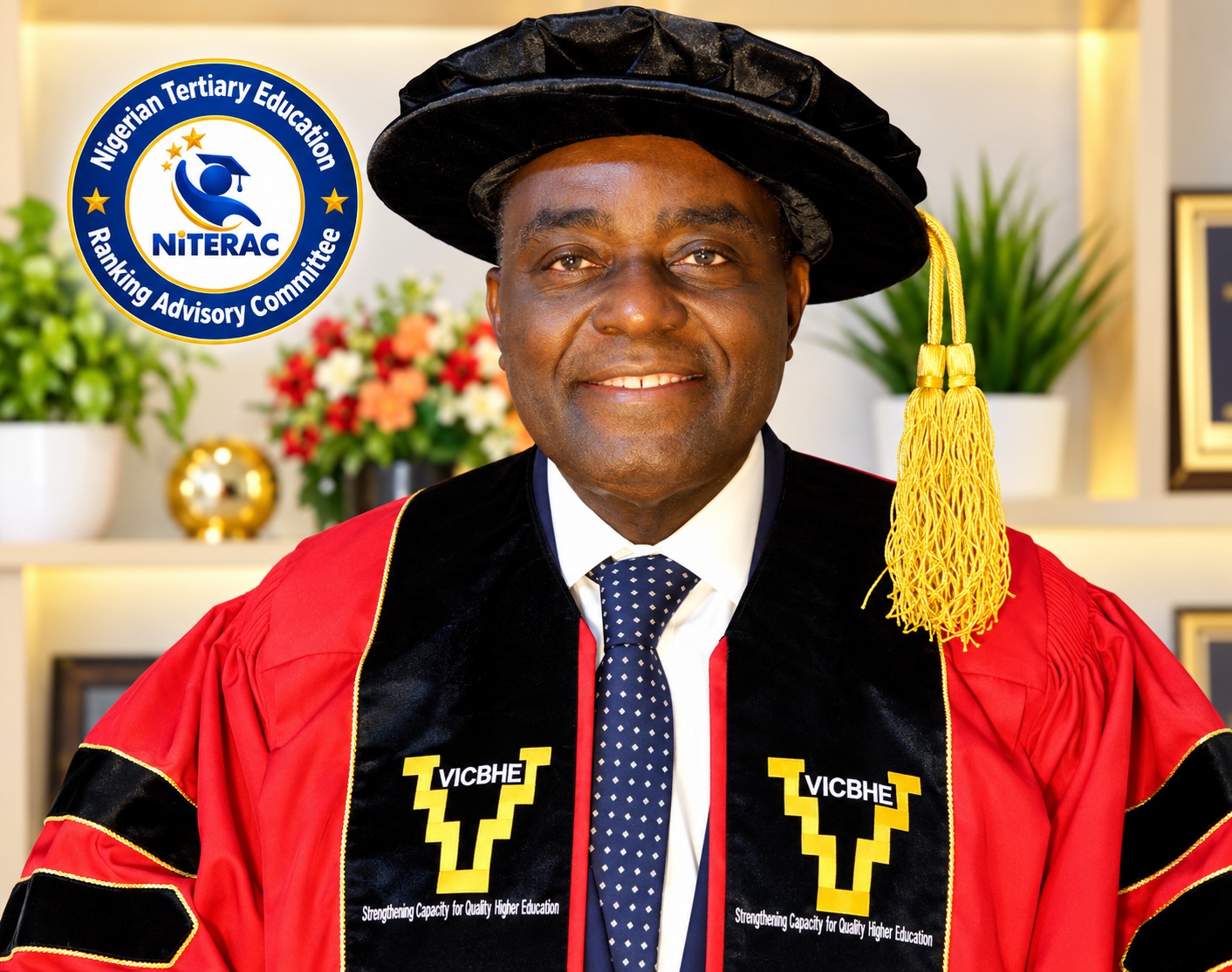
Emeritus Professor Peter Okebukola
