

By Moses Eskor, DGN
The just-concluded Osun State governorship election has thrown up a lesson that extends beyond party politics: celebrity influence can become powerful political capital when it is deployed for mobilisation, peace and community interests.
At the centre of that conversation is Afrobeats superstar David Adeleke, popularly known as Davido, whose high-profile support for his uncle, Governor Ademola Adeleke, brought enormous visibility and youth energy to the campaign.

Governor Adeleke was declared winner of the August 15 election after defeating the APC candidate, Bola Oyebamiji.
Davido’s role should not, however, be reduced to the claim that his celebrity status alone delivered the victory. Elections are won through a combination of candidates’ records, party structures, grassroots mobilisation, voter preferences and the broader political mood.
But the Osun experience demonstrates something important: fame can influence political participation when it is backed by credibility, personal connection and purposeful mobilisation.
He Built Bridges, Not Walls
One striking aspect of Davido’s public engagement has been his willingness to maintain relationships across political lines.
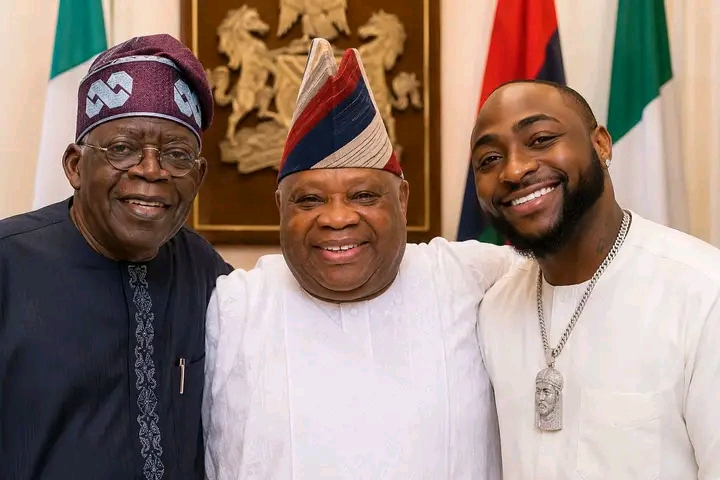
In June 2025, he accompanied his uncle and his father, Dr Deji Adeleke, on a courtesy visit to President Bola Ahmed Tinubu at his private residence in Lagos.
Whatever the political interpretations of that meeting, the gesture carried a broader message: influence does not have to mean permanent confrontation.
For celebrities who command enormous public attention, access to political leaders can be used to open conversations, build relationships and draw attention to issues affecting their communities.
He Took Youth Mobilisation Beyond Social Media
Davido’s involvement in the Osun campaign also showed the difference between merely posting political messages online and physically participating in mobilisation.
He suspended aspects of his music activities to participate in the campaign and took a prominent role in youth mobilisation for the Imole campaign.
That involvement gave political participation a familiar face for many young voters who may ordinarily feel disconnected from conventional politics.
His repeated calls for peaceful participation and protection of the ballot also reinforced the message that political mobilisation should not translate into electoral violence.
The Real Power Was Trust
Celebrity endorsement is easy. Celebrity credibility is much harder to build.
Davido’s influence among young Nigerians did not emerge overnight. It has been built over years through music, philanthropy, public visibility and his connection with a generation that sees him as one of its own.
That connection can translate into political influence—but only when the audience believes the celebrity is genuinely invested in the cause being promoted.
And that is perhaps the biggest lesson from Osun.
What Other Celebrities Should Learn
1. Build trust before seeking influence.
Popularity alone does not guarantee political influence. Celebrities who want to shape public opinion must first establish credibility with the people they hope to mobilise.
2. Use access to open doors.
If fame gives you access to governors, ministers, lawmakers and presidents, use that access to draw attention to the needs of your community.
3. Support development, not blind partisanship.
Political loyalty should not prevent public figures from acknowledging good policies or demanding better governance. Constructive engagement is often more powerful than permanent hostility.
4. Make peace part of the message.
During elections, celebrities have the reach to amplify either tension or peace. Their platforms should discourage violence, hate and intimidation while encouraging citizens to participate responsibly.
5. Turn fame into service.
The ultimate measure of influence should not be the number of followers, endorsements or awards. It should also be what that influence accomplishes for ordinary people.
The Bigger Picture
Davido’s Osun experience offers Nigerian celebrities a different way of looking at stardom.
A celebrity does not have to contest an election or occupy political office to shape the political conversation. Influence can be exercised through mobilisation, advocacy, relationship-building, civic education and community development.
The lesson from Osun is therefore bigger than Davido.
Fame is attention. Influence is what you do with that attention.
When celebrity power is combined with responsibility, it can move beyond entertainment and become a force for civic participation, peaceful elections and community development.